
Research that looks at afternoon fatigue after 50 directly is thin. What exists is general sleep guidance from the National Institute on Aging (NIA) and a large review of exercise trials. Together they suggest an order for checking things. In our view, the night comes first, because most of the guidance is about sleep.
Afternoon fatigue after 50: check the night first
Older adults need about the same amount of sleep as other adults, seven to nine hours a night. That's a general recommendation. It doesn't tell you what you need, and it doesn't show that short sleep is behind your slump. It is still the easiest number to check, so estimate how long you sleep on a typical week.
Next, look at your schedule. The NIA advises going to sleep and getting up at the same time every day, even on weekends or when traveling. It's a standard tip, but the page cites no trial showing it eases daytime tiredness. (More night-time habits are covered in sleep after 50.)
Some sleep problems aren't about habits. Insomnia, sleep apnea (pauses in breathing during sleep) and restless legs syndrome all become more common as people get older. Menopause may also get in the way of getting enough sleep. If any of this sounds like you, the doctor section below is the place to go.
Time your naps, caffeine, exercise and meals
Most of this timing advice is aimed at protecting night sleep, so it bears on afternoon tiredness only indirectly.
- Naps: avoid them in the late afternoon or evening. Nothing in the evidence says how long a nap should be or whether an early-afternoon nap helps, so no length is recommended here.
- Caffeine: avoid it late in the day, since it can keep you awake at night. No cutoff hour is given. To find yours, move your last cup earlier for a week or two and note how you sleep.
- Exercise: try to exercise regularly, but not within three hours of bedtime.
- Meals and drinks: skip large meals within two to three hours of bedtime, and avoid large amounts of liquid late in the day. The evidence says nothing about lunch size and afternoon energy, so there's no lunch advice here.
Does exercise lift energy?
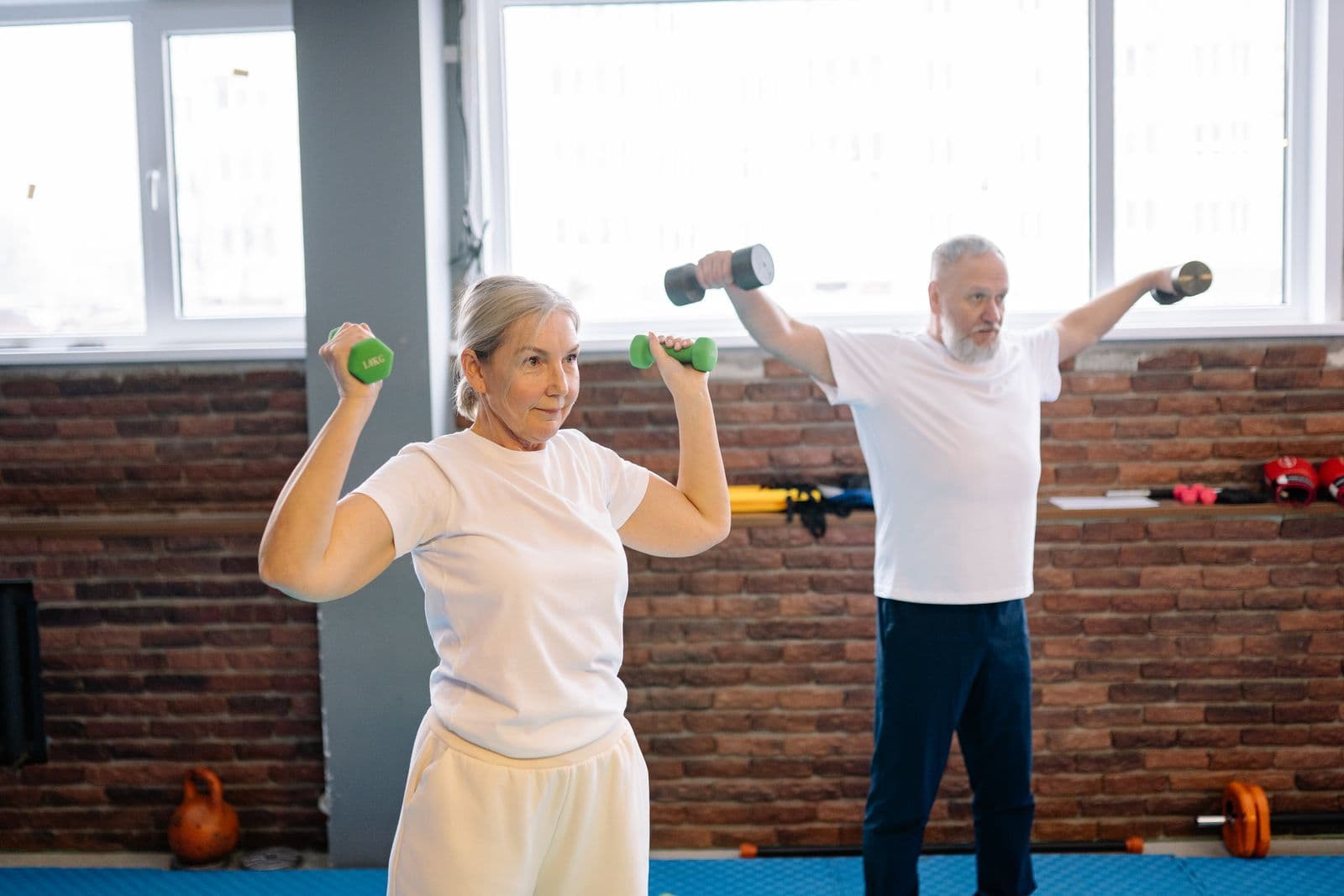
Somewhat, on average. A review pooled 81 randomized trials with 7,050 participants. Groups that followed a moderate-intensity exercise program typically showed small-to-moderate average improvements in feelings of fatigue, energy and vitality, compared with groups that didn't.

Several limits apply to you. The trials weren't limited to older adults, so your results could differ. The review's authors describe earlier research on healthy, inactive people as mixed. And the part of the review available here doesn't say how much exercise, how often, or what kind, so there's no minutes-per-week target to hand you. In our view, treat exercise as a reasonable thing to try, with modest expectations.
When to talk with a doctor
If you're always sleepy, or you have a hard time getting enough sleep at night, it may be time to talk with a doctor. The NIA sets no line for how often or how severe the sleepiness must be, so "always" is yours to judge.
A suspicion of sleep apnea is also a reason to talk with a doctor. Snoring can be a sign, but not everyone who snores has it. Sleep medicines may help in the short term but carry risks and shouldn't be used long term.
Where to start
Tomorrow morning, after you brush your teeth, write down what time you went to sleep and got up, plus a few words on how yesterday afternoon felt. Keep a notebook and pen on the nightstand or the bathroom counter, where you'll see them. The NIA suggests a sleep diary for a couple of weeks for people with trouble sleeping, because it helps spot patterns to discuss with a doctor. Once the notes feel routine, change one thing, such as a fixed wake-up time or an earlier last cup of coffee, and keep writing so you can see whether the afternoons change. If the tiredness stays, bring the diary to your appointment.