
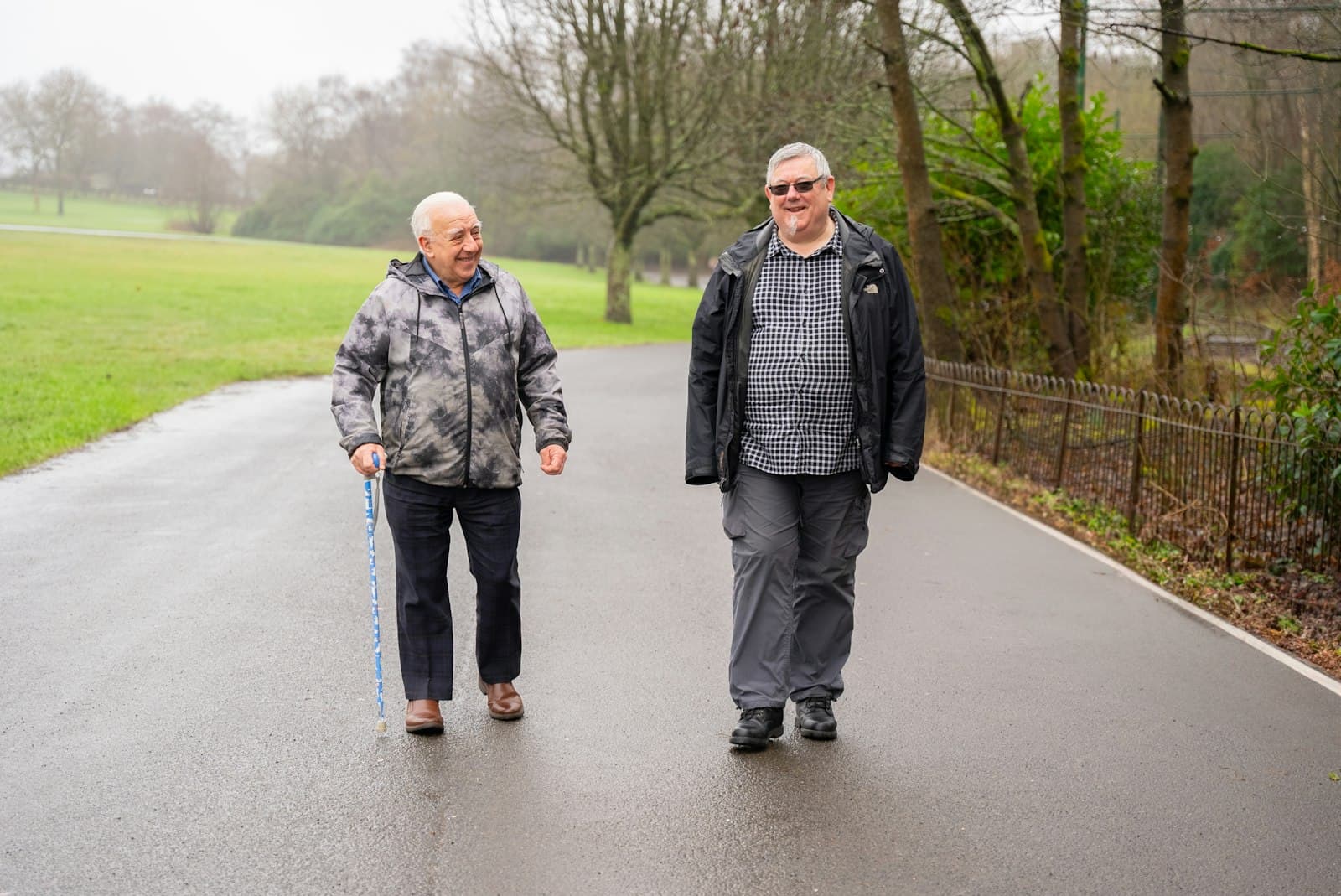
In 1938, researchers at Harvard began following 268 college sophomores. Later they added 456 young men from some of Boston’s poorest neighborhoods. Then they kept going, for decades, through careers, marriages, wars, divorces and grandchildren. When the surviving men reached their 80s, the team went back to what it had known about each of them at age 50. The question was simple: what at midlife best predicted who would be healthy and happy at 80?
The researchers assumed it would be cholesterol, or blood pressure. It wasn’t. The best predictor was how satisfied people were with their relationships.
Sit with that for a second. Fifty-year-olds who felt good about the people in their lives tended to be healthier thirty years later than fifty-year-olds with better lab numbers. Even the researchers were surprised.
One study, even one that has run for more than 85 years, doesn’t settle anything by itself. The original participants were all men. But this finding has a lot of company.
Bigger than one study
In 2010, psychologist Julianne Holt-Lunstad and colleagues pooled 148 studies covering roughly 300,000 people. Those with stronger social relationships had about a 50% greater likelihood of survival over the study periods. A 2023 analysis of 90 studies and more than 2 million adults found that social isolation was linked to a 32% higher risk of dying from any cause, and loneliness to a 14% higher risk. The same year, the U.S. Surgeon General issued a formal advisory calling loneliness and isolation a public health concern.
These studies show links, not proof. Healthy people may simply find it easier to stay social, and a bad hip can shrink a calendar fast. But the pattern holds across countries and decades, and the likely reasons aren’t mysterious. Connected people have someone who drags them out for a walk, someone to drive them to the procedure, someone to tell them that cough has gone on long enough.
In other words, your social life isn’t a break from your health routine. It’s part of it.
Purpose: the reason your feet hit the floor
Purpose turns up in the data almost as strongly as friendship. In a 2019 study of nearly 7,000 American adults over 50, those with the lowest sense of purpose were more than twice as likely to die during the roughly four-year follow-up as those with the highest, even after the researchers accounted for health, income and other factors.
Purpose sounds lofty, but in real life it’s usually ordinary. It’s the neighbor who counts on you for Tuesday rides, the grandkid who expects you at the recital, the tomatoes that won’t stake themselves, the choir that sounds thinner when your section is short. It’s anything that makes you useful, curious or needed.
Purpose also has a way of expiring without telling you. A career ends, the house empties, and the role that organized your days for thirty years is gone. That gap isn’t a personal failing. It’s a design problem, and it deserves the same planning you’d give your finances.
The two-hours-a-week experiment

If you want connection and purpose in one package, volunteering is hard to beat. It comes with a schedule, a team and a reason to show up.
A 2020 study followed nearly 13,000 adults over 50 for four years. Those who volunteered at least 100 hours a year, about two hours a week, had a lower risk of dying during the study, fewer physical limitations, more physical activity and a stronger sense of purpose. They also reported less loneliness. The researchers also reported what didn’t change: volunteering wasn’t linked to lower rates of diabetes, heart disease or cognitive impairment. It’s not a cure-all, just a strong deal on the parts of life that are hard to measure.
The most striking evidence comes from Baltimore, where researchers ran a randomized trial of a program called Experience Corps. Older adults spent their week tutoring and helping out in elementary schools. Over two years, men in the program showed small increases in brain volume in memory-related regions on scans, while men in the comparison group showed the usual age-related decline. The results for women were less clear, and the scanned group was small. Still, it’s a nice image: an older brain getting a little bigger while teaching a seven-year-old to sound out words.
Why friendship takes longer than you think (and why that’s good news)
Here’s a number that explains a lot about adult friendship. Communication researcher Jeffrey Hall estimated that it takes roughly 50 hours together to go from acquaintance to casual friend, around 90 hours to become a real friend, and more than 200 hours to become close friends.
That’s why friendships come easily in school and at work, which hand you hundreds of shared hours for free. After 50, you have to build the hours yourself.
The good news is that the math is very doable. A weekly two-hour walking group gives you 50 hours with the same people in about six months. A Thursday pickleball night, a choir, a volunteer shift, a men’s breakfast or a book club works the same way. Same people, same place, same time, again and again. Friendship is mostly what happens when you keep showing up.
And you need fewer friends than you might think. Waldinger’s team found that what matters most is having at least one solid relationship, someone you know you can count on.
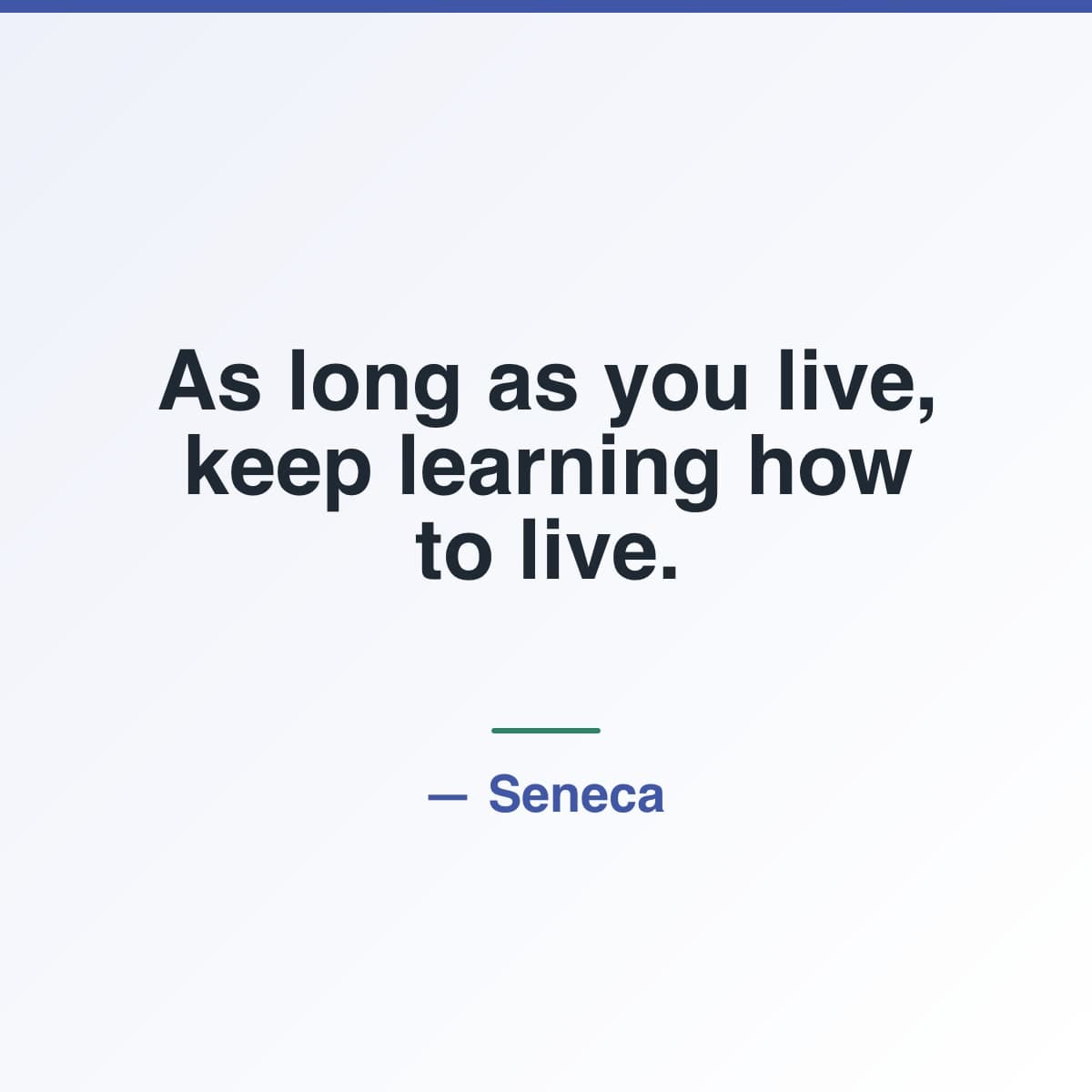
As long as you live, keep learning how to live.
Seneca was writing to a friend in his 60s, and the advice holds up. Building a social life after 50 is a skill, and like any skill it can be learned at any age, clumsy first attempts included.
How to build it without turning your life into a networking event
- Pick one recurring thing. Choose an activity with the same people at a regular time. Movement-based options are a bonus: walking clubs, tai chi, dance classes, community gardens and pickleball count twice.
- Use the three-visit rule. The first visit is awkward for almost everyone. Decide in advance that you’ll go three times before you judge it.
- Make specific invitations. “We should get coffee sometime” goes nowhere. “I’m walking the river path Saturday at nine. Want to come?” gets a yes.
- Be the one who follows up. A text the next day, like “That was fun, same time next week?”, is often the moment an acquaintance turns into a friend.
- Don’t underrate small hellos. In one study, people reported better days when they had more interactions with “weak ties” such as classmates, neighbors and the regular at the coffee shop. These brief exchanges are also how bigger friendships start.
- Reconnect. Somewhere there’s an old friend who would be delighted to hear from you and is waiting for you to go first.
For ideas on where to find your first recurring activity, see Staying connected after 50.
When the problem is loneliness, not a lack of people
Loneliness and being alone aren’t the same thing. Plenty of people feel lonely in a full house, and plenty who live alone feel well connected. The fix is different.
A review of loneliness programs found that the most effective ones didn’t just add social events. They helped people change the thoughts that make connecting harder, such as expecting rejection or reading a slow reply as a snub. In a small trial of adults 55 to 85, an eight-week mindfulness course reduced loneliness compared with a waiting list. Both findings point the same way: how you approach people can matter as much as how many invitations you get.
Some obstacles are practical. If conversations in noisy rooms have become exhausting, get your hearing checked, because a hearing problem can quietly shrink a social life. If you’ve felt persistently low, lost interest in things you used to enjoy, or struggle to sleep, talk to your doctor. Depression is common and treatable. In the U.S., you can call or text 988 at any hour if you’re in crisis.
When life rearranges itself
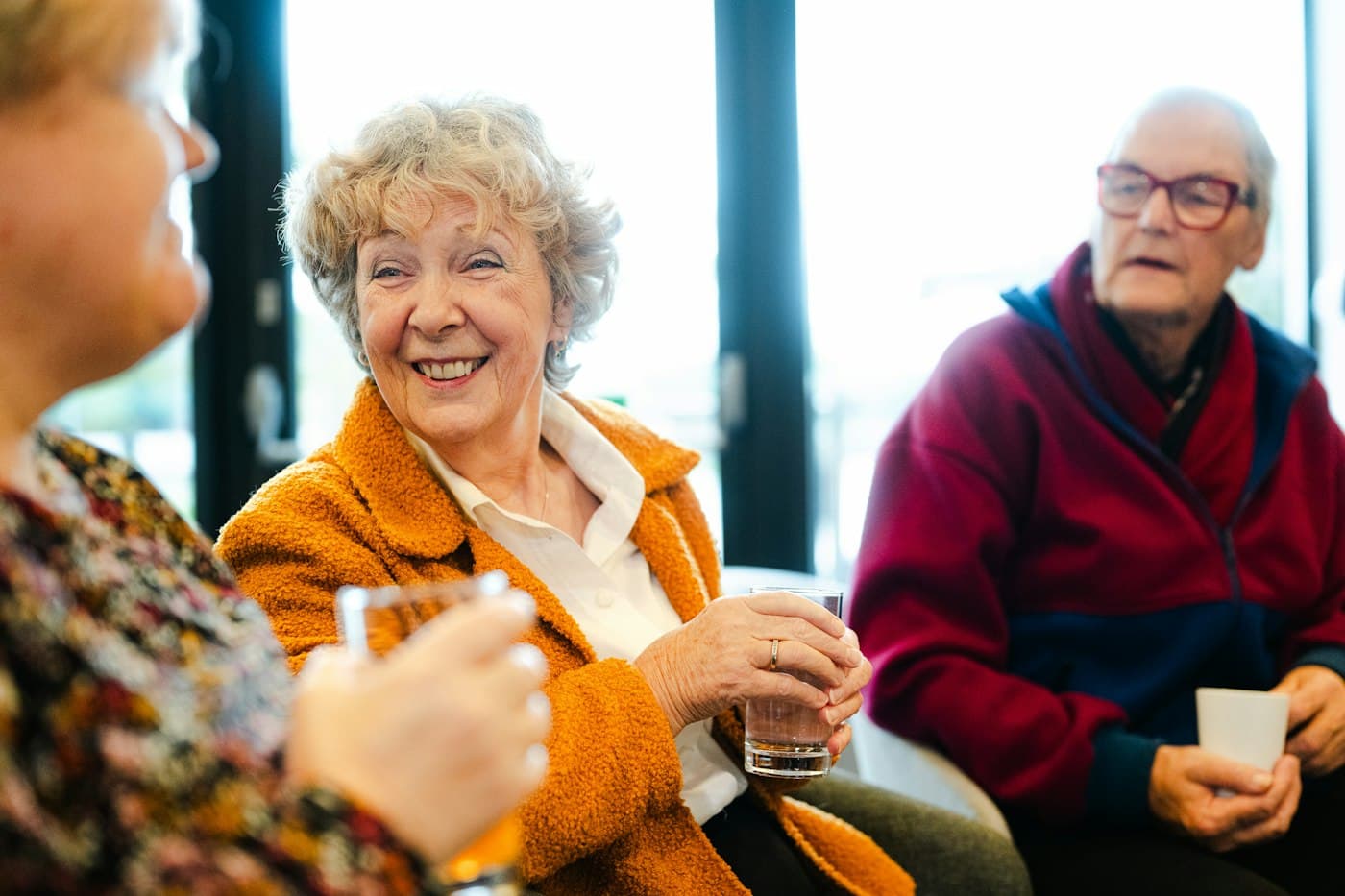
Some moments need extra attention. Retiring? Set up your replacement routine before your last day, whether that’s a class, a volunteer role or a standing morning coffee. Moving? Join one thing in your first month, while being new still gives you an easy reason to introduce yourself. Grieving? Accept the casseroles, keep small routines and look into a grief group, since people who have been through it often help the most. Caregiving? Protect one regular break as if your health depends on it, because it partly does. Getting around less easily? A standing video call, a live online class, or a visiting program run by a library, congregation or senior center can bring connection to you.
Not every attempt will work. Groups fold, friends move and some volunteer roles turn out to be mostly stuffing envelopes. Keep a few threads going, so losing one never leaves you with none.
Try this
This week, choose one recurring activity that involves the same people at the same time, and put the first three dates on your calendar now. Then send one message to someone you’ve lost touch with. Keep it short, like “Saw something that reminded me of you. How are you?” It takes two minutes, and there’s a good chance it will be the highlight of their day.
Two are better than one; because they have a good reward for their labour. For if they fall, the one will lift up his fellow…
Some wisdom ages well. The friend who lifts you up after a fall might also be the one who meets you at the trailhead every Saturday and keeps you from falling in the first place. Start building those hours now. Your 80-year-old self will be glad you did.
Sources
- Harvard Gazette (2017). “Good genes are nice, but joy is better.” Harvard Study of Adult Development and midlife relationship satisfaction as a predictor of health at 80.
- Harvard Gazette (2023). “Work out daily? OK, but how socially fit are you?” Interview with Robert Waldinger. Covers study composition and the need for at least one solid relationship.
- Holt-Lunstad J, Smith TB, Layton JB. Social relationships and mortality risk: a meta-analytic review. PLoS Medicine 2010;7(7):e1000316.
- Wang F, et al. A systematic review and meta-analysis of 90 cohort studies of social isolation, loneliness and mortality. Nature Human Behaviour 2023;7:1307–1319.
- Office of the U.S. Surgeon General. Our Epidemic of Loneliness and Isolation (2023).
- Alimujiang A, et al. Association between life purpose and mortality among US adults older than 50 years. JAMA Network Open 2019;2(5):e194270.
- Kim ES, et al. Volunteering and subsequent health and well-being in older adults: an outcome-wide longitudinal approach. American Journal of Preventive Medicine 2020;59(2):176–186.
- Carlson MC, et al. Impact of the Baltimore Experience Corps Trial on cortical and hippocampal volumes. Alzheimer’s & Dementia 2015;11(11):1340–1348.
- Hall JA. How many hours does it take to make a friend? Journal of Social and Personal Relationships 2019;36(4):1278–1296.
- Sandstrom GM, Dunn EW. Social interactions and well-being: the surprising power of weak ties. Personality and Social Psychology Bulletin 2014;40(7):910–922.
- Masi CM, Chen HY, Hawkley LC, Cacioppo JT. A meta-analysis of interventions to reduce loneliness. Personality and Social Psychology Review 2011;15(3):219–266.
- Creswell JD, et al. Mindfulness-Based Stress Reduction training reduces loneliness and pro-inflammatory gene expression in older adults: a small randomized controlled trial. Brain, Behavior, and Immunity 2012;26(7):1095–1101.
- 988 Suicide & Crisis Lifeline.
Quotations: Seneca, Moral Letters to Lucilius, Letter 76, tr. Richard M. Gummere (Loeb Classical Library). Ecclesiastes 4:9–10, King James Version.