

When you’re working, raising kids and busy, connection tends to come built in: the office, the school gate, the neighbors. After 50, much of that scaffolding changes. People retire, move, lose a spouse or friends, or see their children less. The relationships that remain still need tending, and new ones need a place to start.
The U.S. Surgeon General’s 2023 advisory on loneliness and isolation describes social connection as important to health and well-being and recommends investing in supportive relationships. It’s guidance, not a prescription, and it doesn’t tell anyone how connected they should be. But it’s a fair reminder that reaching out is a legitimate part of looking after yourself.
You don’t need a big circle
Connection comes in layers, and most people only count the first one.
- A few people you could call at midnight. The inner layer. Precious, and usually small.
- Friends you like seeing. Not every week, but when you do it’s easy.
- The lighter ties. The neighbor you wave to, the barista who knows your order, the regulars at your class. These make a place feel like yours.
If your close circle has shrunk, you don’t have to replace it overnight. Adding a few lighter ties is a good first step, and some of them tend to become closer on their own.
The first message is the hard part
Most people worry about being a bother. In practice, many of the people you’d contact have been thinking the same thing about you. The trick is to make the message small and the invitation specific.
If it’s been a long time, say so lightly and carry on. Nobody needs a formal explanation. And if the first try goes quiet, that’s usually busyness, not rejection. Try again in a few weeks.
Where people actually meet people
Repeating the same place at the same time is the quiet secret. Friendships tend to form out of familiarity, not one great conversation. That’s why a weekly class beats a one-off event.
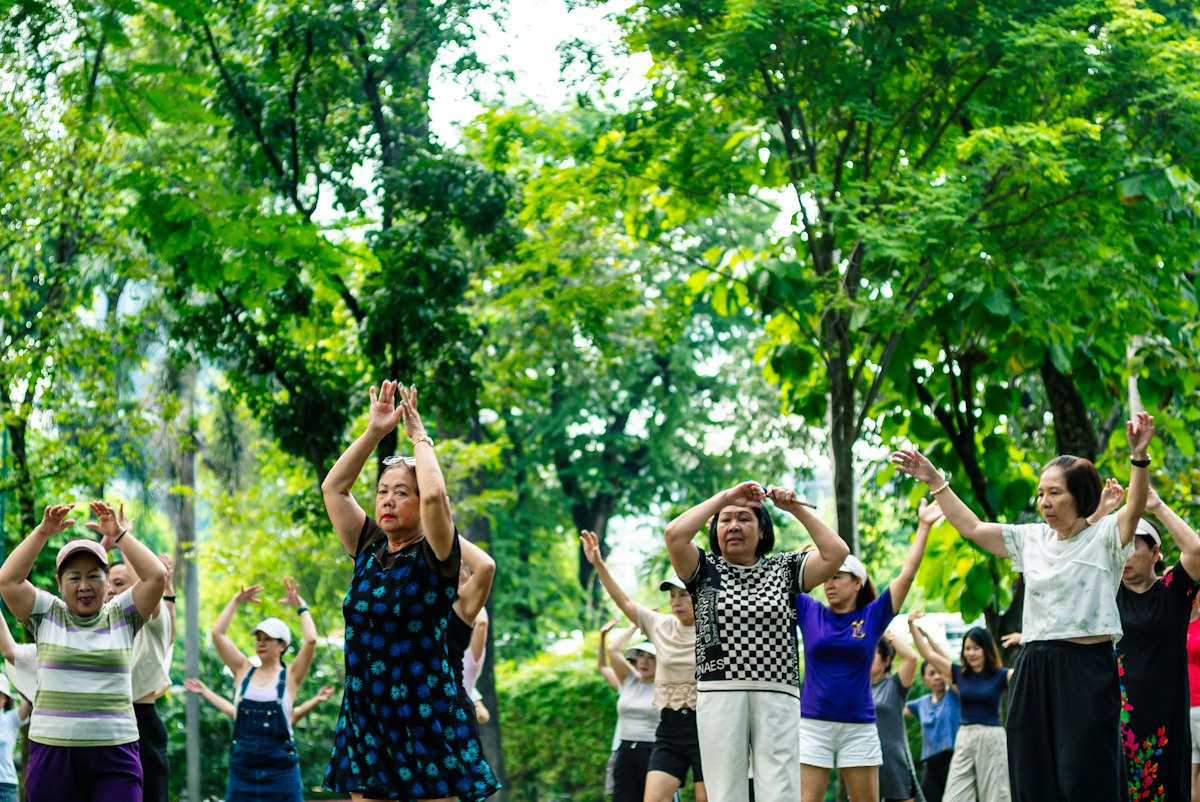
- Movement groups: walking clubs, tai chi, water aerobics, pickleball. The activity carries the first few weeks.
- Learning groups: classes at community colleges, libraries and senior centers, where everyone is a beginner at something.
- Faith and community groups, if that suits you. They often include meals, volunteering and visits.
- Volunteering, where you have a job to do and the same people turn up each week.
- Neighborhood routines: a regular coffee, a dog park, a community garden.

Make it easier on yourself
- Pick one person. It’s easier than trying to reconnect with everyone.
- Attach it to something you already do, like a weekly call on a set day.
- Keep the first message small. Two lines is enough.
- Suggest something specific, with a day and a time.
You don’t have to be good at friendship. You have to show up twice.
A realistic month
Here’s one way a month could go. It’s a plan to borrow or change, not a prescription.
- Week one: send one messagePick the person you’ve been meaning to contact. Use one of the lines above. Then stop. You’re done for the week.
- Week two: make one invitationSuggest something specific with a day and time. A walk, a coffee, a call while you each do the dishes.
- Week three: go somewhere twiceChoose a class, a group or a regular spot and show up for the second time. The second visit is when faces start to feel familiar.
- Week four: keep what workedNotice which of the three felt best, and make that the thing you do every week from here.
Send one specific check-in
About 5 minutes · Very easy. One message or one short call is enough.
Contact one person with a specific question or a simple invitation to connect.
Steps
- How to start
- Choose one person. Write one specific question or invitation, for example: "How did your appointment go?" or "Would you like to take a walk on Saturday?"
- You will need
- A phone or a messaging app.
- Done when
- You sent the message or made the call.
What about screens?
Video calls, texts and messaging groups are a good way to keep ties alive, especially with family who live far away. They work best as a bridge to seeing people in person when that’s possible, not as a replacement for it. If you finish a long scroll feeling worse, that’s useful information about what to do less of.
Your next step
A walk with a friend counts twice: it’s movement and it’s time together. Our walking guide shows how to start.
Plan one walk with someonePhotos: Olympia Petrou on Unsplash; Khanh Do on Unsplash; Age Cymru on Unsplash.