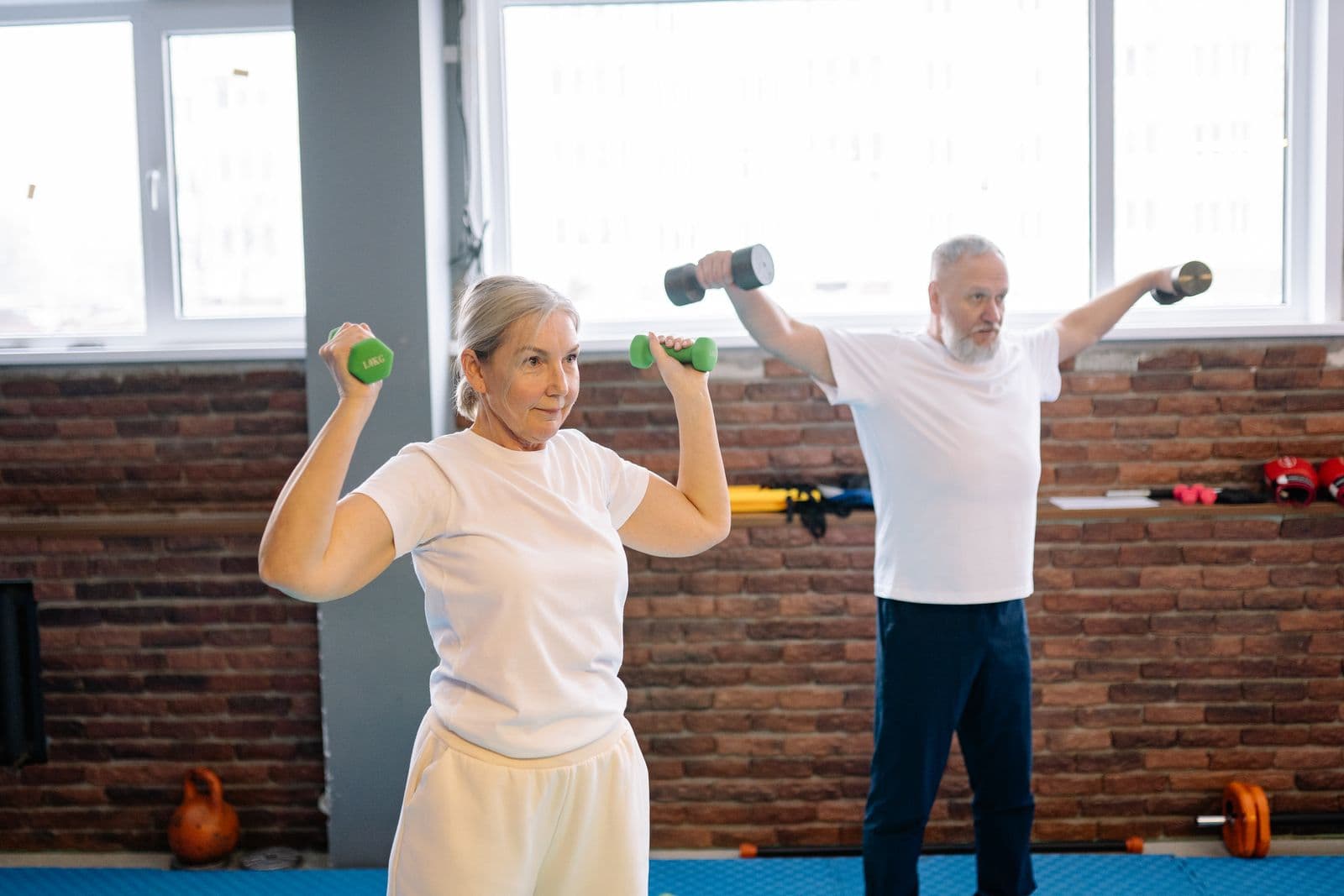
In 2018, a group of Australian researchers published a trial that should have made more headlines than it did. They took 101 postmenopausal women, average age 65, every one of them with low bone density and many with outright osteoporosis, and taught them to deadlift. Not with pink dumbbells. With a loaded barbell, working up to five sets of five repetitions at more than 85 percent of the heaviest weight they could lift once. They also had them squat and press weight overhead, and they added a jump-and-land drill for impact.
For decades the standard advice for a woman with fragile bones had pointed the other way: be careful, avoid heavy lifting, maybe walk a bit and swim. The fear was simple. Load a weak bone and it might break.
After eight months of two 30-minute sessions a week, the lifting group had gained bone at the lumbar spine (about 2.9 percent) while the comparison group, doing gentle home exercise, lost about 1.2 percent. At the femoral neck, the part of the hip that tends to snap in a fall, the lifters held steady while the comparison group lost ground. The lifters also got measurably taller, by a couple of millimeters, while the comparison group shrank. Across the whole trial, the researchers recorded one adverse event: a minor lower back spasm that cost one woman two sessions.
That study, called LIFTMOR, did not prove that every person with osteoporosis should start barbell training next Tuesday. The participants were carefully screened, closely supervised, and introduced to heavy loads gradually. We’ll get into all of that. But it did knock over an assumption that had shaped bone-health advice for a generation: that fragile bones need to be protected from force. In most cases, they need the right kind of force, applied with skill.
This article is about how to use that idea in your own life, whether you’re 52 and have never thought about your bones, 64 and holding a DEXA report you don’t fully understand, or 73 and recovering from a wrist fracture that came out of nowhere.
The numbers that make this worth your time
Bone health is easy to ignore because it’s silent. Your bones don’t ache when they thin out. There’s no shortness of breath, no warning light. And so most people learn they have a problem the way nobody wants to learn it, by breaking something.
The Bone Health & Osteoporosis Foundation estimates that about one in two women and up to one in four men over 50 will break a bone because of osteoporosis. Those fractures add up to roughly two million broken bones a year in the United States, and the foundation reports that nearly 80 percent of older Americans who have one of those breaks are never tested or treated for the underlying cause.
Hip fractures are the ones that change lives. According to the same foundation, about 24 percent of hip fracture patients aged 50 and older die within a year, and six months after the injury only 15 percent can walk across a room without help. Those figures describe averages across a population that includes many frail people, so they aren’t a forecast for any single reader. They do explain why doctors who treat fractures tend to talk about bone health with an urgency that can seem out of proportion until you’ve seen a hip fracture up close.
Men tend to assume this is a women’s issue. It mostly isn’t. Men break fewer bones, but when they do, they fare worse. The International Osteoporosis Foundation has reported that roughly a third of hip fractures worldwide happen in men and that men are about twice as likely as women to die after one. Men are also far less likely to be tested or treated afterward.
Three problems wearing one coat
Most people think of a broken hip as a bone problem. In practice, three problems tend to arrive together.
The first is bone loss: the slow thinning of the skeleton that, past a certain point, we call osteoporosis.
The second is muscle loss, which goes by the name sarcopenia when it becomes significant. Muscle and bone are mechanically and biologically linked. Muscles pulling on bone are one of the main signals that tell bone to stay strong, and strong legs are what keep you upright when you catch a toe on the edge of a rug.
The third is falling. The Centers for Disease Control and Prevention reports that more than 95 percent of hip fractures are caused by falls, usually sideways falls. One in four adults aged 65 and older falls each year.
A person can have thin bones and never break anything because they never fall hard. Another person can have decent bones and break a wrist on an icy sidewalk. The goal of everything that follows is to work on all three at once: make bones harder to break, make muscles strong enough to protect them, and make falls less likely and less damaging. Conveniently, much of the same training works on all three.
Why the years after 50 matter so much
For women, the period around menopause is the steepest stretch of bone loss in adult life, and it often happens without anyone mentioning it. For men, losses are slower and start later, but they add up. Then, for everyone, the risk of falling climbs with each decade.
That makes the 50s and 60s a kind of hinge. What you do in this window shapes the skeleton you’ll be living in at 80. Bone responds to loading at any age, but it’s easier to protect bone you still have than to rebuild bone you’ve lost. And it’s much easier to build strength and balance before a fracture than to start afterward.
How to read this article
This is long, because the subject is big and the advice that works depends on where you’re starting. A rough map:
- If you want to understand what’s actually happening inside your bones, start with the next section.
- If you’re a woman in your late 40s or 50s, the menopause section is the one most likely to change what you do this year.
- If you have a DEXA result in hand, go to the screening section, then to “Practical adaptations.”
- If you just want to know what to do, jump to the exercise strategies and sample programs.
- If you’ve already had a fracture, or you’ve been told you have osteoporosis, read the adaptations section before you try anything new.
Your skeleton is a construction site
It’s tempting to picture bone as something like the steel beams in a building: put in place once, then slowly rusting. A better picture is a building where small crews are always tearing out sections of wall and rebuilding them.
The tearing-out crew is made of cells called osteoclasts. They attach to a patch of bone and dissolve it with acid and enzymes. The rebuilding crew, the osteoblasts, follow behind and lay down new collagen framework, which then mineralizes into fresh bone. A third cell type, the osteocyte, sits buried inside the bone and acts as a sensor. Osteocytes detect strain, the tiny bending and squeezing that happens every time you take a step or pick something up, and send signals that steer the crews.
The timing is lopsided, and that matters. In human bone, the resorption phase at any given site takes about three weeks, while the rebuilding phase takes three to four months, according to a review by bone biologists T. John Martin and Natalie Sims. Across the whole skeleton, remodeling replaces roughly 5 to 10 percent of bone each year, which works out to a full turnover in about a decade.
So when something speeds up the demolition crew (a drop in estrogen, certain medications, long periods of inactivity) bone can be lost quickly. Rebuilding it takes longer. That asymmetry is the main reason prevention beats repair.
It’s also the reason exercise results take patience. If you start a good program in January, the bone you’re laying down won’t be fully built and mineralized until well into the spring, and a measurable change on a scan usually takes a year or more.
Peak bone mass and the long, slow slide
Most people reach their peak bone mass somewhere in their late 20s or early 30s. After that, for a decade or two, formation and resorption roughly balance out. Then, gradually, the demolition crew starts winning by a small margin each year.
How much bone you have at 60 depends on two things: how much you built by 30, and how fast you’ve lost it since. You can’t change the first one now. You can change the second one, which is where all the leverage is.
Strength of a bone isn’t just its density, either. Bone has architecture. The outer shell, called cortical bone, is dense and tube-like, and it carries most of the load in the long bones of your arms and legs. The inside of the spine’s vertebrae and the ends of long bones are filled with trabecular bone, a lattice of tiny struts that looks a bit like a sponge or a coral reef. Trabecular bone turns over faster than cortical bone, which is why the spine tends to show losses earlier. When trabecular struts thin out and some disconnect entirely, the bone loses strength faster than the density numbers alone would suggest, the way a bridge with missing cross-braces is weaker than its total steel weight implies.
Osteopenia, osteoporosis, and what a T-score actually means
The standard test for bone density is a DXA (or DEXA) scan, which stands for dual-energy X-ray absorptiometry. You lie on a padded table for a few minutes while a low-dose X-ray arm passes over your hip and lower spine. It’s painless, quick, and uses a fraction of the radiation of a chest X-ray.
The result comes back as a T-score: a comparison of your bone density to that of a healthy young adult of the same sex. It’s expressed in standard deviations.
| T-score | Category | What it means in plain terms |
|---|---|---|
| −1.0 and above | Normal | Density is in the healthy young-adult range |
| Between −1.0 and −2.5 | Low bone mass (often called osteopenia) | Lower than ideal; fracture risk is raised, sometimes a lot, sometimes only a little |
| −2.5 and below | Osteoporosis | Density low enough that fracture risk is substantially higher |
| −2.5 and below plus a fragility fracture | Severe (established) osteoporosis | The bone has already failed under ordinary stress |
Two things about this table trip people up.
First, “osteopenia” sounds like a disease, but it describes a range. A T-score of −1.1 and a T-score of −2.4 are both osteopenia, and they mean very different things.
Second, density is only part of the story. A large share of fractures happen in people whose scans say “osteopenia” rather than “osteoporosis,” simply because there are many more people in that middle range. That’s why clinicians increasingly combine the T-score with other risk factors, using tools like FRAX, to estimate the actual chance of a fracture over the next ten years. We’ll come back to that.
A fragility fracture is the other key term. It means a bone broken by a force that shouldn’t break a healthy bone: a fall from standing height or less, a cough, lifting a laundry basket. If you’ve had one after age 50, many guidelines treat that as a sign of osteoporosis regardless of what the scan says.
Where bones break, and the fractures nobody notices
Osteoporotic fractures cluster in a few places: the wrist, the spine, the hip, and the upper arm near the shoulder. Wrist fractures often happen earlier, in the 50s and 60s, because a younger person who falls tends to throw out a hand. Hip fractures cluster later, in the late 70s and beyond, when falls tend to be sideways and slower.
Spinal fractures are the strangest of the group, because most of them go undiagnosed. A vertebra can partly collapse, usually at the front, turning from a block into a wedge, and the person may feel nothing more than a backache they put down to gardening. Research reviews estimate that roughly two-thirds of vertebral compression fractures are never clinically recognized.
This is the reason for a few signs worth taking seriously:
- You’ve lost more than about an inch and a half of height from your tallest adult height.
- Your upper back has become noticeably more rounded.
- Your waistband sits differently, or your ribs feel closer to your hips.
- You’ve had a sudden, sharp back pain after a minor strain, which settled over weeks.
None of these prove a fracture. But a clinician can order a simple lateral spine X-ray or a vertebral fracture assessment, often done on the same DXA machine, and the answer changes treatment decisions. A silent vertebral fracture is one of the strongest predictors of the next fracture.
Primary and secondary osteoporosis
Most osteoporosis is called primary, meaning it comes from aging and, in women, the hormonal shift of menopause.
Secondary osteoporosis is bone loss caused by something else: a medication, a disease, a nutritional problem. It matters because the cause can often be treated. Common culprits include long-term glucocorticoid (steroid) use, an overactive thyroid or too high a dose of thyroid replacement, hyperparathyroidism, celiac disease and other conditions that impair absorption, rheumatoid arthritis, low testosterone in men, heavy alcohol use, and certain cancer treatments that lower estrogen or testosterone.
Secondary causes are especially common in men with osteoporosis, which is one reason a man who breaks a bone easily deserves a careful workup rather than a shrug.
Menopause: the steepest stretch of the slope
Many women are surprised to learn that the fastest bone loss of your adult life probably doesn’t happen in your 70s or 80s. It happens in the few years on either side of your final menstrual period, often while you’re feeling otherwise fine and nobody is checking.
The best data on this comes from the Study of Women’s Health Across the Nation, known as SWAN, which followed a multiethnic group of midlife women through menopause with repeated bone scans. In a 2012 analysis led by Gail Greendale, the researchers found that bone loss sped up starting about a year before the final period and stayed fast until about two years after it, a stretch they called the transmenopause. Over the full ten years of observation, women lost an average of 10.6 percent of their lumbar spine density. More than 7 percentage points of that, the majority, disappeared during that three-year transmenopause window. At the femoral neck, cumulative loss was 9.1 percent, with 5.8 percentage points lost in the same window.
Other SWAN papers put the average spine loss during the menopause transition at around 2.5 percent a year. For comparison, bone loss in premenopausal women and in men of the same age is typically a fraction of that.
The loss slows after those first few postmenopausal years, but it doesn’t stop.
Why estrogen matters so much to bone
Estrogen acts as a brake on the demolition crew. It restrains the formation and activity of osteoclasts and helps keep remodeling balanced. When estrogen falls, the brake comes off. More remodeling sites open at once, each one digs a little deeper, and the rebuilding crews can’t keep pace. Bone turnover markers, the breakdown products that labs can measure in blood or urine, rise during the transition, reflecting all that extra demolition.
Calcium handling shifts too. The body absorbs calcium less efficiently from the gut and holds onto it less well in the kidneys, which is part of why the recommended calcium intake for women rises at 51.
Because trabecular bone turns over fastest, the spine feels the effect first and hardest. That’s why many women’s first DXA scan in their 50s shows a spine number noticeably worse than their hip number.
Not everyone loses bone at the same speed
The SWAN data also showed big differences between women. Body weight turned out to be one of the largest factors: women in the heaviest third of the group lost bone 33 to 55 percent more slowly than those in the lightest third. What first looked like large ethnic differences in bone loss largely disappeared once body weight was accounted for.
That doesn’t mean gaining weight is a bone strategy (it has its own costs), but it does mean slim, small-framed women have particular reason to pay attention during these years.
And the rate of loss matters on its own. A later SWAN analysis found that faster spine bone loss during the transition and early postmenopause predicted future fractures independently of where a woman started. Each 1 percent per year faster decline was linked to a 56 percent higher fracture hazard. Women who started with below-average spine density and also lost it faster than average had about 2.7 times the fracture risk.
The timing problem
The timing is awkward. The steepest loss happens around ages 48 to 55 for most women. Routine osteoporosis screening, under the current U.S. Preventive Services Task Force recommendation, starts at 65 for women at average risk.
The Task Force does recommend screening postmenopausal women under 65 who are at increased risk, and we’ll cover how that risk gets judged. But for many women, no one measures anything during the years when the most bone is lost. You can’t feel it, and unless someone looks, you won’t know.
That’s a strong argument for two things. One is asking your clinician directly about your fracture risk around menopause, especially if you’re slim, smoke, have a family history of hip fracture, went through early menopause, or take medications that affect bone. The other is treating your late 40s and 50s as the time to start bone-loading exercise, before you have a reason to.
Hormone therapy and bone: what the evidence shows
Menopausal hormone therapy is one of the most effective bone-protecting treatments available. It’s also among the most argued-about topics in women’s health, and much of the confusion traces back to 2002.
That year, the Women’s Health Initiative (WHI) published early results from a large trial of combined estrogen and progestin in postmenopausal women aged 50 to 79. The headlines focused on increased risks of breast cancer, stroke, and blood clots, and prescriptions dropped sharply.
The bone findings got less attention. In the WHI combined-therapy trial, women on hormones had a 33 percent lower risk of hip fracture and a 24 percent lower risk of fracture overall, and their hip density rose 3.7 percent over three years compared with essentially no change on placebo. The fracture benefit appeared across every subgroup the researchers examined. When the hormones were stopped, the fracture protection faded.
At the time, the investigators concluded that the overall health risks outweighed the benefits in the women they studied, and for years, using hormone therapy just to prevent osteoporosis was discouraged.
The picture has since become more nuanced. The WHI enrolled many women who were well past menopause, and it tested one oral regimen. The Menopause Society’s 2022 position statement, endorsed by more than 20 international organizations, concluded that for women under 60 or within 10 years of menopause onset who have no contraindications, the benefit-risk ratio is favorable for treating bothersome hot flashes and for preventing bone loss. For women who start more than 10 years after menopause or after age 60, the balance looks less favorable, because absolute risks of heart disease, stroke, blood clots, and dementia are higher. The statement also notes that risks differ by type, dose, route (patch versus pill, for example), and duration.
What this means in practice: if you’re in your late 40s or 50s and dealing with menopause symptoms, bone protection is a legitimate part of the conversation with your clinician about hormone therapy, not an afterthought. Whether it’s right for you depends on your personal and family history, and that’s a decision to make with someone who knows both. Other bone medications exist too, and we’ll touch on them later.
How menopause should change your training
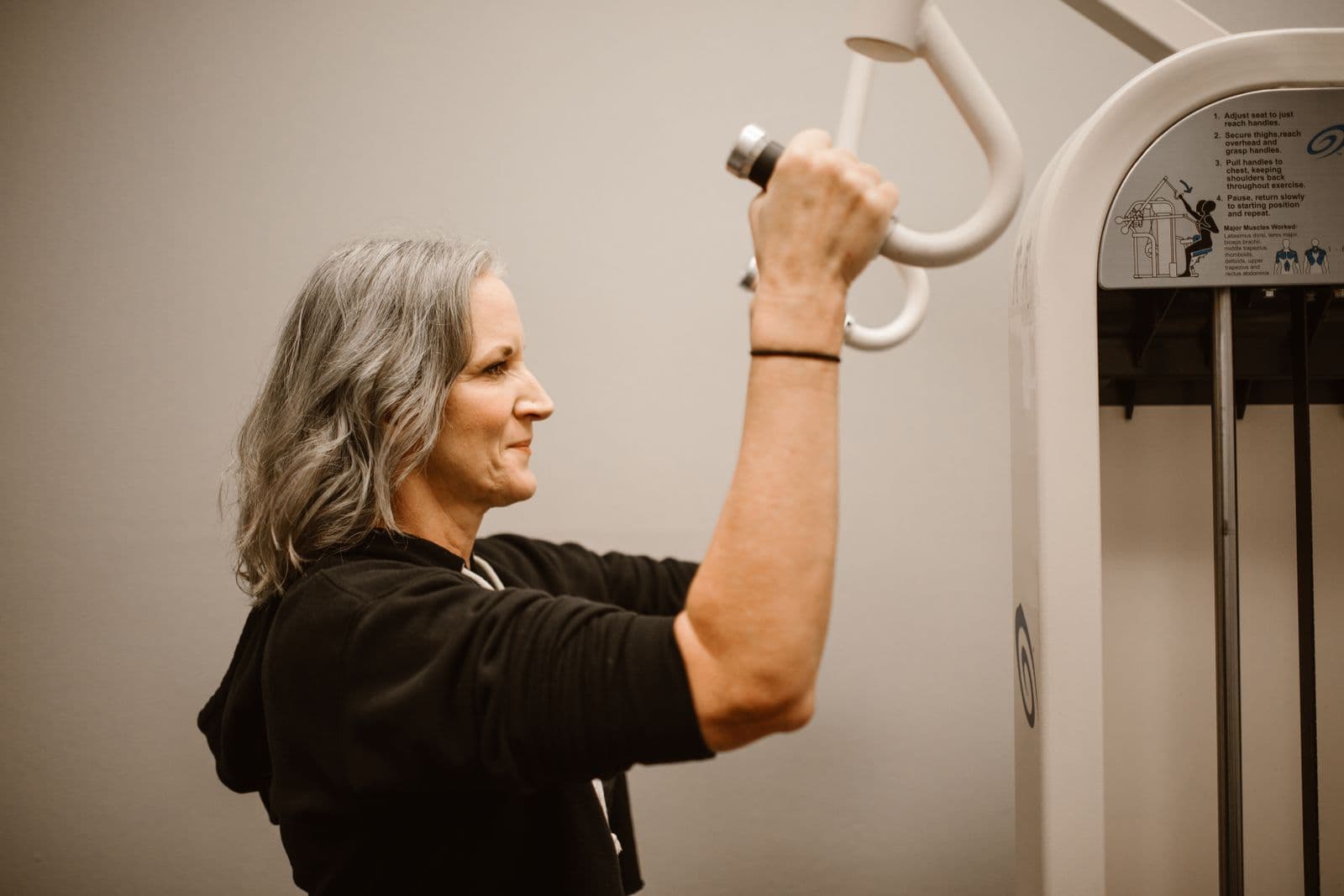
If you’re a woman in or near the menopause transition, the practical message is that this is the time to load your skeleton deliberately. The research reviewed later suggests progressive resistance training plus impact work is the combination most likely to slow or partly offset loss in these years.
A few specifics:
- Prioritize the spine and hip. Squats, deadlift patterns, lunges, step-ups, and loaded carries put useful strain through both.
- Lift heavy enough to matter. Bone responds to strain that’s high relative to what it’s used to. Light weights for many repetitions build endurance, but they don’t send much of a bone signal. Most guidance aims for loads you can lift about 8 to 12 times with good form, with the last couple of reps feeling hard. Some programs, carefully progressed, go heavier.
- Add impact if your joints and bones allow. Small jumps, hops, skipping, or brisk stair work. The section on impact training explains how to start.
- Don’t wait for a diagnosis. Most of the bone you’d be protecting is bone you still have.
Men: a slower, quieter slope
Men don’t have a menopause. Testosterone declines gradually with age, and some of that testosterone is converted to estrogen in the body, which turns out to be important for male bone too. Bone loss in men tends to be slower and steadier, and men start with larger, denser bones.
So men break bones later, on average about a decade later than women. But by their late 70s and 80s, men are breaking hips at substantial rates, and as noted above, they do worse afterward. One U.S. hospital study of hip fracture patients found that 12-month mortality was 32 percent in men compared with 17 percent in women. At discharge, only 4.5 percent of the men received any osteoporosis treatment, compared with 27 percent of the women.
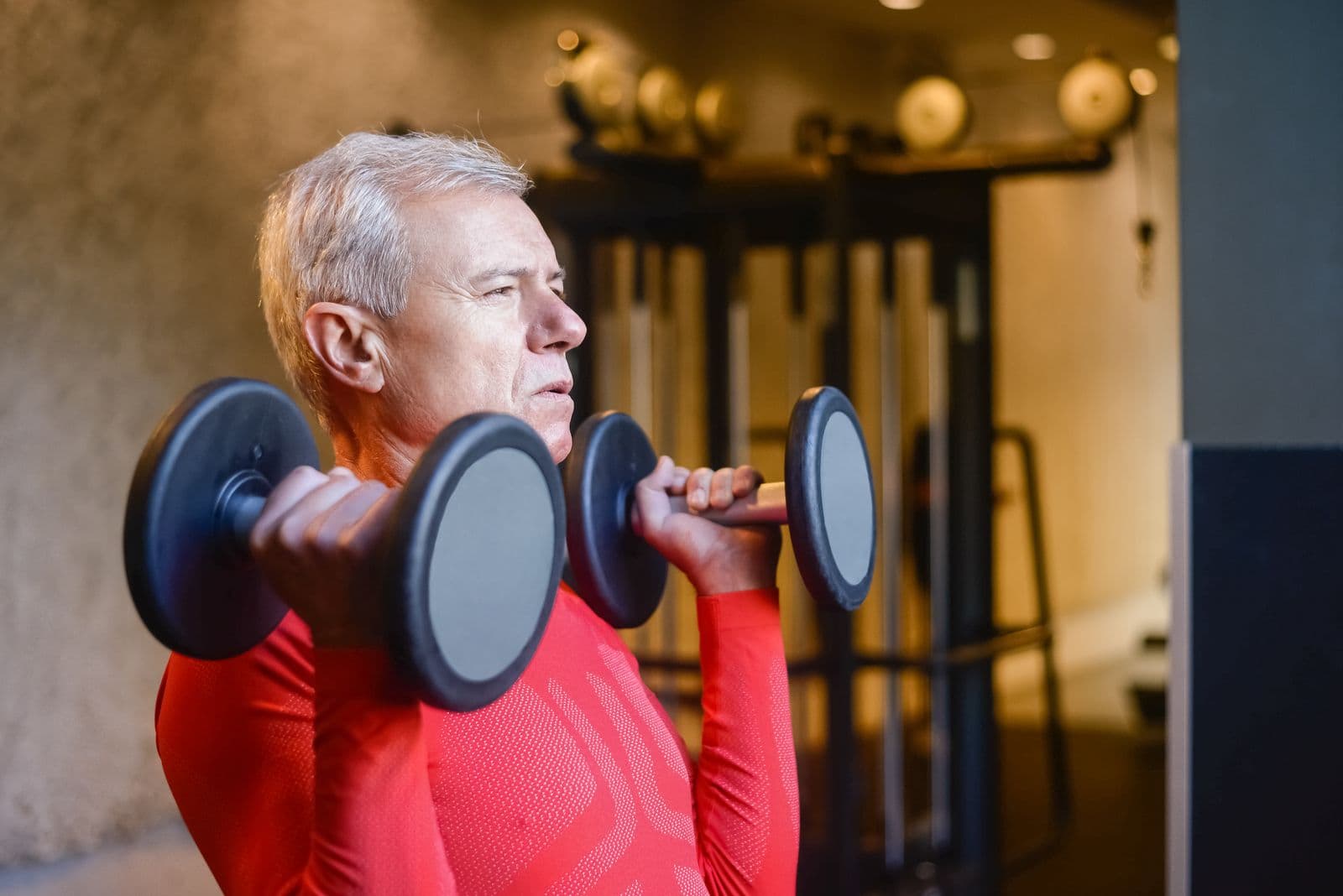
Practically, a man over 50 should take three things seriously: any fracture from a minor fall, any loss of height, and any medication or condition that affects bone (long-term steroids, androgen-deprivation therapy for prostate cancer, heavy drinking, low testosterone). Men respond to bone-loading exercise too. A companion trial to LIFTMOR, called LIFTMOR-M, ran a similar high-intensity program with 93 men averaging 67 years old who had low bone density, and the researchers concluded it was safe and more effective than the machine-based alternative they compared it against.
Practical implications for women in their 50s
If you’re a woman between about 48 and 60, here’s a short list worth acting on:
- Know your risk factors. Early menopause (before 45), low body weight, smoking, a parent who broke a hip, long-term steroid use, and a previous fracture all raise risk.
- Ask about a fracture-risk assessment at your next check-up, especially if any of those apply. If your estimated risk is elevated, a DXA scan before 65 is consistent with current screening guidance.
- Talk through menopause treatment options, including whether hormone therapy makes sense for you, with bone health as part of the discussion.
- Start or upgrade your strength training now. Two sessions a week, progressing toward genuinely challenging loads, is the core.
- Get your calcium from food where possible, aim for adequate protein, and don’t count on a vitamin D pill to do the heavy lifting. The nutrition section has the numbers.
Who’s at risk, and when to get a scan
Some risk factors you’re born with or can’t change. Others you can. It helps to see them side by side, because the ones you can’t change tell you how seriously to take the ones you can.
| Can’t change | Can change, or can be treated |
|---|---|
| Age | Physical inactivity, especially little strength or impact work |
| Female sex | Smoking |
| Early menopause (before 45) or removal of ovaries | Drinking more than about two drinks a day |
| A parent who broke a hip | Low body weight or recent unintended weight loss |
| Your own previous fragility fracture | Low calcium and protein intake |
| Small, slender build | Medications that accelerate bone loss (reviewable with your clinician) |
| Some ethnic backgrounds (risk is highest in white and Asian women on average, though fractures happen in every group) | Conditions that impair absorption or hormone levels, many of which are treatable |
| Rheumatoid arthritis and certain other chronic diseases | Fall risks: poor balance, weak legs, vision problems, home hazards, sedating medications |
Medications worth asking about
If you take any of these regularly, it’s reasonable to ask whether your bones should be monitored:
- Glucocorticoids (prednisone and similar), especially at moderate doses for three months or more. This is the most common cause of medication-related osteoporosis.
- Aromatase inhibitors for breast cancer and androgen-deprivation therapy for prostate cancer, both of which lower sex hormones sharply.
- Excess thyroid hormone, whether from an overactive thyroid or a replacement dose that’s set too high.
- Some anti-seizure medications.
- Long-term proton pump inhibitors for acid reflux, where associations with fracture have been reported (the evidence is mixed, but it’s a fair question to raise if you’ve been on one for years without a clear reason).
- Medications that raise fall risk rather than harming bone directly: sleeping pills, some antidepressants, sedating antihistamines, blood pressure medications that cause dizziness on standing.
Don’t stop any medication on your own. Many of these are essential, and the fix is usually monitoring, dose adjustment, or adding bone protection.
What the screening guidelines say
In January 2025, the U.S. Preventive Services Task Force updated its recommendation on osteoporosis screening. It recommends screening all women 65 and older, and also postmenopausal women younger than 65 who are at increased risk of an osteoporotic fracture. Both are grade B recommendations, the Task Force’s way of saying the benefit is clear enough to recommend routinely.
For women younger than 65, the Task Force suggests clinicians first estimate risk using a tool, then scan those who come out at higher risk. Options include FRAX (the Fracture Risk Assessment Tool), the Garvan calculator, and the simpler Osteoporosis Self-assessment Tool. The Task Force also cautions that many of these tools are less accurate at predicting fracture risk in Asian, Hispanic, and Black populations, which is something both you and your clinician should keep in mind if you fall into one of those groups.
For men, the Task Force concluded that the evidence is insufficient to recommend for or against routine screening. That isn’t the same as saying men shouldn’t be screened. It means the trials haven’t been done to prove that screening men prevents fractures. Several professional societies do recommend testing men at higher risk, and the Task Force itself tells clinicians to use their judgment and encourages anyone concerned about their bones to talk to their clinician.
How much does screening help? In the evidence review behind the 2025 recommendation, screening older high-risk women reduced hip fractures by about 17 percent compared with usual care, which worked out to five or six fewer fractures for every 1,000 women screened.
FRAX, in plain English
FRAX is a free calculator developed at the University of Sheffield that estimates your ten-year probability of a hip fracture and of a “major osteoporotic fracture” (hip, spine, wrist, or shoulder). It uses your age, sex, weight, height, previous fractures, parental hip fracture, smoking, steroid use, rheumatoid arthritis, secondary causes, alcohol intake, and, if you have one, your femoral neck bone density.
You can run it yourself online. The number won’t diagnose anything, but it’s a useful way to walk into an appointment with a concrete question: “My FRAX estimate is X. What does that mean for me?”
FRAX has limits. It doesn’t account for how many fractures you’ve had or how recent they were, it doesn’t include falls, and it underweights some risks. Treat it as a starting point.
Red flags that should move you up the line
Don’t wait for a routine screening if any of these apply:
- You’ve broken a bone from a fall from standing height or less since turning 50.
- You’ve lost about an inch and a half (around 4 cm) or more of height, or a clinician has noticed new rounding of your upper back.
- You’ve had a sudden episode of mid-back pain without a clear injury.
- You’re starting long-term steroids or a hormone-blocking cancer treatment.
- You’ve had several falls in the past year, or one fall that injured you.
The fracture that predicts the next one
One more thing about previous fractures, because it’s routinely overlooked. After a fragility fracture, the risk of another one is highest in the next one to two years, a period researchers call “imminent risk.” A 2022 meta-analysis found that the pooled incidence of a second fracture was about 7.6 percent in the first year and 11.6 percent within two years, and in studies with longer follow-up, roughly half of all re-fractures happened in those first two years.
So a wrist fracture at 58 means more than a cast and six weeks of inconvenience. It’s a warning sign, and it deserves a bone-health evaluation right away. If your orthopedic visit ended with “it’s healed, you’re done,” ask for a referral. Many hospitals now run Fracture Liaison Services specifically to catch people in this window.
How bone decides to get stronger
In the 1890s, the German surgeon Julius Wolff proposed that bone adapts its structure to the loads placed on it. A century later, the American researcher Harold Frost refined the idea into what he called the mechanostat: bone behaves like a thermostat for strain. If strain stays below a certain threshold for long enough, as in bed rest or space flight, the body decides that bone isn’t needed and removes it. If strain regularly exceeds the threshold, bone adds material where it’s needed.
The threshold isn’t fixed. Hormones, age, and medications can shift it. That’s one reason menopause has such an outsized effect: it essentially resets the thermostat so that ordinary daily activity no longer looks like enough.
The kinds of strain bone cares about
From decades of animal and human research, a few principles have emerged about which loads bone pays attention to:
- Magnitude. Bigger loads produce bigger signals. Lifting something genuinely heavy for you matters more than lifting something light many times.
- Rate. Loads applied quickly, like the jolt of landing from a small jump, are more stimulating than the same force applied slowly.
- Novelty and direction. Bone adapts to the loads it’s used to and then stops responding. Loads from unusual angles, such as a sideways hop, a change of direction, or carrying something on one side, seem to wake it up.
- Brief bouts work. Bone cells become less responsive after a short burst of repeated loading. Studies suggest a small number of high-quality loading cycles, spread out with rest, does about as much as a long session. That’s why many bone programs use sets of 10 to 20 jumps rather than an hour of jumping.
Put those together and you get an exercise prescription that looks different from what most people think of as “staying active”: short, varied, relatively intense loading, repeated a few times a week.
What the trials actually show
LIFTMOR is the most striking example, so it’s worth looking at it closely.
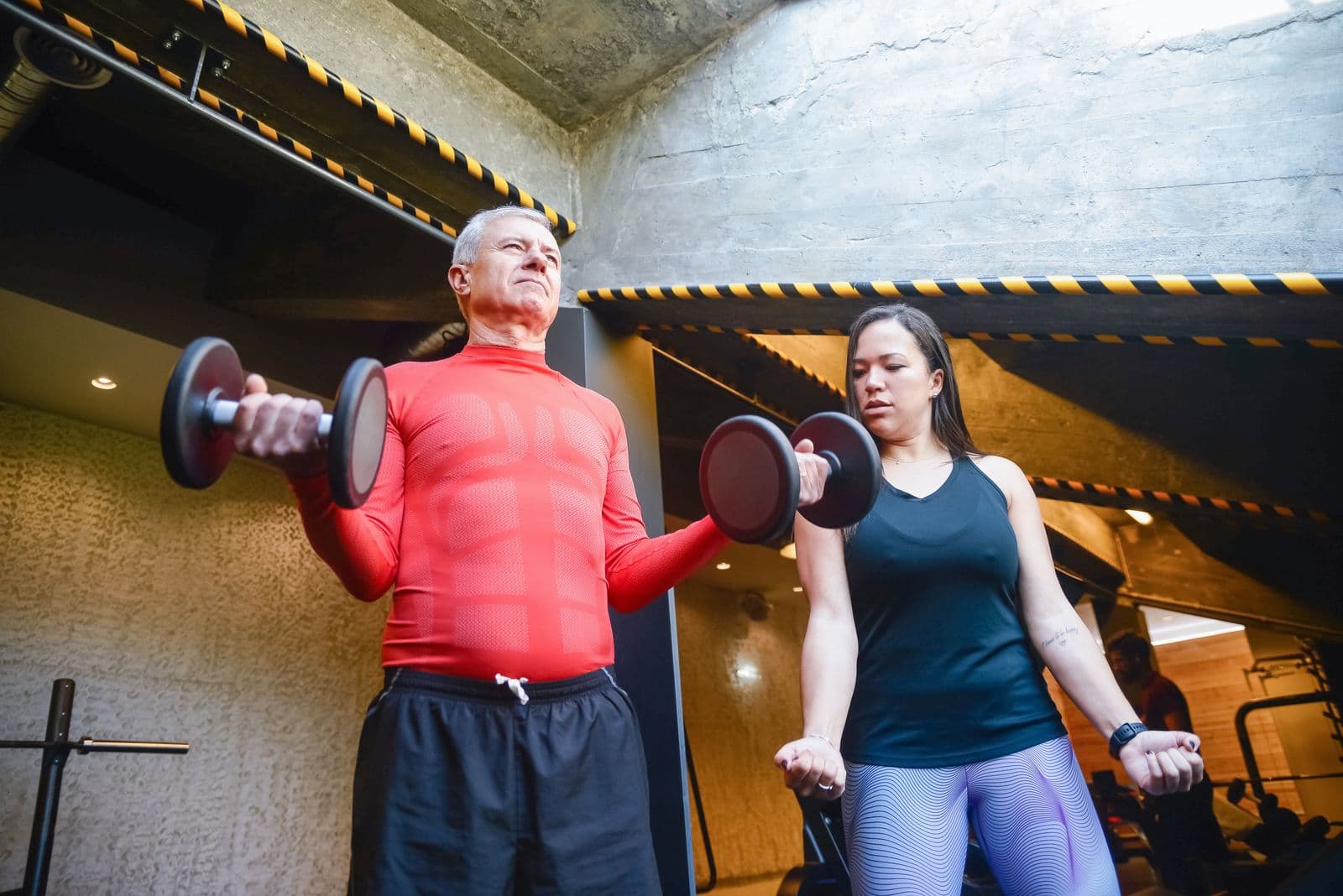
The women in the trial were postmenopausal with T-scores below −1.0 at the hip or spine. They were randomly assigned either to eight months of supervised high-intensity resistance and impact training twice a week, or to a home program of low-intensity exercise for the same time. The high-intensity group trained in 30-minute sessions built around three lifts (deadlift, back squat, and overhead press) done for five sets of five repetitions at more than 85 percent of their one-repetition maximum, plus an impact exercise. Everyone started light and worked up over the first weeks with close attention to technique.
The results, published in the Journal of Bone and Mineral Research:
- Lumbar spine density: +2.9 percent in the training group versus −1.2 percent in the control group.
- Femoral neck density: +0.3 percent versus −1.9 percent.
- Femoral neck cortical thickness, a structural measure: improved more in the training group.
- Height: +0.2 cm versus −0.2 cm.
- Physical function (timed up-and-go, functional reach, sit-to-stand, back and leg strength): better in the training group on every measure.
- Safety: one minor lower back spasm. Compliance was about 92 percent in the training group.
A follow-up analysis of spine X-rays from the same trial found no new vertebral fractures in the high-intensity group and some improvement in thoracic kyphosis, the forward rounding of the upper back.
Now the caveats, which are real. The researchers screened 568 women to enroll 101, excluding many with conditions or medications that affect bone or physical function. Every session was supervised by trained staff. And a gain of 2.9 percent at the spine, while meaningful, doesn’t turn osteoporosis into normal bone. The trial also wasn’t large or long enough to measure whether fractures actually went down.
What LIFTMOR does show, convincingly, is that a carefully selected and supervised group of women with low bone mass could tolerate heavy loading and that their bones responded. The senior author, Belinda Beck, described the key as introducing loads gradually and paying close attention to technique.
The broader research base points the same direction. Meta-analyses of exercise trials in postmenopausal women generally find that combined programs, meaning progressive resistance training together with moderate- to high-impact weight-bearing exercise, produce the most consistent benefits at the hip and spine. The effects are modest, typically in the range of one to three percent compared with doing nothing. But keep in mind what doing nothing looks like at 55: losing a percent or two a year.
The Royal Australian College of General Practitioners’ guidance summarizes it bluntly: moderate- to high-impact weight-bearing activities and progressive resistance training are the most effective exercise for increasing or maintaining bone density, and there’s minimal evidence of benefit for low-intensity resistance training or low-impact activity on its own.
Bone responds where you load it
Exercise effects on bone are site-specific. Bone adapts where the strain lands. Tennis players have measurably denser bones in their racket arm than in their other arm. That has a practical consequence: to protect your hip, you have to load your hip, and to protect your spine, you need exercises that load the spine safely.
- Hip: squats, deadlifts, lunges, step-ups, hops and jumps, and lateral movements.
- Spine: standing loaded movements like deadlifts and carries, overhead presses, and back-extensor strengthening. The spine responds to compressive load through the axial skeleton and to the pull of the back muscles.
- Wrist and forearm: weight-bearing through the arms (wall or incline push-ups, planks on hands), grip work, and carries. The wrist is harder to load than the hip, and evidence for exercise effects there is thinner.
The activities that don’t do much for bone
This is where a lot of fit, active people get an unwelcome surprise.
Swimming and water exercise are wonderful for the heart, joints, and mood. But water takes away most of the body’s weight, so the skeleton gets very little load. Lifelong competitive swimmers often have bone densities no better than sedentary people.
Cycling is similar. In a 2018 study of elite Norwegian endurance athletes, road cyclists had lower bone density than runners at every site measured, and 10 of the 19 cyclists met criteria for low bone density, despite reporting heavy lower-body resistance training. One male cyclist had osteoporosis in his spine. The study couldn’t separate out all the possible causes (low energy intake and calcium lost through heavy sweating may play a role), but the pattern matches other research on cyclists.
Walking is the most common bone advice and the most overrated. It’s excellent for health generally, and it’s better than sitting. But for most adults, walking at a usual pace is a load the skeleton has seen every day for decades. It doesn’t cross the threshold that tells bone to build. Walking may help slow losses a little, especially in very inactive people, and brisk walking with hills or a weighted pack does more than a stroll. But it isn’t enough on its own.
None of this is a reason to give up the activities you love. If you’re a cyclist, keep riding. Just add the things cycling doesn’t give you. Think of swimming and cycling as heart and lung exercise, and strength and impact work as bone exercise. You need both.
What results are realistic
What to expect, honestly, from a well-designed program over a year or two:
- Slowing or stopping loss: the most common result. Given that the alternative is ongoing decline, this is a real win.
- Small gains: one to three percent at the spine or hip in many trials, sometimes more with high-intensity programs.
- Large gains that turn osteoporosis into normal density: uncommon from exercise alone. If your fracture risk is high, exercise is a partner to medication, not a replacement.
- Better strength, balance, and function: almost universal, often within weeks. And these may reduce fracture risk more than density changes do, because they reduce falls.
The last point matters most in daily life. A one percent change in density is hard to feel. Being able to stand up from a low chair without using your hands, or catch yourself when you stumble, is something you’ll notice on a Tuesday afternoon.
The bone-building training plan, piece by piece
The UK’s Royal Osteoporosis Society convened an expert panel to write a consensus statement on exercise for people with osteoporosis, published in the British Journal of Sports Medicine in 2022. It organizes recommendations under three words: strong (build bone and muscle), steady (improve balance and prevent falls), and straight (protect posture and the spine). It also states a principle worth taping to the fridge: people with osteoporosis should be encouraged to be more active, with a “how to” rather than a “don’t do” approach.
Most of what follows draws on that statement and on the Australian evidence behind LIFTMOR, adapted for people who aren’t in a supervised trial.
Progressive resistance training: the foundation
How often: two or three days a week, on non-consecutive days.
How long: about 20 to 30 minutes of actual lifting is enough.
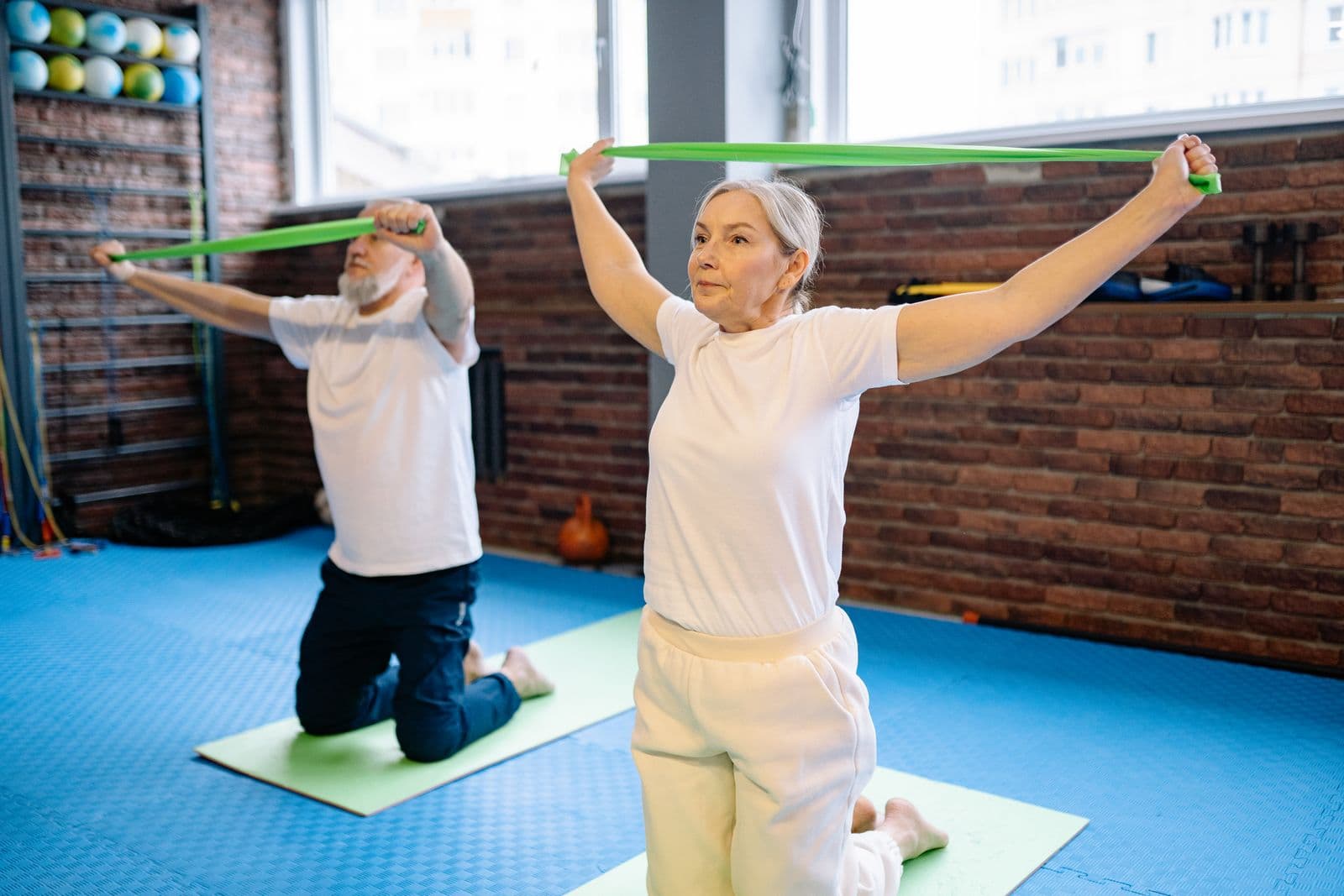
How hard: this is where most people undershoot. The Royal Osteoporosis Society’s guidance is to build up to three sets of 8 to 12 repetitions using the most weight you can lift with good form for that range. If you could easily do 20, it’s too light to count as bone training.
What to train: big, multi-joint movements that load the legs, hips, and spine, plus the upper body and back.
How to progress: increase the weight when you can complete all your sets and reps with good form and a rep or two in reserve. Small jumps are fine: a pound or two for upper-body exercises, a few pounds for lower body.
Here are the movement patterns that matter most, with why they matter and a starting version for each:
| Pattern | Example exercises | Why it matters for bone | Easier starting version |
|---|---|---|---|
| Squat | Goblet squat, box squat, barbell back squat | Loads hips, thighs, and spine; builds the strength to get up from chairs and the floor | Sit-to-stand from a firm chair, arms crossed |
| Hip hinge | Romanian deadlift, trap-bar deadlift, kettlebell deadlift | Strong load through hip and spine; trains back extensors | Hip hinge with a dowel along the spine, then a light kettlebell from a raised block |
| Lunge and step | Split squat, reverse lunge, step-ups | Loads one leg at a time; builds balance alongside strength | Supported split squat holding a counter |
| Push | Wall or incline push-up, dumbbell press, overhead press | Loads arms, shoulders, wrists, and, when standing, the spine | Wall push-up |
| Pull | Seated row, band row, lat pulldown | Strengthens upper back to support posture | Band row anchored to a door |
| Carry | Farmer’s carry, suitcase carry (one side) | Loads the whole frame; trains grip and trunk stability | Carrying grocery bags with good posture |
| Back extension | Prone press-up, “superman” lifts, bird dog | Strengthens spinal extensors linked to fewer vertebral fractures | Standing back extension against a wall |
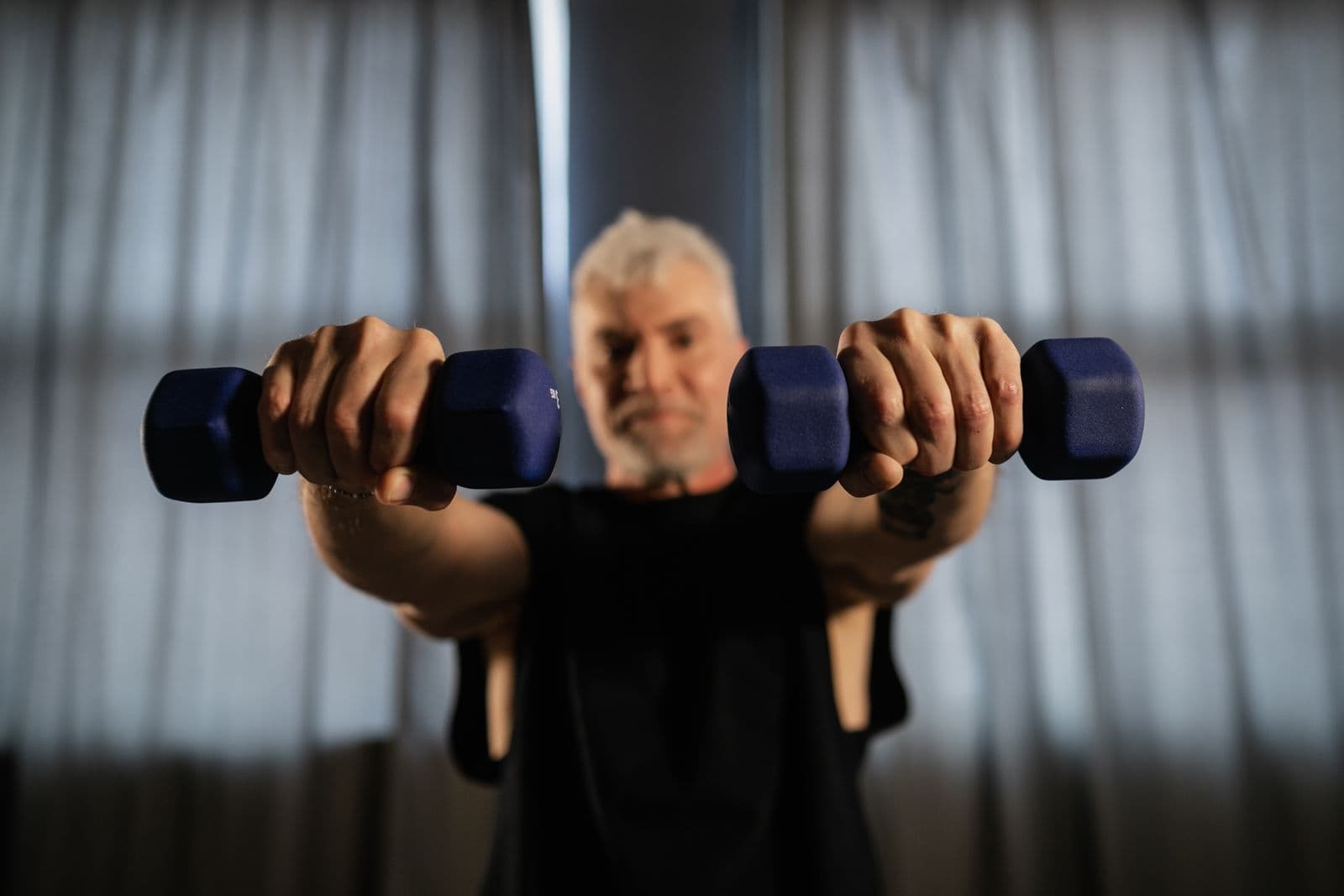
A couple of form principles apply across all of these:
- Hinge at the hips, not the waist. When you pick something up, your spine should stay long and neutral while your hips move back. This is the single most important movement skill for anyone with low bone density.
- Brace before you lift. Take a breath, gently tighten the abdomen as if someone were about to poke you, then move. Exhale through the effort or at the top.
- Control the lowering. Two or three seconds down, steady up.
Impact training: small jolts, big signal
Impact means any movement where you briefly leave the ground or strike it with force, so bone receives a quick, high-rate load.
The Royal Osteoporosis Society recommends that most people with osteoporosis who don’t have vertebral fractures build up to about 50 moderate impacts on most days. The panel’s authors specify 50 impacts on each leg, with rest pauses in between. Australia’s RACGP guidance suggests breaking these into short bouts, such as five sets of ten, and including movements in different directions.
That’s a few minutes a day. You can do it while the kettle boils.
A progression ladder for impact (move up a rung only when the current one feels easy and causes no pain):
- Heel drops. Rise onto your toes, then drop onto your heels with a firm thud. Hold a counter if needed.
- Marching or stamping in place, deliberately heavy.
- Stair work. Walking briskly up stairs, then trying two at a time if safe, with a handrail.
- Low jumps. Tiny two-footed jumps on the spot, landing softly through the balls of the feet with knees slightly bent.
- Skipping with an imaginary or real rope.
- Hops and directional jumps. Single-leg hops, side-to-side jumps, jumps forward and back.
- Jogging, dancing, racket sports, or jumping from a low step for those whose bones, joints, and balance can handle it.
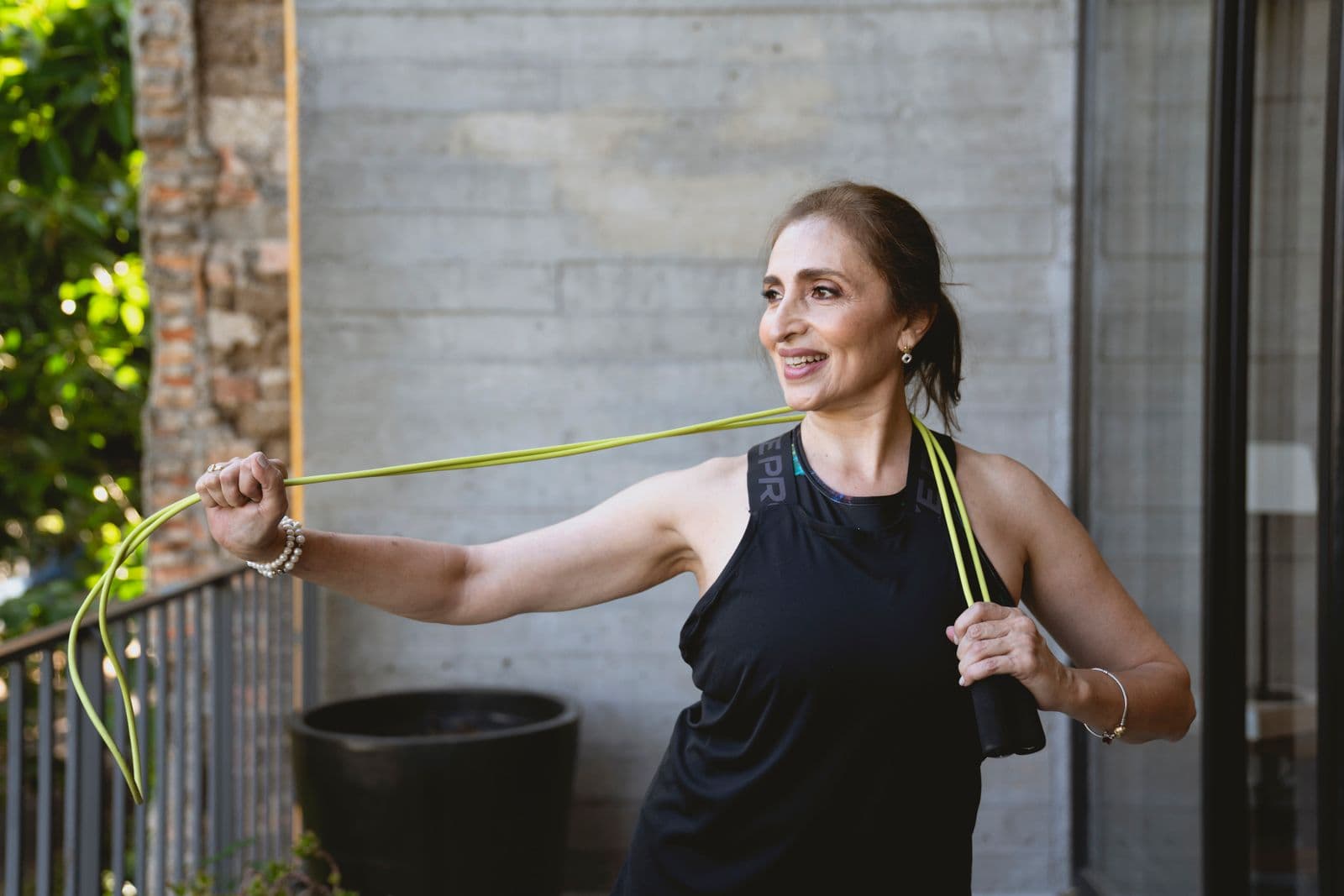
Safety note for impact work: if you’ve had a vertebral fracture, have multiple fragility fractures, are very frail, or have poor balance, the Royal Osteoporosis Society advises lower-impact activity instead: up to the level of brisk walking, building toward about 20 minutes on most days. Knee or hip arthritis may also call for lower-impact options. Pelvic floor problems, common after childbirth and menopause, can make jumping uncomfortable; a pelvic health physiotherapist can help you build up to it.
Combination is the point
The strongest evidence is for programs that combine progressive resistance training with impact. Resistance training provides high-magnitude strain. Impact provides high-rate strain. Together they cover more of what bone responds to, and they strengthen the muscles that protect you in a fall.
A sensible weekly skeleton:
- 2 or 3 resistance sessions (20 to 30 minutes each)
- Impact on most days (a few minutes; can be tacked onto a walk or warm-up)
- Balance work on 2 or 3 days, or built into your strength sessions (covered in the next section)
- Back-extensor exercises on 2 or 3 days (they fit easily into a strength session)
- Plus your general activity: walking, cycling, swimming, gardening, whatever keeps you moving and enjoying it
What about vibration plates and other gadgets?
Whole-body vibration platforms have been studied for bone with mixed and generally modest results. Some trials show small benefits at the hip or spine in postmenopausal women; many show nothing meaningful. They may have a role for people who can’t do other loading, but they aren’t a shortcut, and high-intensity platforms can be unsafe for people with certain conditions.
Isometric axial compression devices, machines that let you push maximally against a fixed resistance, were tested in the LIFTMOR-M trial in men and came out less effective than conventional high-intensity resistance and impact training. An exploratory safety analysis also raised some concern about vertebral fractures with the machine-based approach, though the numbers were small.
Weighted vests add load to walking and bodyweight exercises. They can be useful for progressing impact or step work, but start light, check with a clinician if you have spinal fractures, and remember a vest is still a fairly low, slow load compared with lifting.
Steady: the fall you don’t have can’t break anything
If more than 95 percent of hip fractures come from falls, then preventing falls is fracture prevention, possibly the most powerful kind available. Of all the interventions in this article, the evidence here is the strongest.
A 2019 Cochrane review led by Cathie Sherrington pulled together 108 randomized trials involving more than 23,000 people living in the community, average age 76. Across 59 trials, exercise reduced the rate of falls by 23 percent, rated as high-certainty evidence. To make that concrete, the authors estimated that if 1,000 people would have had 850 falls in a year without exercise, an exercise program would prevent about 195 of them.
The type of exercise mattered:
- Balance and functional exercises reduced the rate of falls by about 24 percent (high certainty).
- Programs combining several types, usually balance and functional work plus resistance training, probably reduced falls by about 34 percent.
- Tai chi may reduce falls by about 19 percent (low-certainty evidence, partly because there were fewer trials).
- Resistance training alone, dance, or walking programs: the effects on falls were uncertain.
That last line is interesting. Strength is necessary but not sufficient. You can have strong legs and still fall if you’ve never practiced catching yourself. Balance is a skill, and skills need practice.
The review also found, with lower certainty, that exercise may reduce the number of people having fall-related fractures by about a quarter.
Why falls get more likely
The reasons someone falls are usually a mix of what’s happening inside the body and what’s happening around it. The internal, or intrinsic, factors tend to accumulate quietly after 50:
- Slower reaction time and less powerful leg muscles, especially the ability to generate force quickly
- Reduced sensation in the feet
- Changes in vision, including slower adjustment to low light and reduced depth perception with bifocals or progressive lenses
- Inner-ear changes that affect balance
- Drops in blood pressure on standing up
- Medications that cause drowsiness or dizziness
- Joint pain that changes how you walk
- Fear of falling, which leads to stiff, shuffling movement and, ironically, more falls
Most falls happen during ordinary activities: turning around quickly in a kitchen, stepping down off a curb, reaching up to a high shelf, getting up at night to use the bathroom. Recognizing your own risky moments is half the battle.
Lower-body power: the overlooked piece
Strength is how much force you can produce. Power is how quickly you can produce it. When you trip, you have a fraction of a second to get a foot out in front of you. That’s a power task.
Power declines faster than strength with age. The fix is to include some deliberately fast movements in your training once you have a base of strength: standing up from a chair as quickly as you safely can, then sitting down slowly; quick step-ups; brisk marching; and, for those ready for it, small jumps. Move fast on the way up, slow and controlled on the way down.
Tai chi deserves its reputation
Tai chi looks gentle, but it’s a sneaky-hard balance workout. Slow weight shifts, single-leg moments, turning and stepping in different directions: all the things balance needs.
One of the best-known trials, published in 2005 by Fuzhong Li and colleagues in Oregon, randomly assigned 256 inactive adults aged 70 to 92 to either tai chi three times a week or a stretching program for six months. The tai chi group had about half as many falls (38 versus 73), and after adjusting for other factors their risk of multiple falls was 55 percent lower. They also reported less fear of falling, and the benefits held up six months after the classes ended.
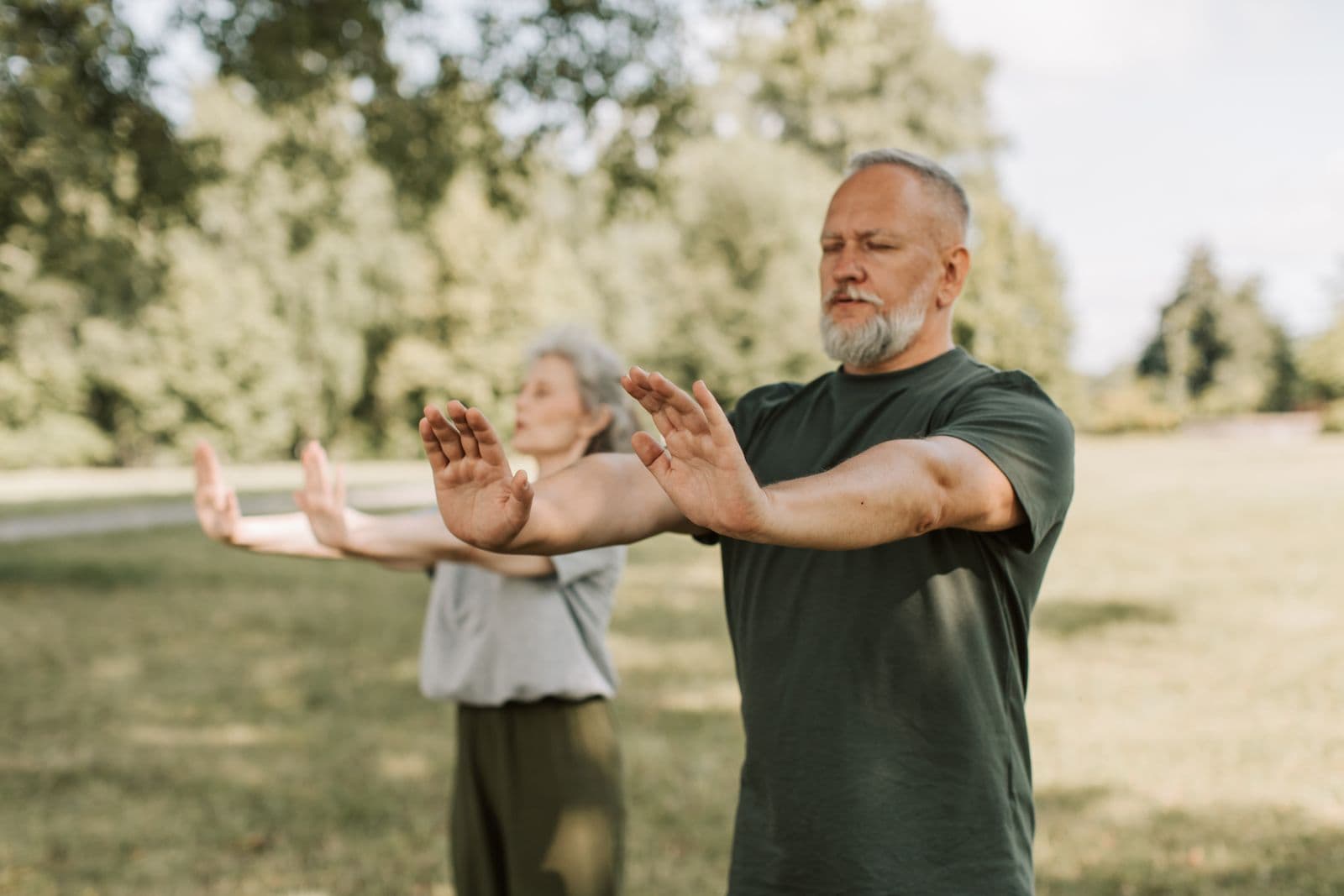
How much balance training is enough?
For people at higher risk of falling, the Royal Osteoporosis Society’s consensus panel recommends strength and balance training that’s challenging, ideally individualized and taught by a health or exercise professional, and done for at least three hours a week over at least four months. That’s more than most people expect. It doesn’t have to be all formal exercise; tai chi classes, dance, and balance work woven into daily routines all count.
For people who aren’t at particular risk, two or three sessions a week of challenging balance work, built into your strength routine, is a reasonable target.
The key word is challenging. If a balance exercise feels easy, it isn’t training anything.
Practical balance drills, from first steps to advanced
Do these near a counter, sturdy chair, or wall, and progress only when you can do the current level steadily for the full time.
Level 1: Stable base
- Stand with feet together, 30 seconds.
- Stand with one foot slightly ahead of the other (semi-tandem), 30 seconds each side.
- Sit-to-stand from a chair without using your hands, 10 times.
Level 2: Narrow base and weight shifts
- Heel-to-toe stand (tandem), 30 seconds each side.
- Single-leg stand holding the counter lightly with one fingertip, 10 to 30 seconds each side.
- Heel-to-toe walking along a hallway, 10 steps, turn, return.
Level 3: Remove support, add movement
- Single-leg stand without support, building to 30 seconds.
- Single-leg stand while turning your head slowly side to side.
- Walking with head turns, then walking while saying the months of the year backward (this “dual-task” practice mimics real life, where you’re rarely thinking only about balance).
- Step-ups onto a low step, slowly, alternating legs.
Level 4: Reactive and dynamic
- Single-leg stand on a folded towel or cushion.
- Single-leg stand with eyes closed, near support, a few seconds at a time.
- Quick steps: from standing, step out fast in different directions (forward, sideways, back) as if catching yourself, then return.
- Side-stepping, grapevine stepping, and walking backward.
- Tai chi forms, dance classes, or agility ladders for those who enjoy them.
Reactive stepping has its own small evidence base. Several research groups have tested training where people practice recovering from small, controlled slips or pushes, and results suggest it can reduce falls. You can practice a mild version at home with quick-step drills, but true perturbation training is best done with a physiotherapist.
Fear of falling is a real obstacle, and it’s treatable
Fear of falling can be as disabling as a fall itself. People who fear falling often move less, which weakens muscles and dulls balance, which makes falls more likely. It’s a downward spiral, and it’s common after a fracture.
The approach that works is called graded exposure: deliberately practicing the things that feel risky in small, safe doses until they feel normal. Start with drills near a counter. Practice getting down to the floor and back up, at first using a sturdy chair for support. (Knowing you can get up after a fall removes a lot of the fear.) Walk on grass and gravel, not just smooth floors. Tai chi has good evidence for reducing fear of falling as well as falls themselves.
If fear is keeping you housebound, a physiotherapist or a community falls-prevention program is a good investment.
Beyond exercise: closing the other gaps
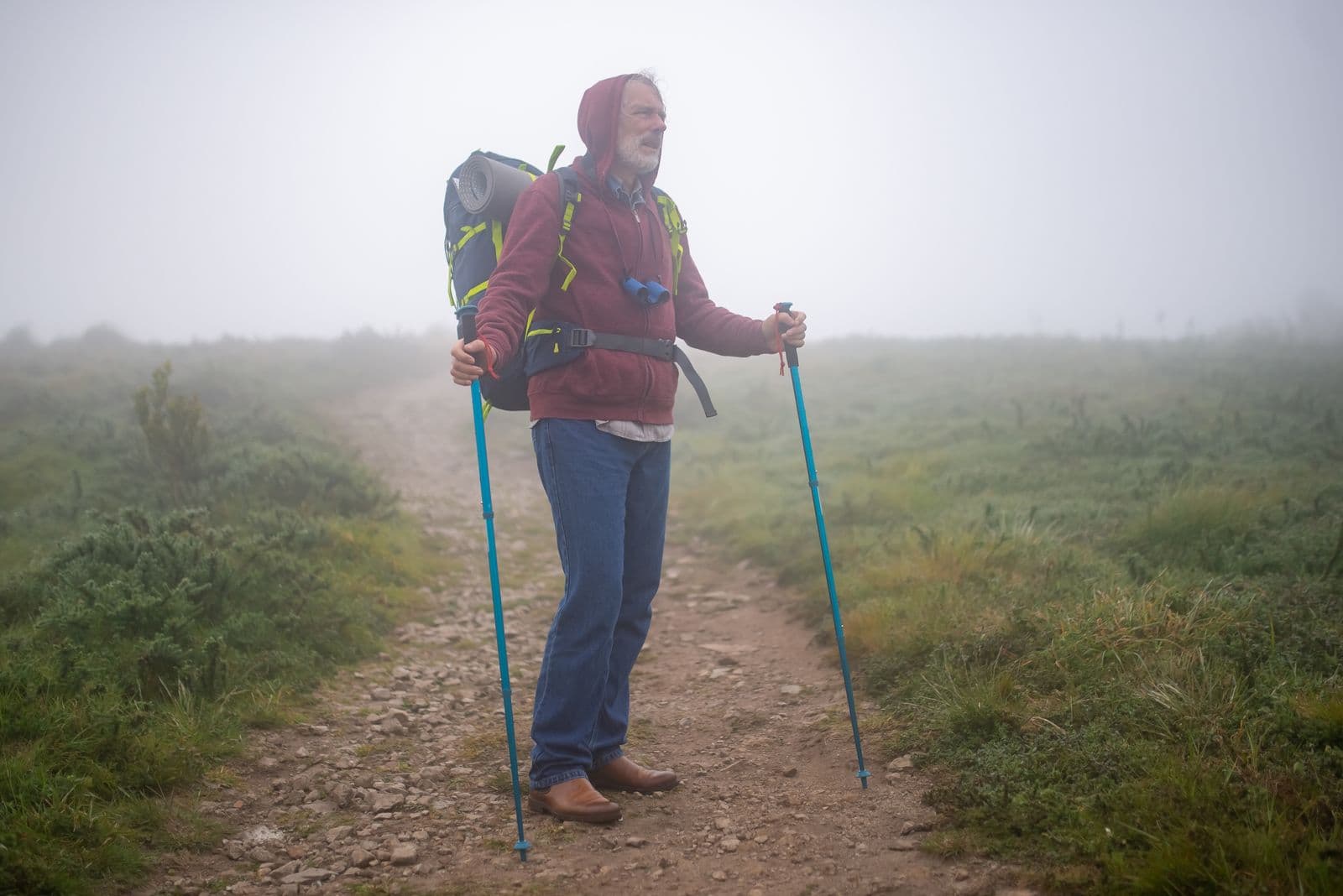
Exercise does a lot. It doesn’t do everything. Most falls involve some combination of the body and the environment, and most of the environmental fixes are cheap.
Your home
Most falls happen at home, which is good news of a sort, because home is the place you control.
- Light the path you take at night. Plug-in motion-sensor night-lights from bedroom to bathroom cost a few dollars each and address one of the riskiest trips of the day.
- Handrails on both sides of stairs, running the full length.
- Grab bars by the toilet and in the shower or tub. Towel bars aren’t designed to hold body weight.
- Non-slip mats in the bathtub and shower.
- Deal with throw rugs. Remove them, or secure them with double-sided tape or non-slip backing.
- Clear walkways of cords, shoes, pet toys, and stacks of anything.
- Put everyday items between waist and shoulder height so you’re not reaching overhead or bending to the floor constantly.
- A sturdy step stool with a handle, never a chair, when you must reach high.
Eyes, ears, and feet
Get your eyes checked every year or two. Cataracts, outdated prescriptions, and multifocal lenses all affect balance. Some people do better with a pair of single-vision distance glasses for walking outdoors, especially on stairs and curbs, where bifocals make the ground blurry right where you need to see it.
Hearing loss has been linked to higher fall risk too, possibly because the inner ear and balance systems are connected and because hearing helps you track your surroundings.
Feet matter more than people think. Choose shoes with a firm, thin, non-slip sole, a supportive heel counter, and a secure fit. Backless slippers and worn-down shoes are a common factor in home falls. If your feet are numb or painful, see a clinician or podiatrist.
Medication review
Ask your doctor or pharmacist for a full medication review at least once a year, specifically with falls and bones in mind. The big offenders for falls are sedatives and sleeping pills, some antidepressants, medications that lower blood pressure (particularly if you feel lightheaded when standing), and taking several medications at once. Sometimes the fix is a lower dose, a different drug, or a change in timing.
Smoking, alcohol, and weight
Smoking is directly toxic to bone and is linked to lower density and more fractures. Stopping at any age helps.
Alcohol in excess interferes with bone formation and increases falls. More than about two drinks a day is the commonly cited threshold where fracture risk rises.
Weight cuts both ways. Being underweight is a significant risk factor for bone loss and fracture. Rapid or unplanned weight loss also tends to take bone with it. If you’re losing weight on purpose, keep up your protein and strength training to protect bone and muscle while you do it. Severe obesity, meanwhile, raises fall risk and changes the pattern of fractures.
Hip protectors
Hip protectors are padded shields worn inside special underwear. In nursing homes, they modestly reduce hip fractures, but only if people actually wear them, which is the catch. For people living independently, the evidence of benefit is weak. They may make sense for someone at very high risk who falls frequently.
Medications for bone: a brief, balanced overview
If your fracture risk is high, medication is often the most effective single step you can take, and exercise works alongside it. The main options, briefly: Your clinician will help decide which, if any, fits you.
- Bisphosphonates (alendronate, risedronate, ibandronate as pills; zoledronic acid as a yearly infusion). These slow the demolition crew. They’re the most widely used, inexpensive, and well studied. Rare but serious side effects include atypical femur fractures and osteonecrosis of the jaw, both uncommon at standard doses and durations. Because bisphosphonates stay in bone, some people can take a planned “drug holiday” after several years.
- Denosumab (an injection every six months). Very effective: in its main trial, it reduced spine fractures by about two-thirds and hip fractures by about 40 percent over three years. One critical point: stopping denosumab without a plan can trigger rapid bone loss and multiple spine fractures within months. Expert groups such as the European Calcified Tissue Society advise that it should not be stopped without switching to another treatment, typically a bisphosphonate. Never just let the injections lapse.
- Anabolic (bone-building) drugs: teriparatide and abaloparatide (daily injections that stimulate the rebuilding crew) and romosozumab (a monthly injection that both builds bone and slows breakdown). These are usually reserved for people at very high risk or with multiple fractures, and they’re followed by an antiresorptive drug to keep the gains.
- Hormone therapy for appropriate women, discussed in the menopause section, and raloxifene, a drug that acts like estrogen on bone, mainly reducing spine fractures.
Many people are understandably nervous about bone medications after reading about side effects. That’s worth discussing openly. For someone at high risk, the risk of an untreated fracture is usually far larger than the risk of a rare drug complication. For someone at low risk, the calculation can be different.
Practical adaptations: training safely when bone is fragile
This is the section to read carefully if you’ve been told you have osteoporosis or have had a fracture. It covers which movements need rethinking and what to do instead, so you can keep training with confidence.
Why flexion is the main concern
The front part of each vertebra is the weakest part when bone is thin. When you bend forward through the spine, rounding your back, compressive force concentrates on that front edge. Add load, speed, or repetition and the risk of a wedge-type compression fracture rises.
The classic evidence comes from a small 1984 study at Mayo Clinic led by Mehrsheed Sinaki. Fifty-nine women with postmenopausal spinal osteoporosis and back pain were assigned to different exercise programs and followed with spine X-rays for one to six years. New wedging or compression fractures occurred in 16 percent of women doing back-extension exercises, 53 percent of those doing combined extension and flexion exercises, 67 percent of those doing no therapeutic exercise, and 89 percent of those doing flexion exercises like sit-ups. The study was small and not randomized in the modern sense, but its findings have been borne out by later work, and no one is eager to repeat it.
A later Mayo trial found the flip side. Postmenopausal women who did back-strengthening exercises for two years were followed for ten years, and those in the control group were 2.7 times more likely to have vertebral compression fractures.
Yoga is the area where this most often catches people out, because yoga is widely promoted as bone-friendly. A Mayo Clinic review of 89 patients referred between 2006 and 2018 for pain they attributed to yoga identified 29 bone injuries, including compression fractures, which appeared related to poses that put extra pressure on the vertebrae and discs. A separate case series described nine people, median age 66, who developed vertebral fractures after yoga-related spinal flexion. The researchers weren’t saying yoga is bad. They were saying that people with low bone density need to modify certain poses.
Movements to avoid or heavily modify
If you have osteoporosis, especially in the spine, or a previous vertebral fracture, treat these with caution:
- Loaded forward flexion of the spine: sit-ups, crunches, toe-touches, rounded-back lifting, rowing machines done with a rounded spine
- Deep forward folds in yoga and Pilates (seated forward bends, standing forward fold with a rounded back, plow pose, shoulderstand, rolling like a ball)
- Twisting under load or at end range, especially combined with bending: hard seated twists, golf or tennis swings with a forceful twist and fold, twisting to lift something from the floor
- Fast, uncontrolled movements into end range, like bouncing stretches
- Bending and lifting from the floor with a rounded back: laundry baskets, grocery bags, grandchildren, the dog
Notice that these are about how you move, not whether you move. The Royal Osteoporosis Society’s guidance is explicit that everyone with osteoporosis can benefit from advice on safe lifting and moving, with the aim of amending activities rather than banning them.
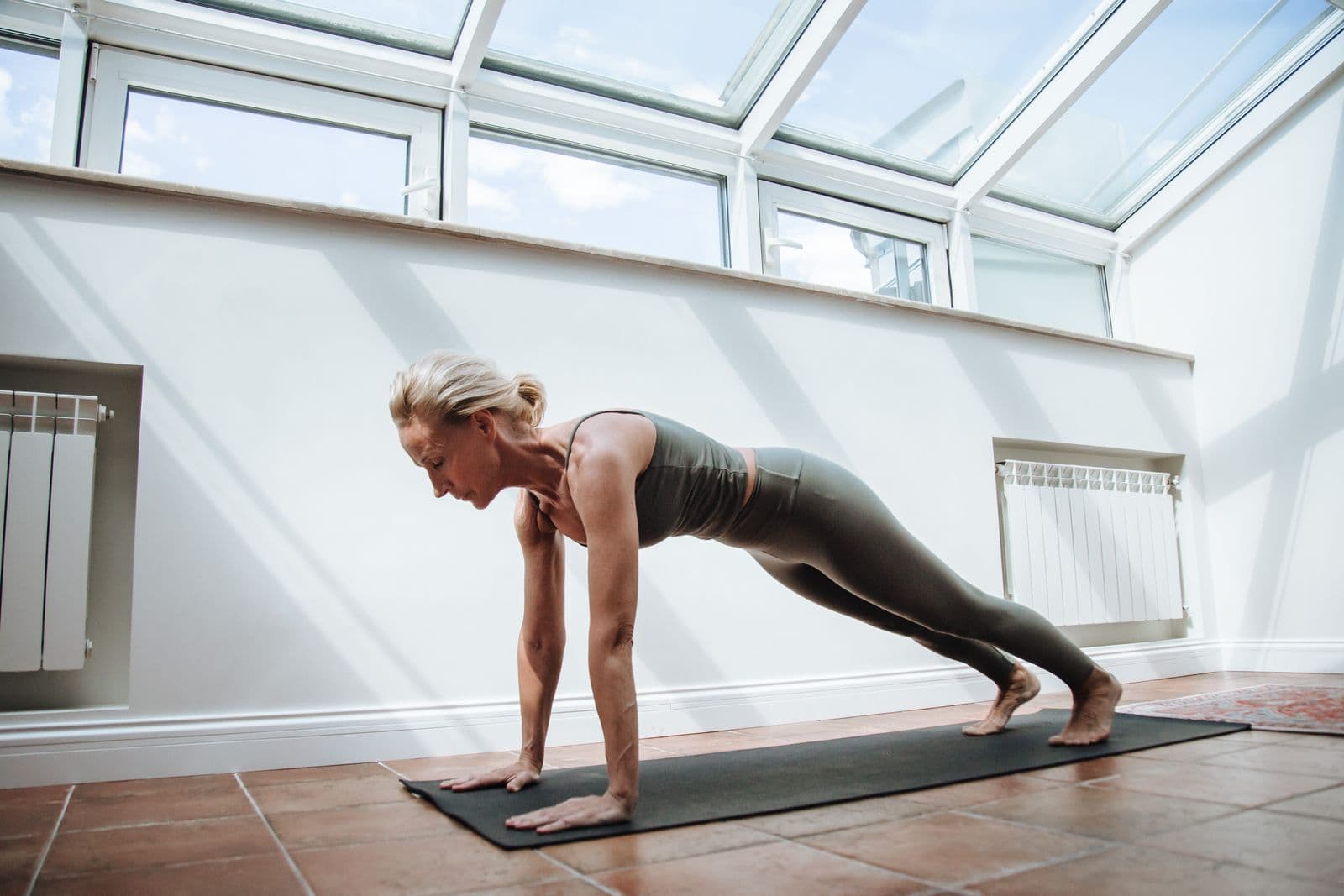
Spine-sparing alternatives
| Instead of | Try | What changes |
|---|---|---|
| Sit-ups or crunches | Planks (on knees or forearms on a bench), dead bugs, bird dogs, Pallof press | Core works to resist movement instead of flexing the spine |
| Toe-touch hamstring stretch | Lying hamstring stretch with a strap, back flat on the floor | Stretches the hamstrings while the spine stays neutral |
| Rounded-back lifting from the floor | Hip hinge or squat with spine long, object close to your body | Load goes through hips and legs, not the front of the vertebrae |
| Seated forward fold | Standing hip hinge with hands on thighs | Hamstring and hip work without rounding |
| Deep seated twists | Gentle standing rotation keeping spine tall, or open-book stretch lying on your side within a comfortable range | Mobility without loaded end-range twisting |
| Shoulder stand, plow | Legs-up-the-wall pose | Similar relaxation without neck and upper-spine flexion |
| Rowing machine with rounded back | Rowing with a strict hip hinge and tall chest, or a band row standing | Keeps the training effect, removes the flexion |
Everyday movement: the “hip hinge for life”
Many vertebral fractures happen not in the gym but in the kitchen, the garden, and the laundry room. A few habits help:
- To pick something up from the floor, use a squat, a lunge (kneeling on one knee), or a “golfer’s lift” (one leg extends behind you as you hinge and reach down, with a hand on a counter or chair).
- To load the dishwasher or dryer, kneel on one knee or squat rather than folding at the waist.
- To make a bed, kneel on the mattress or bend your knees rather than reaching across with a rounded back.
- To cough or sneeze, if you have spinal fractures, put a hand on your thigh or a counter, or arch your back slightly. (Yes, really. A forceful sneeze while folded forward is a known cause of vertebral fractures in people with severe osteoporosis.)
- To get out of bed, roll onto your side first, then push up with your arms while lowering your legs over the edge.
- Carry loads close to your body, split between two hands where possible.
Progression pathways by starting point
The plan shifts depending on where you’re starting.
If you have normal bone density or mild osteopenia and no fractures
- Follow the full “strong” program: progressive resistance training to challenging loads, impact on most days, balance two or three days a week.
- You can usually progress to higher-impact activities like jogging, skipping, and jumping if your joints allow.
- Use good technique on spinal flexion, but you don’t need to fear it the way someone with established osteoporosis should.
If you have osteoporosis (T-score −2.5 or below) and no fractures
- Resistance training remains the core, but learn technique carefully. A few sessions with a physiotherapist or a qualified trainer experienced with osteoporosis is a smart investment.
- Build up to moderate impact (heel drops, stamping, small jumps, jogging steps) gradually, toward about 50 impacts per day.
- Avoid loaded spinal flexion and forceful twisting. Emphasize back-extensor strength.
- High-intensity lifting like LIFTMOR’s should be considered only with professional guidance and gradual progression.
If you’ve had a vertebral fracture or multiple fragility fractures
- The Royal Osteoporosis Society panel suggests prioritizing the “straight” recommendations first: back-extensor strengthening, posture training, and pain management.
- Choose lower-impact weight-bearing: brisk walking building to about 20 minutes on most days, low-impact dance, step-ups.
- Progress to bone-strengthening resistance training when and if you can, ideally under supervision.
- Avoid high impact and any loaded spinal flexion.
If you have joint limitations (knee or hip arthritis, a replaced joint)
- Swap high-impact options for those your joints tolerate: heel drops instead of jumps, step-ups instead of hops, stair climbing.
- Resistance training remains effective and often reduces arthritis pain. Choose ranges of motion that are comfortable.
- With a joint replacement, follow your surgeon’s guidance on impact and deep flexion.
If you’re starting from low fitness or have been mostly inactive
- Begin with sit-to-stands, wall push-ups, band rows, heel raises, and short walks.
- Add balance drills from Level 1.
- Increase difficulty every week or two. Your first goal is consistency, not intensity.
- If you’re at high fall risk, the Royal Osteoporosis Society panel recommends working on “steady” first and building toward bone-strengthening exercise.
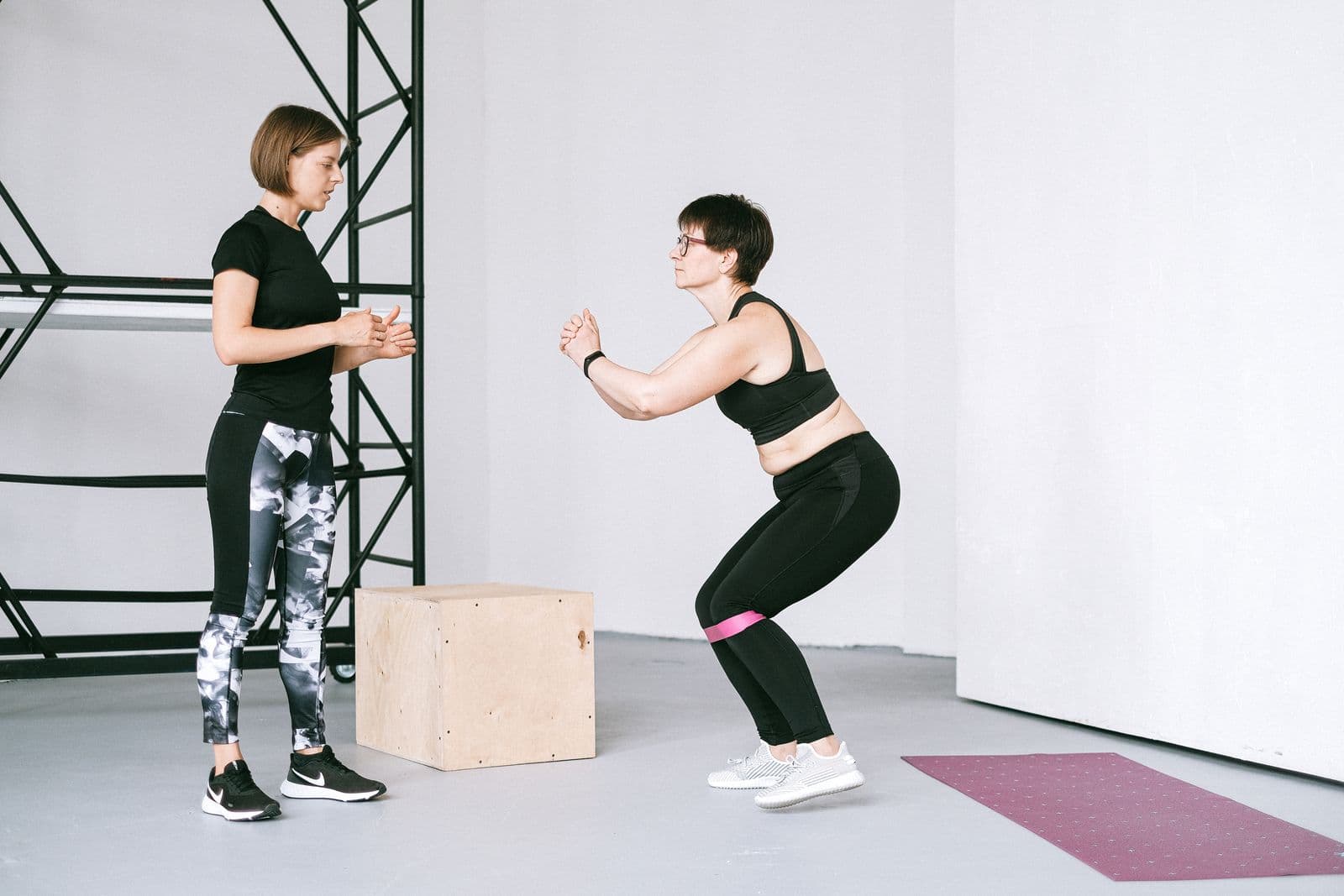
Equipment: what you actually need
Minimal kit, maximum benefit (under $100)
- A set of resistance bands with a door anchor
- One or two adjustable dumbbells or a couple of kettlebells (or filled water jugs to start)
- A sturdy chair without wheels
- A stable step or the bottom stair of your staircase
Nice to have
- A gym membership with a squat rack, trap bar, and cable machine, which makes progressive loading much easier
- A weighted vest for adding load to walking and step-ups
- A few sessions with a trainer or physiotherapist
You don’t need a vibration plate, special supplements, or a branded “bone-building” program.
Managing other conditions
Back pain. Many people with back pain stop moving, which weakens the back muscles and makes pain worse. Gentle back-extension work, walking, and gradually progressed strength training often help. New, sudden, severe back pain, though, should be checked before you exercise through it.
Arthritis. Resistance training is a recommended treatment for knee and hip arthritis. Pain during exercise that stays mild (say, 3 out of 10 or below) and settles within 24 hours is generally acceptable. Pain that’s sharp, lingers, or causes swelling means scale back.
Balance problems or dizziness. Train balance near support, and consider a referral for vestibular assessment if dizziness is a regular part of your life.
Heart and lung conditions. Most people with stable heart disease can strength train, and it’s often recommended. Avoid holding your breath while straining. Check with your cardiologist about intensity if you’ve had a recent event.
Warning signs: when to stop and get checked
Stop exercising and contact your clinician if you notice:
- Sudden, sharp back pain, especially if it began during or after bending, lifting, coughing, or a minor fall
- New pain in the hip, groin, or thigh that’s worse with weight-bearing (this can occasionally be a stress fracture or, rarely, an atypical femur fracture in people on long-term bisphosphonates)
- Pain that persists or worsens over days rather than easing
- Noticeable loss of height or change in posture
- Chest pain, unusual shortness of breath, or dizziness during exercise
A quick decision guide
“Should I do this exercise?” Ask three questions:
- Does it round my spine under load, or twist it hard? If yes, and I have osteoporosis, modify it.
- Can I do it with good form and without pain? If not, regress to an easier version.
- Is it hard enough to matter? If I could do it for 25 reps without effort, it’s probably not loading my bones much. Add load or choose a harder version.
Feeding the construction crew
Exercise sends the signal. Nutrition supplies the materials. Neither works well without the other.
Calcium: food first, and don’t overshoot
Your skeleton holds about 99 percent of your body’s calcium, and it acts as a reserve: when blood calcium runs low, the body pulls it from bone.
The U.S. recommended daily amounts, from the National Institutes of Health’s Office of Dietary Supplements:
| Group | Recommended daily calcium | Upper limit |
|---|---|---|
| Women 51 to 70 | 1,200 mg | 2,000 mg |
| Men 51 to 70 | 1,000 mg | 2,000 mg |
| Everyone 71 and older | 1,200 mg | 2,000 mg |
These totals include food and supplements combined. Surveys suggest many women over 50 fall short from food alone.
Good food sources (approximate calcium per serving):
- Plain yogurt, 1 cup: about 300 to 450 mg
- Milk or calcium-fortified soy milk, 1 cup: about 300 mg
- Hard cheese such as cheddar, 1.5 oz: about 300 mg
- Canned sardines with bones, 3 oz: about 325 mg
- Canned salmon with bones, 3 oz: about 180 to 210 mg
- Tofu made with calcium sulfate, half a cup: often 250 to 400 mg (check the label)
- Cooked collard greens or turnip greens, 1 cup: about 200 to 270 mg
- Cooked kale or bok choy, 1 cup: about 100 to 180 mg
- Almonds, 1 oz: about 75 mg
- Fortified orange juice or cereal: varies, check the label
Spinach is famous but disappointing: it’s high in calcium on paper, but much of it is bound to oxalate and poorly absorbed.
If you use a supplement, take only what you need to fill the gap, not the full recommended amount on top of your diet. The body absorbs calcium best in doses of about 500 mg or less at a time, so split larger amounts. Calcium carbonate is cheaper and absorbs best with food; calcium citrate can be taken anytime and suits people on acid-reducing medication. Supplements, unlike food, have been linked to kidney stones, so food remains the better source.
A simple check: tally your calcium from a typical day’s food. If you’re around 800 mg, a 400 mg supplement closes the gap. If you’re already at 1,200 mg from food, you don’t need a pill.
Vitamin D: necessary, but not magic
Vitamin D helps your gut absorb calcium. Without enough of it, bones can’t mineralize properly. So deficiency is a genuine problem to fix.
But the idea that more vitamin D means stronger bones has taken some hard knocks. The VITAL trial gave 25,871 generally healthy U.S. adults (men 50 and older, women 55 and older) either 2,000 IU of vitamin D3 a day or a placebo, and followed them for a median of 5.3 years. Vitamin D made no meaningful difference to total fractures, hip fractures, or non-spine fractures. The lead researcher, Meryl LeBoff, was careful to note that the results don’t apply to people with severe deficiency, low bone mass, or osteoporosis, who weren’t the focus of the trial.
The Endocrine Society’s 2024 guideline followed suit. For most adults under 75, it advises sticking with the standard intake recommendations rather than taking extra: 600 IU a day up to age 70 and 800 IU after 70, from food and supplements combined. It advises against routine vitamin D blood testing in healthy people. For adults 75 and older, it suggests extra vitamin D may be worth taking because of a possible small reduction in mortality. And for people over 50 who need vitamin D, it recommends daily doses rather than large, infrequent ones.
What this means for you:
- If you’ve been diagnosed with osteoporosis, have a condition that affects absorption, rarely go outdoors, or have very dark skin and live far from the equator, discuss vitamin D with your clinician. Testing may be appropriate for you.
- If you’re generally healthy, a modest daily supplement (around 600 to 1,000 IU) is a reasonable insurance policy, especially in winter. Huge doses aren’t better.
- Sunlight on bare skin is a natural source, but production drops with age, sunscreen, and northern latitudes, and skin cancer risk argues against relying on sun.
Protein: the nutrient bone health forgot
For years, high-protein diets were thought to harm bone by making the body more acidic and leaching calcium. That theory hasn’t held up. Expert reviews now conclude that adequate protein, if anything, helps bone, provided calcium intake is sufficient. A 2019 meta-analysis of studies in adults 65 and older found that higher protein intake was associated with a modestly lower risk of hip fracture.
Protein also protects the muscles that protect your bones. Several expert groups recommend 1.0 to 1.2 grams of protein per kilogram of body weight per day for healthy older adults, and 1.2 to 1.5 for those who are ill or losing muscle. For a 150-pound (68 kg) person, 1.0 to 1.2 g/kg works out to roughly 70 to 80 grams a day.
The practical trick is spreading it out. Many people eat a small amount of protein at breakfast and lunch and a big portion at dinner. Aim for 25 to 30 grams at each meal: Greek yogurt or eggs at breakfast, a can of salmon or a bean-and-cheese wrap at lunch, chicken, fish, tofu, or lentils at dinner. Dairy foods are a two-for-one, delivering both calcium and protein.
Other nutrients: what the evidence actually supports
- Vitamin K (leafy greens) is involved in bone protein formation. Eating plenty of vegetables is sensible; supplement evidence for fractures is inconsistent.
- Magnesium (nuts, seeds, whole grains, beans) plays a role in bone mineral. A varied diet usually covers it.
- Fruits and vegetables overall are associated with better bone health in observational studies, though it’s hard to separate the effect from other healthy habits.
- Soy foods may have mild bone benefits in some postmenopausal women; evidence is mixed.
- Collagen supplements, strontium supplements, and “bone-building” blends: the evidence is thin or absent. Prescription strontium ranelate is a different product and isn’t available in the U.S.
- Excess sodium and very high caffeine intakes may slightly increase calcium loss; moderate coffee drinking appears fine for most people with adequate calcium.
- Cola drinks have been associated with lower bone density in some studies, possibly because they replace milk in the diet.
Sleep, stress, and recovery
Bone adapts during the hours after you load it, not during the workout itself. Muscles do too. That makes recovery part of the program, not a break from it.
- Sleep: Poor sleep has been linked to lower bone density in observational research, and fatigue certainly raises fall risk. Most adults need seven to nine hours.
- Stress: Chronic stress raises cortisol, and cortisol in excess is bad for bone (this is the same reason steroid medications cause bone loss). Stress management isn’t a bone treatment, but it’s part of the context.
- Rest days: Leave at least a day between resistance sessions for the same muscle groups.
- Under-eating: Chronic energy deficits, common in people trying to lose weight aggressively and in some endurance athletes, are bad for bone. If you’re training hard, eat enough to support it.
Sample programs you can start this week
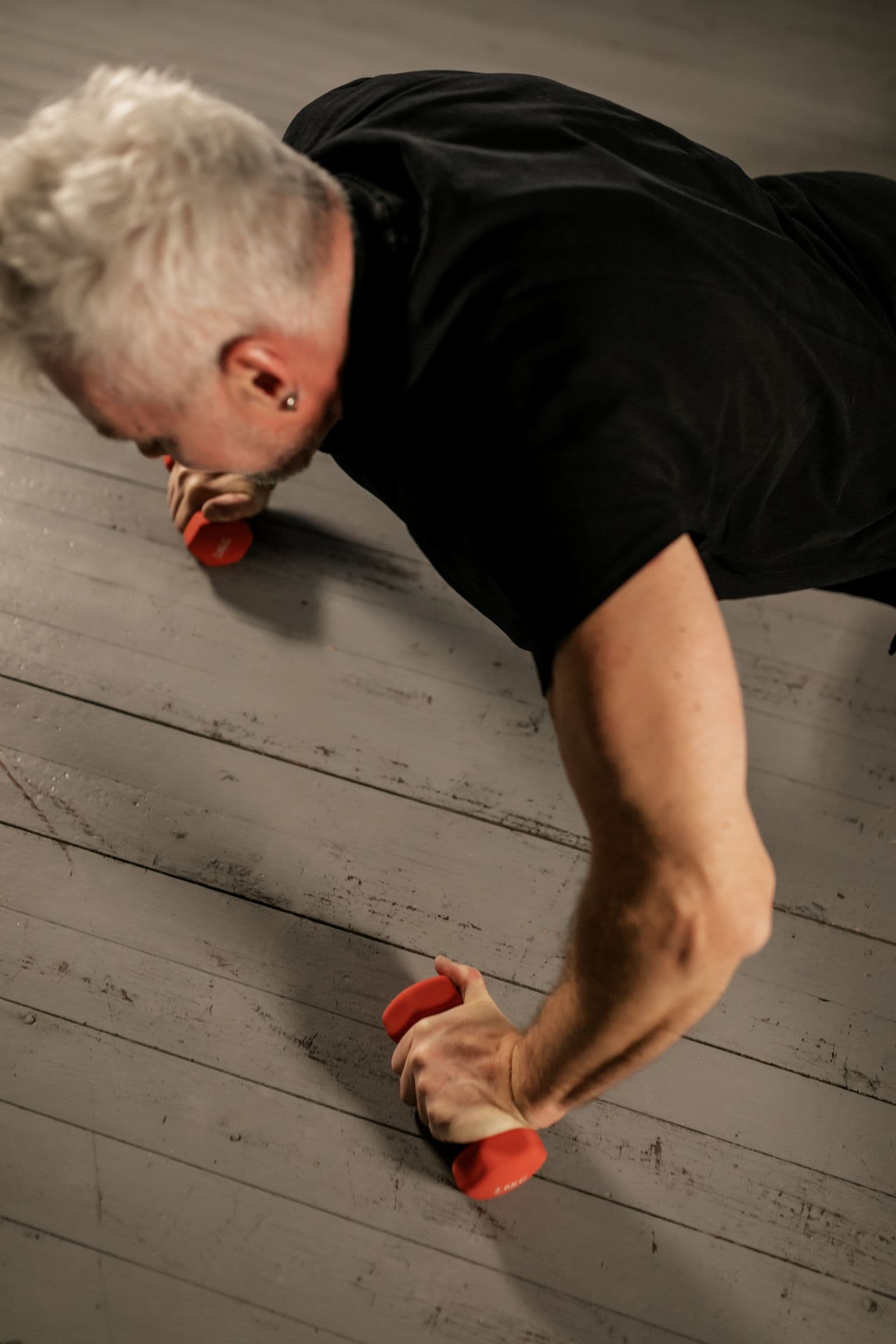
These are templates, not prescriptions. Adjust them to your starting point, your joints, and any guidance from your clinician. Every session should begin with a warm-up and end with a cool-down.
Warm-up (5 to 8 minutes): brisk marching or walking, arm circles, gentle hip hinges with hands on thighs, sit-to-stands, side steps, and a few heel raises.
Cool-down (5 minutes): slow walking, then gentle stretches for calves, hip flexors, and chest, keeping the spine neutral (avoid forward folds if you have osteoporosis).
Plan A: Beginner, home-based (8 weeks)
Strength days (Monday and Thursday), 25 to 30 minutes
| Exercise | Sets × reps | Notes |
|---|---|---|
| Sit-to-stand from chair | 2 × 10 | Arms crossed; progress to holding a weight at your chest |
| Wall push-up | 2 × 10 | Progress to counter-height push-ups |
| Band row | 2 × 12 | Squeeze shoulder blades together |
| Supported split squat | 2 × 8 each leg | Hold the counter |
| Heel raises | 2 × 15 | Slow up, slow down |
| Prone back extension (lift chest slightly off floor) | 2 × 5, hold 3 sec | Gentle, no strain on the neck |
| Bird dog | 2 × 6 each side | Keep the spine still |
Impact and balance (most other days), 10 minutes
- Heel drops: 5 sets of 10, rest between sets
- Balance drills from Level 1, progressing to Level 2
Walking: 20 to 30 minutes on most days.
Progression: Every two weeks, make each exercise a bit harder: add a set, add a light weight, reduce hand support, or try the next impact rung.
Plan B: Intermediate, gym-based
Strength days (Monday, Wednesday, Friday), 30 to 40 minutes
| Exercise | Sets × reps | Notes |
|---|---|---|
| Goblet squat or box squat | 3 × 8 to 10 | Progress weight steadily |
| Trap-bar or kettlebell deadlift | 3 × 6 to 8 | Neutral spine; learn from a coach first |
| Dumbbell or barbell overhead press | 3 × 8 | Standing, brace your trunk |
| Seated cable or dumbbell row | 3 × 10 | Tall chest |
| Step-ups onto a knee-height box | 2 × 8 each leg | Add dumbbells as you improve |
| Farmer’s carry | 3 × 30 meters | Heavy, upright posture |
| Back extension on a bench or floor | 2 × 8 | Controlled |
Impact (most days): 5 sets of 10 small jumps or skips, or alternate days of jogging intervals, building toward 50 impacts per leg.
Balance (twice a week): 10 minutes of Level 3 drills, or a tai chi class.
Progression: When you can complete all sets at the top of the rep range with good form, increase the weight by about 2 to 5 percent next session.
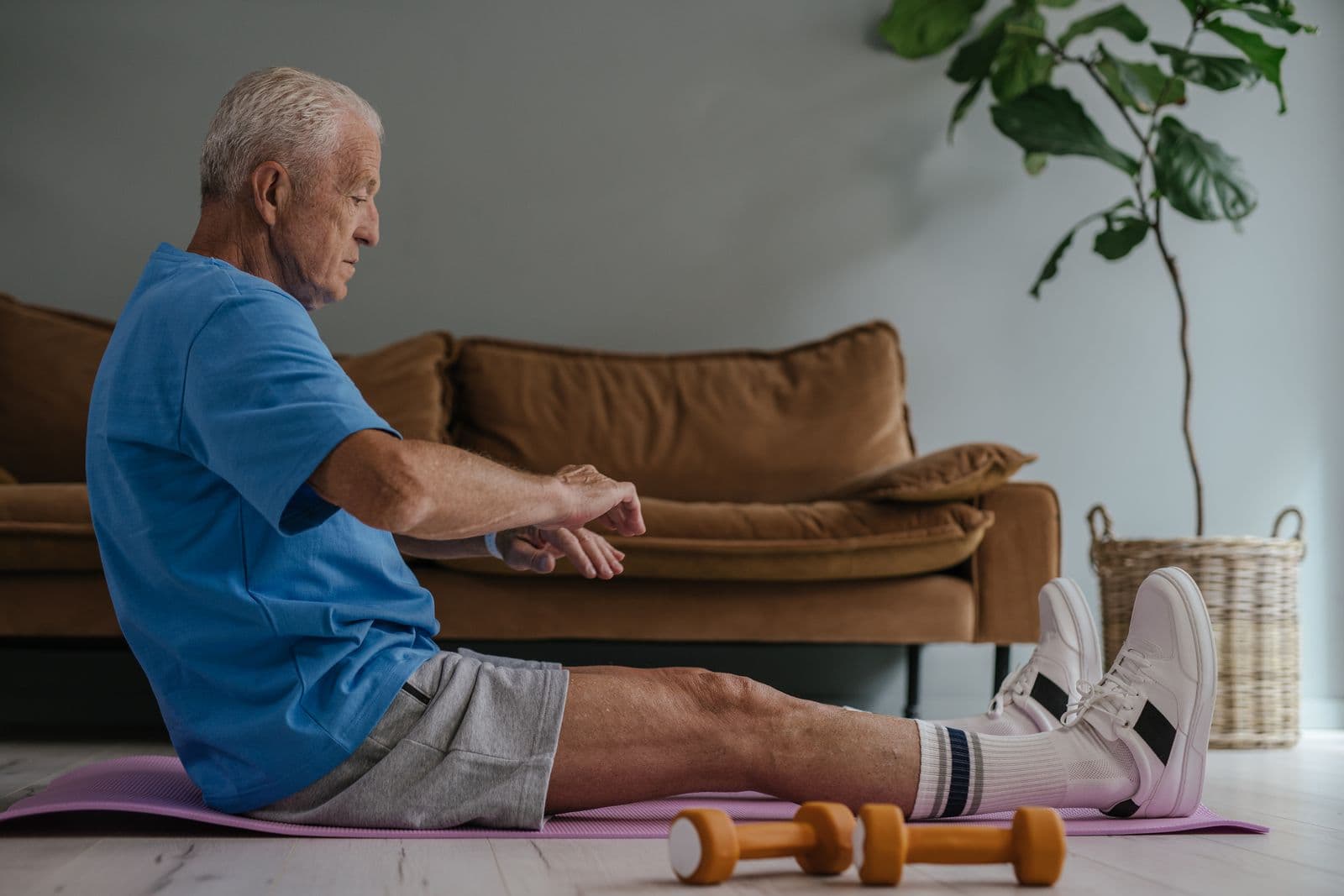
Plan C: Balance-focused, for higher fall risk or after a fracture
Three sessions a week, 30 to 45 minutes, building toward three hours a week of strength and balance over four months
- Warm-up: seated marching, ankle circles, seated arm raises
- Sit-to-stands: 3 × 8, using arms only as needed
- Standing heel raises holding the counter: 2 × 12
- Side-stepping along the counter: 3 lengths each way
- Tandem stand and tandem walk near support: 3 × 30 seconds / 10 steps
- Single-leg stand with fingertip support: 3 × 10 to 20 seconds each side
- Step-ups onto the bottom stair with the handrail: 2 × 8 each leg
- Wall push-ups: 2 × 10
- Standing back extension against the wall: 2 × 5
- Quick-step drill (step out quickly forward and to the side, return): 2 × 5 each direction
- Brisk walking: building toward 20 minutes on most days
Consider joining a community falls-prevention class, a structured program like Otago (often delivered by physiotherapists), or a tai chi class designed for balance.
How to tell you’re making progress
Bone density changes slowly and can only be measured with a scan every year or two. In the meantime, track things you can see:
- 30-second chair stand: how many times can you stand up from a chair with arms crossed in 30 seconds? Retest every month.
- Single-leg stand: how long can you balance on each leg, up to 30 or 60 seconds?
- Timed up-and-go: stand up from a chair, walk 3 meters (about 10 feet), turn, walk back, and sit. Time it. Under about 12 seconds is a commonly used benchmark; slower than that suggests higher fall risk.
- Your working weights: write down what you lift. Steady increases mean the loads your bones see are increasing too.
- Height: measure once a year against the same wall.
- Confidence: are you doing things you avoided six months ago?
Troubleshooting
“I don’t have time.” Two 25-minute strength sessions and five minutes of impact on other days totals under 90 minutes a week. Impact can happen while the kettle boils. Balance drills can happen while brushing your teeth.
“It hurts.” Mild muscle soreness a day or two after a new exercise is normal. Joint pain that’s sharp, persistent, or worse the next day isn’t. Swap the exercise for an easier version or a different one, and if pain persists, get it assessed.
“I’m bored.” Change exercises every six to eight weeks, try a class, train with a friend, or set a goal like carrying your own luggage up a flight of stairs or doing ten full push-ups from the floor.
“I can’t get to a gym.” Bands, a couple of dumbbells or kettlebells, a chair, and a step cover almost everything. A backpack with books makes a decent weight for squats and step-ups.
“I’m afraid of hurting my back.” Start with a professional. A few sessions with a physiotherapist or a trainer experienced in osteoporosis can teach you to hinge, brace, and progress safely. Fear of exercise is reasonable; the solution is guidance, not avoidance.
Myths, questions, and the things people worry about
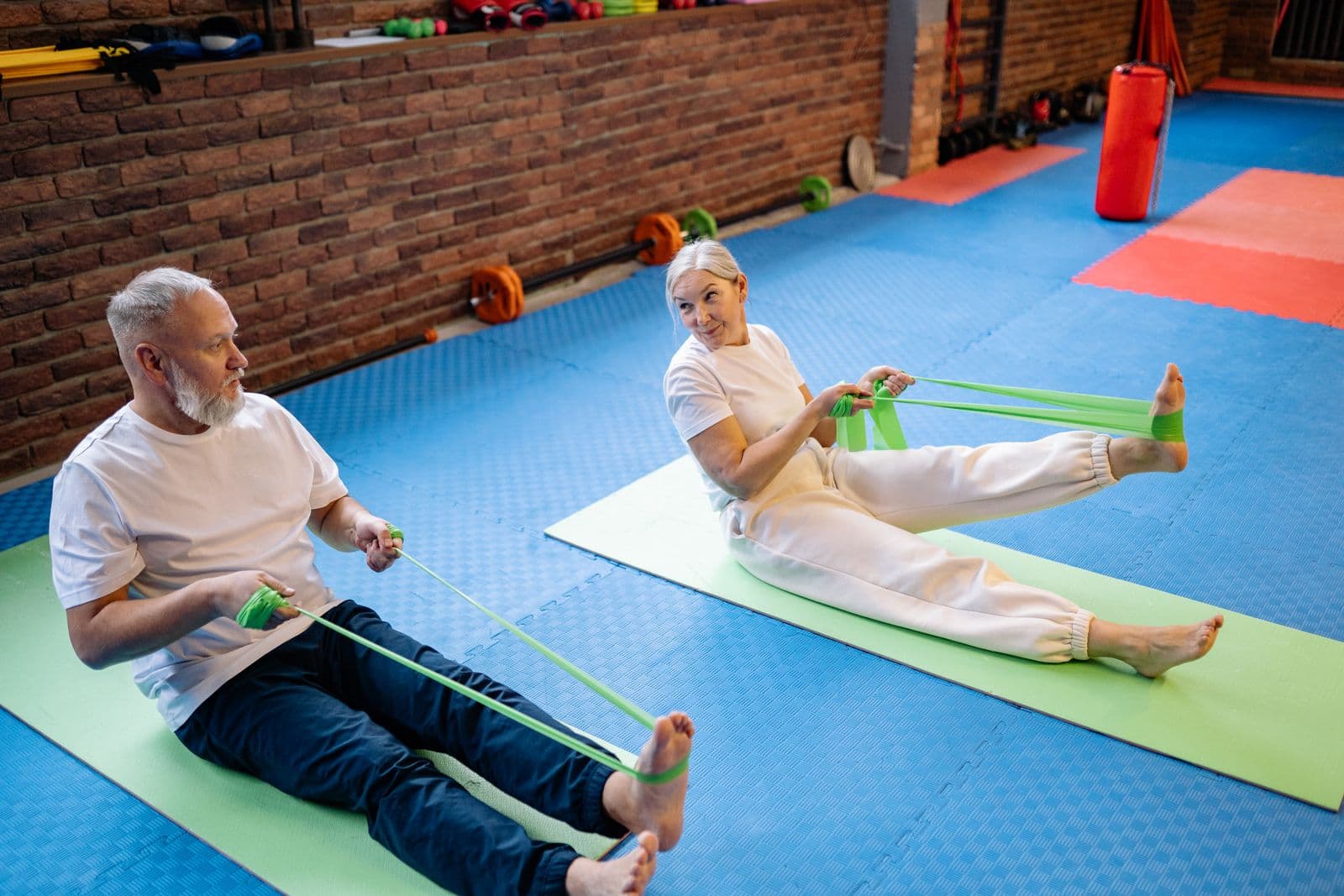
“Isn’t walking enough?”
For bone, usually not. Walking is a familiar load your skeleton has adapted to over decades. It’s great for your heart, mood, and general health, and it’s far better than sitting. But to build or protect bone, you need loads that are higher, faster, or more novel than walking provides. Keep walking, and add strength and impact work.
“Can I reverse osteoporosis?”
Sometimes, partially. Exercise can produce modest gains in density, typically a few percent. Medications, especially the anabolic drugs, can produce larger gains. Some people move from the osteoporosis range back to the osteopenia range. But “reversal” is less important than the real goal: lowering your chance of breaking a bone. Strength, balance, and fall prevention reduce fracture risk even when density barely changes.
“Is yoga safe? What about Pilates?”
Both can be good for balance, posture, and strength, and both can be done safely with osteoporosis. But both include positions that round the spine under load (forward folds, roll-ups, the hundred, plow, rolling like a ball) and some deep twists. If you have low bone density, look for a teacher trained in modifications for osteoporosis, or ask your physiotherapist which poses to skip. Standing poses, balance poses, gentle backbends, and core work that keeps the spine neutral are generally good choices.
“Is swimming or cycling bad for my bones?”
No. They just don’t do enough on their own. They’re excellent exercise for your heart, lungs, and joints, but they don’t load the skeleton much. If they’re your main activities, add two or three strength sessions and some impact each week.
“Do I need calcium and vitamin D supplements?”
Only if your diet falls short or you have a specific reason. Get as much calcium from food as you can and use a supplement only to fill the gap. A modest daily vitamin D supplement is reasonable for many older adults, especially those over 75 or those who get little sun, but large doses haven’t been shown to prevent fractures in healthy people.
“Is it too late to start?”
No. Bone responds to loading at any age. In the LIFTMOR trial, participants averaged 65; in the Oregon tai chi trial, participants were 70 to 92. Strength and balance improve within weeks even in people in their 80s and 90s. Starting later means progressing more carefully, not skipping it.
“I’m scared of the side effects of osteoporosis drugs.”
That’s a fair concern, and it’s worth a frank conversation with your clinician. The serious side effects people read about (osteonecrosis of the jaw, atypical thigh-bone fractures) are rare at standard doses. For someone at high risk of fracture, the medication usually prevents far more fractures than it causes problems. For someone at low risk, the balance may be different, and that’s exactly why individual risk assessment matters.
“I’ve been on medication for years. Can I just stop?”
Not without talking to your clinician. For bisphosphonates, a planned break after several years is sometimes appropriate. For denosumab, stopping abruptly without a follow-on treatment can cause rapid bone loss and multiple spine fractures. Always make a plan before changing bone medication.
“Will lifting weights make my osteoporosis worse?”
Done with good technique and progressed gradually, the evidence says no, and it may help. The LIFTMOR trial is the strongest example, but it’s backed by the broader research behind the Royal Osteoporosis Society’s recommendations. The risks come from poor technique, loaded spinal flexion, and doing too much too soon, not from lifting itself.
Keeping track over the long run
Reading your follow-up DXA
If you have a follow-up scan, a few tips help you interpret it:
- Compare like with like. Ideally, have follow-up scans on the same machine, at the same facility. Different machines can give slightly different numbers.
- Look at the change in grams per square centimeter (g/cm²) and the “least significant change.” Small changes, often around 2 to 3 percent, may be within the measurement error. Many reports state whether the change is statistically significant.
- Hip numbers are often more reliable than spine numbers in older adults, because arthritis and calcium deposits in the spine can falsely raise spine readings.
- Stable is often good news. If you’re postmenopausal and your density held steady over two years, you’ve likely beaten the expected loss.
How often to rescan depends on your situation. People on treatment are often rescanned one to two years after starting, and the Bone Health & Osteoporosis Foundation notes that many providers repeat a test about a year after starting a new medication. People at low risk may not need another scan for several years.
Working with professionals
A good team for bone health might include your primary care clinician, an endocrinologist or rheumatologist if your case is complex, a physiotherapist (ideally one with experience in osteoporosis or falls prevention), and possibly a dietitian.
When choosing a trainer or class, ask: Have you worked with people with osteoporosis? How do you modify spinal flexion and twisting? How do you progress load? A good answer sounds specific and practical. A vague “we’ll keep it gentle” is a warning sign, because the aim is safe, progressive loading, and gentle often means too light to matter.
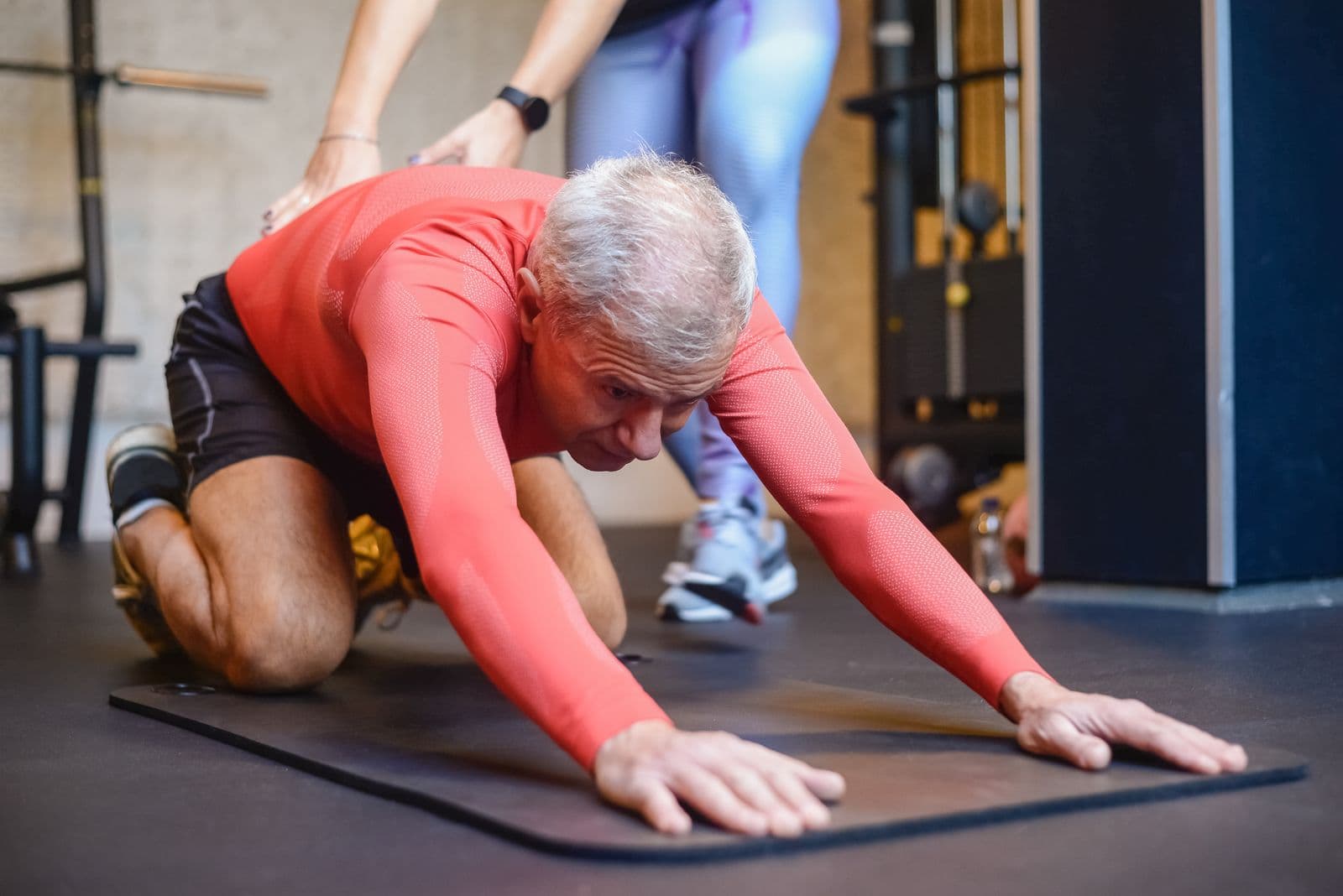
Building a routine that lasts
The best program is the one you’ll still be doing in five years. A few things help that happen:
- Anchor it to existing habits. Strength sessions on the same days and times, impact while the coffee brews, balance drills while brushing your teeth.
- Make it social. Classes, a training partner, or a walking group make it harder to skip.
- Reassess every three to six months. Retest your chair stand, balance, and up-and-go. Adjust your program.
- Expect interruptions. Illness, travel, and injuries happen. Restart at a slightly lower level and build back up.
- Revisit your bone health plan with your clinician after any fracture, any major change in medications or health, or every couple of years.
Resources and next steps
Trusted organizations
- Bone Health & Osteoporosis Foundation (bonehealthandosteoporosis.org): U.S. patient information, exercise guidance, and support groups.
- Royal Osteoporosis Society (theros.org.uk): UK charity with excellent exercise and safe-movement guides based on the “Strong, Steady and Straight” consensus.
- International Osteoporosis Foundation (osteoporosis.foundation): global information, including a one-minute risk test.
- CDC STEADI (cdc.gov/steadi): falls-prevention resources, including the “Stay Independent” self-check.
- FRAX (frax.shef.ac.uk): the online fracture-risk calculator.
- NIH Office of Dietary Supplements (ods.od.nih.gov): calcium and vitamin D fact sheets.
- The Menopause Society (menopause.org): information on menopause and hormone therapy.
Your action checklist
- [ ] Know your risk factors and run your FRAX estimate
- [ ] Ask your clinician whether you need a DXA scan, especially if you’re a postmenopausal woman under 65 with risk factors, a woman 65 or older, or a man with risk factors or a previous fracture
- [ ] If you’ve had a fracture after 50 from a minor fall, ask for a bone health evaluation
- [ ] Start resistance training 2 to 3 times a week, progressing toward challenging loads
- [ ] Add impact on most days, if appropriate for you, building toward about 50 per leg
- [ ] Practice challenging balance work 2 to 3 times a week
- [ ] Strengthen your back extensors, and learn to hinge at the hips
- [ ] Modify forward-bending and twisting movements if you have osteoporosis
- [ ] Check your calcium intake from food and supplement only the gap
- [ ] Get 1.0 to 1.2 g of protein per kg of body weight daily, spread across meals
- [ ] Review your medications for fall and bone risks
- [ ] Fall-proof your home, starting with lighting and the bathroom
- [ ] Get your eyes checked
- [ ] Don’t stop bone medication without a plan
Try this: one week, one habit
Pick one small piece of this article and do it every day for the next seven days: the kettle drill. Each time you wait for the kettle, the coffee maker, or the microwave, do one set of ten heel drops (rise up onto your toes, then drop down firmly onto your heels) followed by ten seconds of standing on one leg near the counter, then switch legs. Three or four times a day adds up to 30 to 40 impacts and a minute or more of balance practice, with no workout clothes required. If your heels and knees feel fine after a week, try ten small jumps in place instead of the heel drops.
It won’t change your DXA scan by itself. But it gets two important signals into your day, and it builds the habit that makes everything else easier.
The skeleton you’ll live in at 80
One fact about bone should feel more encouraging than worrying: the skeleton you have now isn’t the one you’ll have in ten years. Remodeling will replace most of it. What you do between now and then (how you load it, what you feed it, how well you protect it from falls) will shape what gets built.
You don’t need to become a competitive lifter. You need to lift things that feel heavy, put a little jolt into your day, practice your balance until it’s boring, and stop folding forward to pick up the laundry. And if you’re at high risk, you need a clinician on your side and a willingness to consider medication.
That’s a manageable list. Most of it takes less time per week than watching one feature film. The payoff is something you’ll feel long before it shows up on a scan: getting up off the floor without thinking about it, carrying your own suitcase, catching yourself when the dog cuts across your path. That’s what strong bones are for.