Right now the bathroom scale may be the least useful tool in your house.
That sounds like a strange thing for a fitness site to say, so here is the evidence. The Study of Women’s Health Across the Nation (SWAN) has followed thousands of American women through midlife since the 1990s. When researchers scanned participants’ bodies year after year, they found that weight kept creeping up at about the same steady pace before, during, and after the menopause transition. There was no sudden jump. But what that weight was made of changed sharply. Once the transition began, the rate of fat gain roughly doubled, and lean mass started to fall. Those two trends continued until about two years after the final period, then leveled off.
Put plainly, a woman can step on the scale at 47 and again at 53, see nearly the same number, and still be carrying several pounds more fat and several pounds less muscle. The lead investigator, Dr. Gail Greendale of UCLA, made the point in an interview at the time: the gains in fat and the losses of lean tissue simply don’t show up on a scale.
This is why so many women in their late forties and fifties say some version of “my body changed overnight.” The number looks familiar. The jeans fit differently. The stairs feel steeper. Sleep falls apart around 3 a.m. Workouts that used to leave you energized now leave you flattened for a day. None of that is imagined, and very little of it is a character flaw.
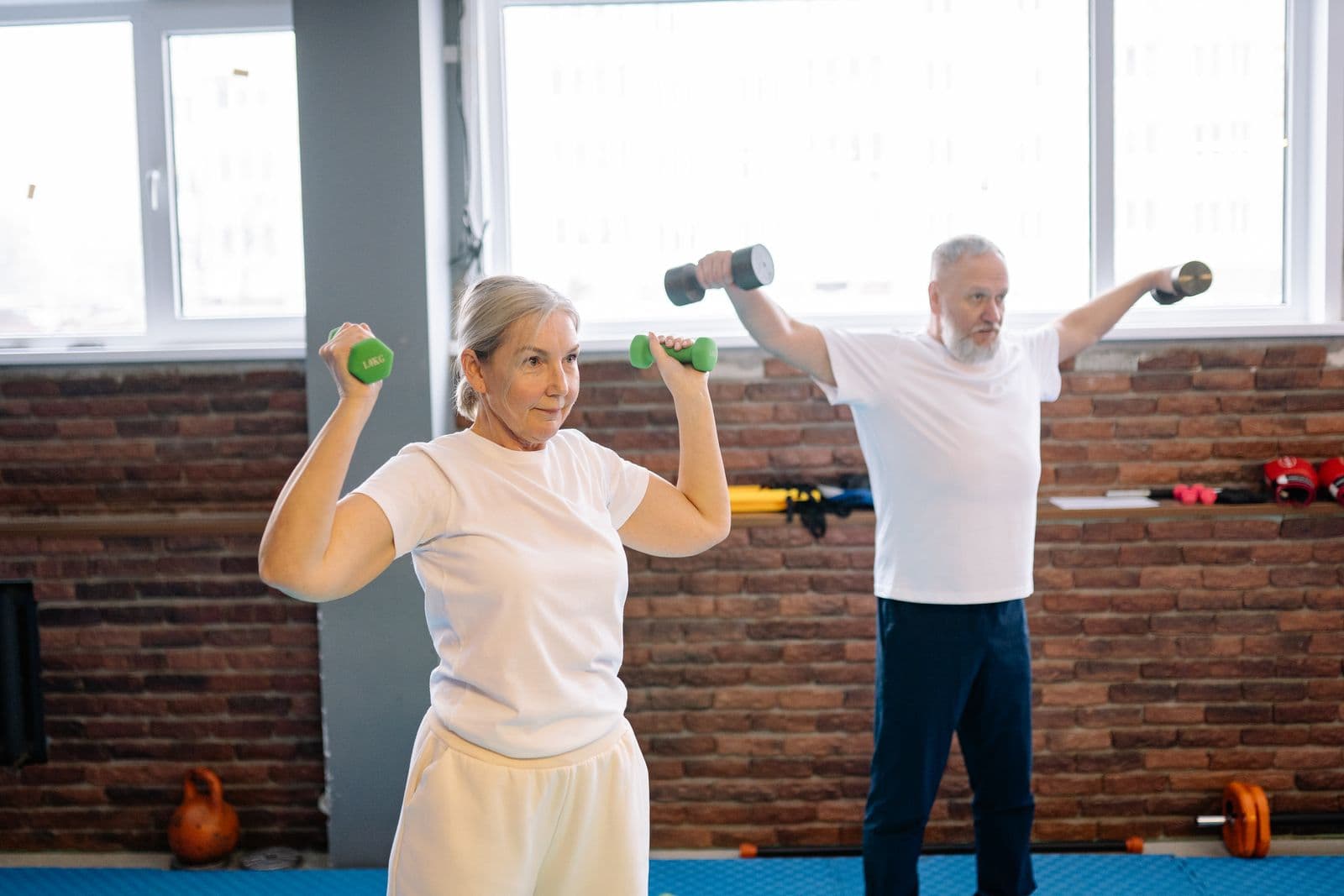
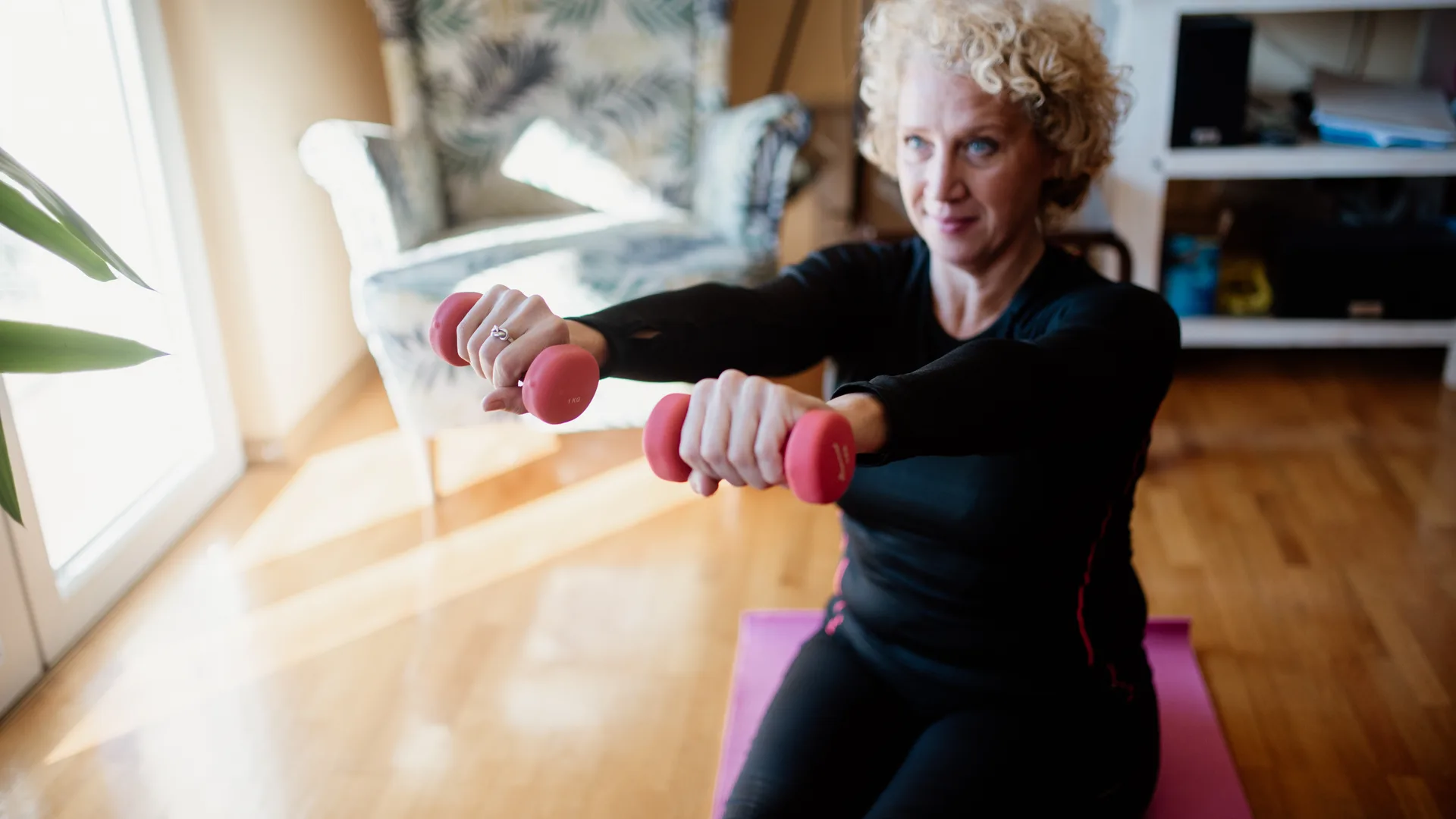
It is also not the end of the story. Of all the changes that cluster around menopause, the loss of muscle and bone and the rise in visceral fat respond best to what you do. The research is better than most people assume. Women in their sixties with low bone density have lifted heavy barbells under supervision and gained spinal bone. Postmenopausal women who started lifting weights three times a week cut their hot flashes nearly in half in one Swedish trial. Women who stay physically active through the transition hold on to measurably more muscle than women who don’t.
What this guide covers, and how to use it
This is a long article. Menopause touches strength, body composition, metabolism, energy, sleep, appetite, mood, joints, and motivation all at once, and advice that addresses only one of those tends to fail. A training plan that ignores your sleep will stall. A diet that ignores your muscle will backfire.
Here is the territory:
- What actually happens in your body during perimenopause, menopause, and postmenopause, and on roughly what timeline
- Why body composition shifts, and what you can and can’t change about it
- Why strength training sits at the center of everything else
- How to build a weekly program, including cardio, mobility, and recovery
- Energy, fatigue, and when tiredness is a medical problem rather than a life-stage problem
- Sleep, night sweats, and how to train around a bad night
- Protein, calories, and the nutrients that matter most at this stage
- How to keep going when motivation is unreliable
- Sample weekly plans for beginners, intermediate lifters, and people short on time
- Common myths, frequent questions, and how to measure progress without obsessing over the scale
If you’re new to exercise, start with the sections on strength and programming, then jump to the sample plans. If you already train, the sections on recovery, sleep, and protein are probably where your next gains are hiding.
One more framing point before the science. A lot of menopause content is written as if every woman over 50 is fragile, exhausted, and quietly mourning her younger self. Plenty of women go through this transition while running half-marathons, hiking with their grandchildren, starting businesses, or lifting more weight than they did at 35. Many others are dealing with symptoms that genuinely knock them sideways. Both groups deserve real information. The goal here is not to “fight aging.” It is to keep being able to do the things you care about, for as long as possible, and to feel decent while you do them.
What’s actually happening: perimenopause, menopause, and after
Menopause is technically a single day: the point at which you have gone 12 consecutive months without a period. In the United States, it arrives on average around age 51, though anywhere from the mid-40s to the mid-50s is normal. Everything before that day, back to when cycles first start becoming irregular, is perimenopause, also called the menopause transition. Everything after is postmenopause.
Perimenopause typically begins in the 40s and lasts several years. It is the messiest phase, and it’s worth understanding why.
The hormone story is less “decline” and more “turbulence”
The popular version says estrogen drops at menopause. That’s true eventually, but it misses what makes perimenopause hard. During the transition, the ovaries don’t wind down smoothly. Estradiol, the main form of estrogen during the reproductive years, can swing from unusually high to very low within a single month. Progesterone tends to fall earlier and more consistently, because ovulation becomes less frequent. Follicle-stimulating hormone (FSH) climbs as the brain pushes harder on ovaries that are responding less.
So a woman in perimenopause isn’t living in a low-estrogen state so much as an unpredictable one. That helps explain why symptoms come and go, why one month feels normal and the next is a mess, and why the transition can be more disruptive than life after it.
After menopause, estradiol settles at a low, steady level. Testosterone and other androgens decline gradually with age, but they don’t fall off a cliff at menopause the way estrogen does. The result is a shift in the ratio between estrogen and androgens, which is one reason fat distribution tends to move toward the abdomen, a pattern more typical of men.
Why estrogen matters to muscle, bone, and metabolism
Estrogen is often filed under “reproductive hormone,” which undersells it badly. Estrogen receptors are found in skeletal muscle, bone, tendons, cartilage, blood vessels, fat tissue, and the brain. When estrogen levels change, all of those tissues notice.
Muscle. Estrogen appears to help muscle respond to exercise and protein, support the satellite cells that repair and build muscle fibers, and protect muscle quality. Researchers in Finland followed 234 women between 47 and 55 through the transition in the ERMA study, measuring their muscle with scans and even biopsies. Over a transition that averaged about a year and a half, lean and muscle mass declined measurably. The average drop was about 1 percent, which sounds small until you remember how short the window was. Women who were more physically active had more muscle before menopause and after.
Bone. Estrogen slows the cells that break bone down. When it falls, bone breakdown outpaces bone formation. SWAN found that bone loss accelerates starting about a year before the final period and continues at a fast pace for about two years after. Over a ten-year window, women lost about 10.6 percent of lumbar spine bone density on average, and roughly 7.4 percentage points of that disappeared during the three fastest years.
Fat distribution and insulin. Lower estrogen is associated with more fat stored deep in the abdomen around the organs (visceral fat) and less in the hips and thighs. Visceral fat is more metabolically active and is linked with insulin resistance, higher blood lipids, and cardiovascular risk. Insulin sensitivity tends to worsen through the transition, partly because of that fat shift and partly because of muscle loss, since muscle is the body’s largest storage site for glucose.
Inflammation and recovery. Estrogen has anti-inflammatory effects in muscle and other tissues. Many women notice that soreness lingers longer and that they need more recovery between hard sessions than they used to. That observation lines up with the biology, though the research on recovery specifically in menopausal women is still thin.
Joints and connective tissue. A 2024 review in the journal Climacteric gave a name to something many women had noticed without a label: the “musculoskeletal syndrome of menopause.” The authors estimated that more than 70 percent of women experience musculoskeletal symptoms through the transition, from achy joints to frozen shoulder, and that about a quarter are disabled by them at some point. It’s a review rather than a trial, so treat the exact numbers cautiously. The pattern matters, though. If your joints started complaining at 49 for no obvious reason, you are in a very large club.
The rough timeline
Everybody’s transition is different, but the research points to a general sequence:
- Early 40s to late 40s: Cycles start shifting in length. Sleep may get lighter. Some women notice mood changes, heavier periods, or the first hot flashes.
- Late perimenopause (often late 40s to early 50s): Periods become far apart. Hot flashes and night sweats peak for many women. Bone loss and changes in body composition speed up.
- The first two years after the final period: Fat gain and lean-mass loss continue at the faster rate, then begin to level off. Bone loss stays rapid, then slows but doesn’t stop.
- Later postmenopause: Changes settle into a slower, age-related pattern. Hot flashes fade for most women, though not all.
On the subject of hot flashes, SWAN produced one of its most quoted findings. Among women with frequent hot flashes or night sweats, the median total duration was 7.4 years, with a median of 4.5 years continuing after the final period. Women whose symptoms started early in the transition had them the longest. Duration also varied a lot by ethnicity: African American women reported the longest median duration in the study, about 10 years, and Japanese and Chinese American women the shortest, around 5. If anyone told you this would all be over in a year or two, they were working from outdated information.
Why your experience may look nothing like your sister’s
Genetics shape the age of menopause and the severity of symptoms. Smoking tends to bring menopause earlier. Body weight affects both hot flashes and bone loss; in SWAN, women in the lightest third lost bone faster. A surgical menopause, where the ovaries are removed, produces an abrupt drop instead of a gradual transition and often more intense symptoms.
Your fitness history matters too, and this is one of the more encouraging points in the research. Women who arrive at the transition with more muscle and stronger bones have a bigger cushion to lose from, and the habits that built that cushion keep paying off. But the reverse is also true. Starting at 55 or 65 is not “too late.” Several of the studies discussed below enrolled women who had never done structured strength training.
A brief word on hormone therapy and other medical options
This is a fitness article, not a prescribing guide, but the rules around treatment changed recently, and you should know where things stand.
Menopausal hormone therapy (MHT, often called HRT) remains the most effective treatment for hot flashes and night sweats, and some formulations are also approved to prevent osteoporosis. For two decades, use was shaped by alarming boxed warnings that followed the 2002 Women’s Health Initiative findings. In November 2025, the FDA announced it would remove most of those boxed warnings, keeping only the warning about endometrial cancer for estrogen-alone products, and adding guidance that systemic therapy is best started before age 60 or within ten years of menopause. Some medical experts welcomed the change; others argued it went further than the safety data justified. Either way, the decision about hormone therapy is an individual one, built around your personal and family history, and it belongs in a conversation with a clinician who knows menopause well.
For women who can’t or don’t want to use hormones, there are now two prescription drugs that work on the brain’s temperature-control circuitry: fezolinetant (Veozah), approved in 2023, and elinzanetant (Lynkuet), approved in October 2025. Certain antidepressants and gabapentin are also used off the hormone pathway.
The important point for this article is that none of these medications build muscle or bone loading on their own, and none replace the effects of training, protein, and sleep. Women who use hormone therapy still lose muscle if they don’t use it. Medication, if you choose it, is something you build on top of the basics, not a substitute for them.
Muscle, fat, and metabolism: what’s really changing
Midlife weight gain is usually blamed on a slowing metabolism. The best data we have says that explanation is mostly wrong, at least until 60.
In 2021, the anthropologist Herman Pontzer and an international team pooled data on more than 6,400 people, from newborns to 95-year-olds, whose daily energy use had been measured with doubly labeled water. That’s a gold-standard technique that tracks how many calories people burn in ordinary life rather than in a lab. Once the researchers accounted for body size and composition, metabolism was remarkably flat from about age 20 to 60, and that held through pregnancy and middle age. After 60, it began falling, but slowly, about 0.7 percent a year.
So if your metabolism didn’t fall off a cliff at 50, why does weight management suddenly feel harder? A few reasons stack up.
You’re probably moving less without noticing. Work gets more sedentary, kids leave home, joints ache, sleep is worse, and there’s less energy for the “background” movement that burns more calories than most people realize: walking to the car, carrying laundry, standing while you talk on the phone. Fatigue during perimenopause makes this worse.
Your body composition is shifting. Muscle is more metabolically expensive than fat, though not by as much as fitness marketing claims. At rest, a kilogram of skeletal muscle burns roughly 13 calories a day; a kilogram of fat burns about 4.5. Losing 2 kilograms (about 4.4 pounds) of muscle over the transition reduces resting burn by roughly 25 calories a day. That’s real but modest, about one small cookie. The larger cost of muscle loss is what it does to your capacity: how much you can do, how hard you can work, and how well your body handles glucose.
Where fat goes changes. Thanks to the estrogen-androgen shift described above, more fat ends up stored viscerally, deep in the abdomen. You may notice your waist thickening even if your weight is stable. Visceral fat matters for health in a way that fat on the hips and thighs mostly doesn’t.
Sleep and appetite interact. Poor sleep increases hunger and cravings and makes it harder to feel full. More on that in the sleep section.
That’s why “calories in, calories out” is true but incomplete. Energy balance still decides whether you gain or lose fat overall. But what you gain or lose (muscle or fat, hip fat or belly fat) depends heavily on hormones, protein intake, sleep, and above all whether you’re giving your muscles a reason to stay.
Sarcopenia doesn’t wait for old age
Sarcopenia is the medical term for age-related loss of muscle mass, strength, and function. It’s often discussed as a problem of people in their 80s, but the process starts much earlier. For women, the menopause transition appears to step on the accelerator.
Three things are worth separating:
- Muscle mass: how much muscle you have
- Muscle strength: how much force it can produce
- Muscle power: how quickly it can produce force
Strength declines faster than mass, and power declines faster than strength. Power is the one that catches you when you trip on a curb, or lets you stand up from a low couch without pushing off your knees. It’s also the quality most neglected in typical “gentle exercise for women over 50” advice, which mostly involves slow, light movement.
All three respond to training at any age. Muscle is stubbornly adaptable.
What you can change, and what you mostly can’t
It’s worth being honest here, because unrealistic expectations are a fast route to quitting.
What training and nutrition can change substantially:
- Muscle mass and, even more, muscle strength and power
- Bone density at the spine and hip, at least modestly, and the rate at which it’s lost
- Insulin sensitivity and blood sugar control
- Visceral fat, especially through a combination of aerobic exercise and a modest calorie deficit
- Functional capacity: stairs, carrying, getting up off the floor
- Energy, mood, and, for many women, sleep quality
What’s largely driven by hormones and age, and harder to fully reverse:
- Some shift in fat toward the midsection, even at stable weight
- Some loss of bone during the fastest years of transition
- Hot flashes, though some training may reduce them
- The overall direction of aging itself
Think of it as steering rather than stopping. You can’t keep your body exactly as it was at 40. You can make a very large difference to how it functions at 60, 70, and 80, and that difference starts with what you do now.
Measuring what matters (the scale is optional)
Because the scale can hide what’s happening underneath, it helps to track a few other things. None of these require expensive equipment.
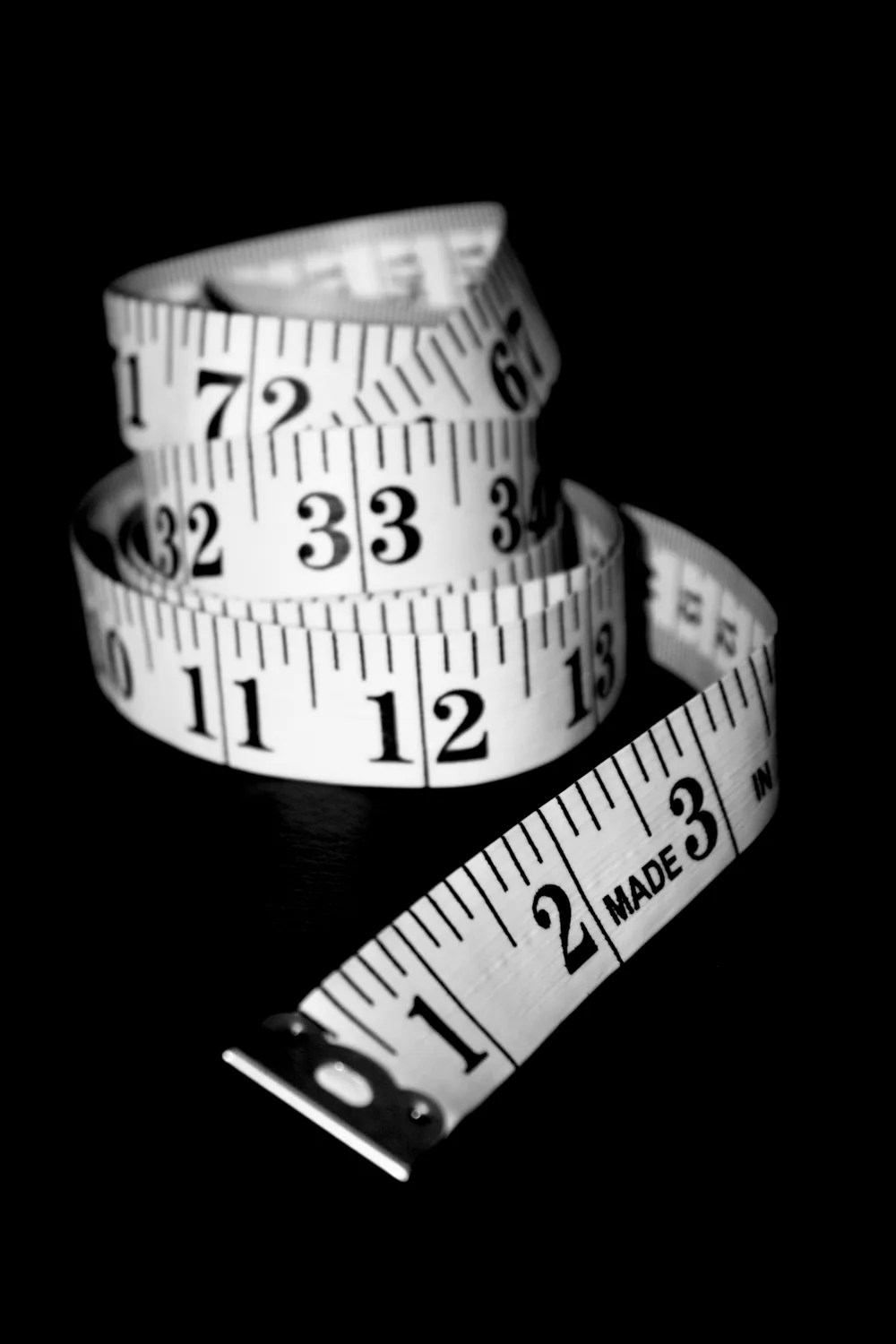
Waist circumference. Measure at the top of your hip bones, standing relaxed, after breathing out. A waist above 35 inches (88 cm) is a common clinical flag for women’s cardiometabolic risk. Another useful rule of thumb is to keep your waist under half your height. Measure monthly, not daily.
Strength benchmarks. Write down what you can lift and how many times. The numbers themselves matter less than the direction they’re moving.
The 30-second chair stand. Sit in a standard chair (about 17 inches high) with arms crossed over your chest. Count how many times you can stand fully and sit back down in 30 seconds without using your hands. The CDC’s fall-prevention program uses these cutoffs for “below average” in women: fewer than 12 stands at ages 60 to 64, fewer than 11 at 65 to 69, and fewer than 10 at 70 to 79. If you’re under 60, aim well above those. Retest every couple of months.
How clothes fit. Crude, but sensitive. Jeans that close more easily at the waist while the scale is unchanged usually mean something good happened.
Optional: a DEXA scan. Dual-energy X-ray absorptiometry measures bone density and can also estimate fat and lean mass by region. A bone-density DEXA is a standard medical test, and your clinician may recommend one based on your age and risk factors. Body-composition DEXA scans are available commercially in many cities. They’re useful for a baseline and an annual check, but not necessary.
Bioimpedance scales and handheld devices. These are convenient but can swing several percentage points depending on hydration. If you use one, measure at the same time of day under the same conditions and only pay attention to trends over months.
Why strength training comes first
If you take one thing from this article, take this: for women going through and beyond menopause, progressive resistance training is the closest thing we have to a single intervention that touches nearly every problem at once.
It isn’t the only thing that matters. Cardio, sleep, and protein all pull their weight. But strength training is the piece most women aren’t doing, and the piece that most directly counters what changes at menopause.
What the trials show
Bone. For years, women with osteoporosis were told to stick to gentle exercise for fear of fractures. The LIFTMOR trial in Australia challenged that. Researchers randomized 101 postmenopausal women, averaging 65 years old and all with low bone mass, to one of two programs for eight months. One group did 30-minute supervised sessions twice a week of heavy lifting (deadlifts, squats, overhead presses) at more than 85 percent of their one-repetition maximum, for 5 sets of 5, plus jumping chin-ups with drop landings. The other group did a home program of low-intensity exercise.
The heavy-lifting group gained lumbar spine bone density, about 2.9 percent, while the comparison group lost about 1.2 percent. At the femoral neck of the hip, the lifters held steady while the home group lost almost 2 percent. The lifters also got measurably better at every functional test, and even gained a little height, probably from improved posture and spinal bone. Only one adverse event was reported across the entire trial: a minor lower-back spasm.
There’s an important caveat. Every session was supervised by trained staff, and participants built up to heavy loads over the first month using carefully taught technique. LIFTMOR shows that heavy training can be safe and effective for women with low bone mass. It doesn’t show that anyone with osteoporosis should load up a barbell alone in the garage next week. If you have diagnosed osteoporosis or a history of fractures, find a physical therapist or qualified coach to teach you the lifts.
Muscle and function. The broader research on resistance training in older adults is consistent: people gain strength, often by a lot, and usually gain some muscle too. Previously untrained older adults often make their fastest strength gains in the first couple of months, because much of that early improvement comes from the nervous system learning to recruit muscle more effectively. That’s why a beginner can feel noticeably stronger within weeks, long before the mirror shows anything.
Hot flashes. This one surprised researchers. A Swedish trial at Linköping University randomized 58 postmenopausal women who had at least four moderate to severe hot flashes or night sweats a day, and who weren’t exercising regularly, to either 15 weeks of resistance training or unchanged activity. The training was demanding: three 45-minute sessions a week at a level participants described as harder than they were used to. Hot flash frequency fell by roughly 44 percent in the training group, while the control group barely changed.
That’s one small, unblinded trial, and it should be read that way. When the Menopause Society reviewed the evidence in 2023, it concluded there wasn’t yet enough to recommend exercise specifically as a treatment for hot flashes, because results across studies have been mixed. So don’t take up lifting in place of treatment if your hot flashes are severe. But if you were looking for one more reason to start, a possible reduction in hot flashes is a nice side effect.
Metabolic health. Muscle is where most of the glucose from a meal ends up. More muscle, and muscle that’s regularly emptied of stored glucose by training, improves insulin sensitivity. That matters more after menopause, when insulin resistance tends to rise.
Strength versus cardio: an honest comparison
The answer isn’t “weights good, cardio bad.”
| Goal | Strength training | Aerobic exercise |
|---|---|---|
| Preserve or build muscle | Strong effect | Minimal |
| Bone density | Good, especially with heavier loads and impact | Weak, except for impact activities like jogging or jumping |
| Visceral (belly) fat | Modest on its own | Stronger evidence |
| Heart and lung fitness | Some benefit | Strong effect |
| Insulin sensitivity | Strong | Strong |
| Daily function (stairs, carrying, getting up) | Strong | Moderate |
| Fall prevention | Good, better combined with balance work | Moderate |
On visceral fat in particular, a 2012 meta-analysis that pooled 35 trials found aerobic exercise reduced it significantly, while resistance training on its own did not show a significant effect. That’s one reason the program in this article includes both.
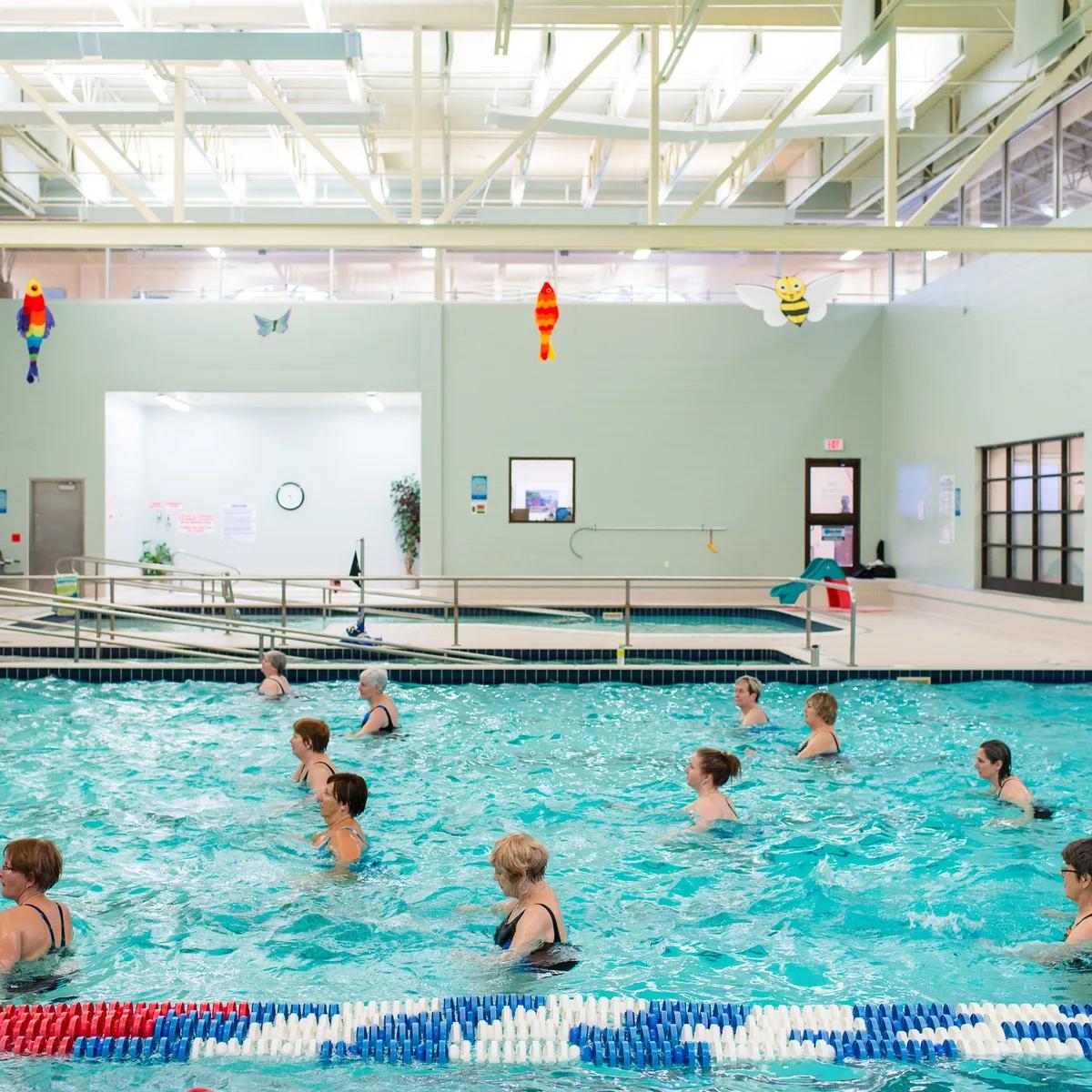
The trap many women fall into is doing only cardio, often long sessions of moderate-intensity work like brisk walking or elliptical machines, in the hope of controlling weight. It helps the heart and can help with visceral fat. But it does little to stop muscle and bone loss, and those are the losses that determine whether you can carry your own groceries at 80. Swimming and cycling, wonderful for the heart and joints, put almost no load on bones.
The solution is both, with strength as the foundation.
Strength as confidence
There’s also a psychological side. Many women in their 50s and 60s have never been encouraged to be strong. They were told to tone, to firm, to slim down, to avoid getting “bulky.” Learning to deadlift a weight that seemed impossible two months earlier changes how you think about your body. Instead of watching it decline, you’re watching it improve, at a time of life when you’ve been told that doesn’t happen.
That sense of capability matters, and it carries into other parts of life. Ask almost anyone who started lifting in midlife.
Inaction weakens the body, work strengthens it; the former brings premature old age, the latter prolongs youth.
Nearly two thousand years ago, Celsus was writing for wealthy Romans, not perimenopausal women. He got the principle right anyway. Your body responds to the demands you place on it, and it adapts to the absence of demand just as faithfully. The next section is about what to demand, how much, and how often.
Building your week: strength, cardio, mobility, and recovery
A good program for this stage of life isn’t exotic. It looks a lot like a good program for anyone, with a few adjustments: more attention to recovery, a firmer commitment to heavier loads than most women have been told to use, some deliberate power and impact work for bone, and flexibility to accommodate weeks when symptoms or sleep go sideways.
The U.S. Physical Activity Guidelines recommend at least 150 to 300 minutes a week of moderate aerobic activity (or 75 to 150 minutes of vigorous activity), plus muscle-strengthening activity on at least two days. For older adults they add balance training. That’s a sensible floor. Below is one way to turn it into a week.
The basic weekly shape
| Component | How often | How long | Purpose |
|---|---|---|---|
| Strength training | 2 to 3 days | 30 to 60 minutes | Muscle, bone, strength, metabolic health |
| Easy-to-moderate cardio (walking, cycling, swimming) | 3 to 5 days | 20 to 60 minutes | Heart health, visceral fat, recovery, mood |
| Harder intervals | 0 to 1 day (optional) | 15 to 25 minutes | Fitness ceiling, insulin sensitivity |
| Mobility and balance | Most days, briefly | 5 to 15 minutes | Joint comfort, fall prevention |
| Rest or very light activity | 1 to 2 days | Recovery |
You don’t need all of this on day one. A beginner who does two strength sessions and walks most days has covered the most important ground.
Strength training: the principles that matter
Use compound movements. Exercises that move several joints at once give you the most return for your time and resemble the things you do in daily life. Organize your training around movement patterns rather than body parts:
- Squat (sitting down and standing up): goblet squat, box squat, leg press
- Hinge (bending at the hips with a neutral spine): Romanian deadlift, kettlebell deadlift, hip thrust, trap-bar deadlift
- Push (pushing away from you or overhead): push-ups (wall, counter, or floor), dumbbell bench press, overhead press
- Pull (pulling toward you): rows, lat pulldown, band pull-aparts, assisted pull-ups
- Lunge or single-leg (one leg at a time): split squat, step-up, reverse lunge
- Carry (walking while holding weight): farmer’s carry, suitcase carry
- Core and trunk stability: dead bug, side plank, Pallof press
A session that includes one exercise from most of these categories is a complete workout.
Lift heavy enough to matter. This is the most common gap. Many women train with weights so light they could do 30 repetitions but stop at 12 because that’s what the sheet says. Muscle and bone respond to effort and load. A practical rule: by the last two or three repetitions of a set, the weight should feel genuinely hard, but your form should still hold. If you could easily do five more, it’s too light.
Exercise scientists often describe this as “reps in reserve” (RIR), the number of reps you could still have done. For most sets, aim to finish with 1 to 3 reps in reserve. As a beginner, stay closer to 3 while you learn the movements.
Use a range of rep ranges. Both heavier loads with fewer reps (around 5 to 8) and moderate loads with more reps (around 8 to 15) build muscle when sets are taken close to fatigue. Heavier loads build more maximal strength and probably load bone more effectively. A simple approach is to do your main lift each session in the 5-to-8 range and your accessory exercises in the 8-to-15 range.
Progress gradually. Progressive overload means asking a little more of your body over time. When you can complete all sets at the top of your target rep range with good form, increase the weight by the smallest increment available (often 2.5 to 5 pounds for upper body, 5 to 10 for lower body). If the weight increase is too big, add a rep or two first. Write it down. Progress you don’t record is easy to lose track of.
Volume: how much is enough. For most muscle groups, roughly 6 to 12 hard sets per week is a productive range for women at this stage, spread across two or three sessions. Beginners make progress with less. More isn’t always better, especially when recovery is compromised by sleep or stress.
Rest between sets. Take 2 to 3 minutes between sets of heavy compound lifts and 60 to 90 seconds for smaller exercises. Rushing rest to make the workout feel “cardio-ish” usually just means lifting less weight.
Power and impact: the bone-specific ingredients
Bone responds best to loads that are high, fast, and a little unusual. Slow, gentle, repetitive movement does very little for it. That’s why walking, though excellent for other reasons, isn’t much of a bone-builder.
Two practical additions:
Move with intent. On the way up in a squat, push, or row, move the weight as quickly as you can with control, then lower it in about two to three seconds. This trains power.
Add impact if your joints and bones allow. Small hops, jumping jacks, skipping, stepping off a low step and landing softly, or the “jumping chin-up with drop landing” used in LIFTMOR. Start with 10 to 20 low hops a few times a week and build gradually. If you have osteoporosis, a history of fractures, pelvic floor symptoms, or knee problems, get individual guidance before adding impact. A physical therapist can match the dose to your bone density and joint health.
Cardio: two speeds are better than one
Zone 2 / easy aerobic work. “Zone 2” has become a fitness buzzword, and the hype has gotten ahead of the evidence. In practice it means steady aerobic exercise at an effort where you can still speak in full sentences but would rather not sing. That’s moderate in the guideline sense. Brisk walking, easy cycling, swimming, rowing, hiking, dancing, and using an elliptical machine all count. This kind of work improves heart and blood vessel health, helps reduce visceral fat, aids recovery between strength sessions, and is gentle enough to do often.
Use the “talk test” rather than fussing over heart-rate formulas, which are unreliable for many people, especially anyone on beta-blockers.

Intervals. Short bursts of harder effort raise your fitness ceiling and improve insulin sensitivity efficiently. A simple starting format: after a 5-minute warm-up, alternate 30 to 60 seconds of hard effort (breathing hard, can only say a few words) with 1 to 2 minutes easy, 5 to 8 times. Uphill walking, a stationary bike, or rowing are joint-friendly options. Once a week is plenty for most people. Intervals are optional, not required, and they’re the first thing to drop during a week of poor sleep.
Mobility, balance, and the parts nobody posts about
Mobility. Five to ten minutes a day spent moving joints through comfortable ranges (hip circles, cat-cow, thoracic rotations, ankle rocks, shoulder rolls with a band) does more for stiff, achy joints than an occasional long stretching session. Use the warm-up before strength training as your main mobility time.
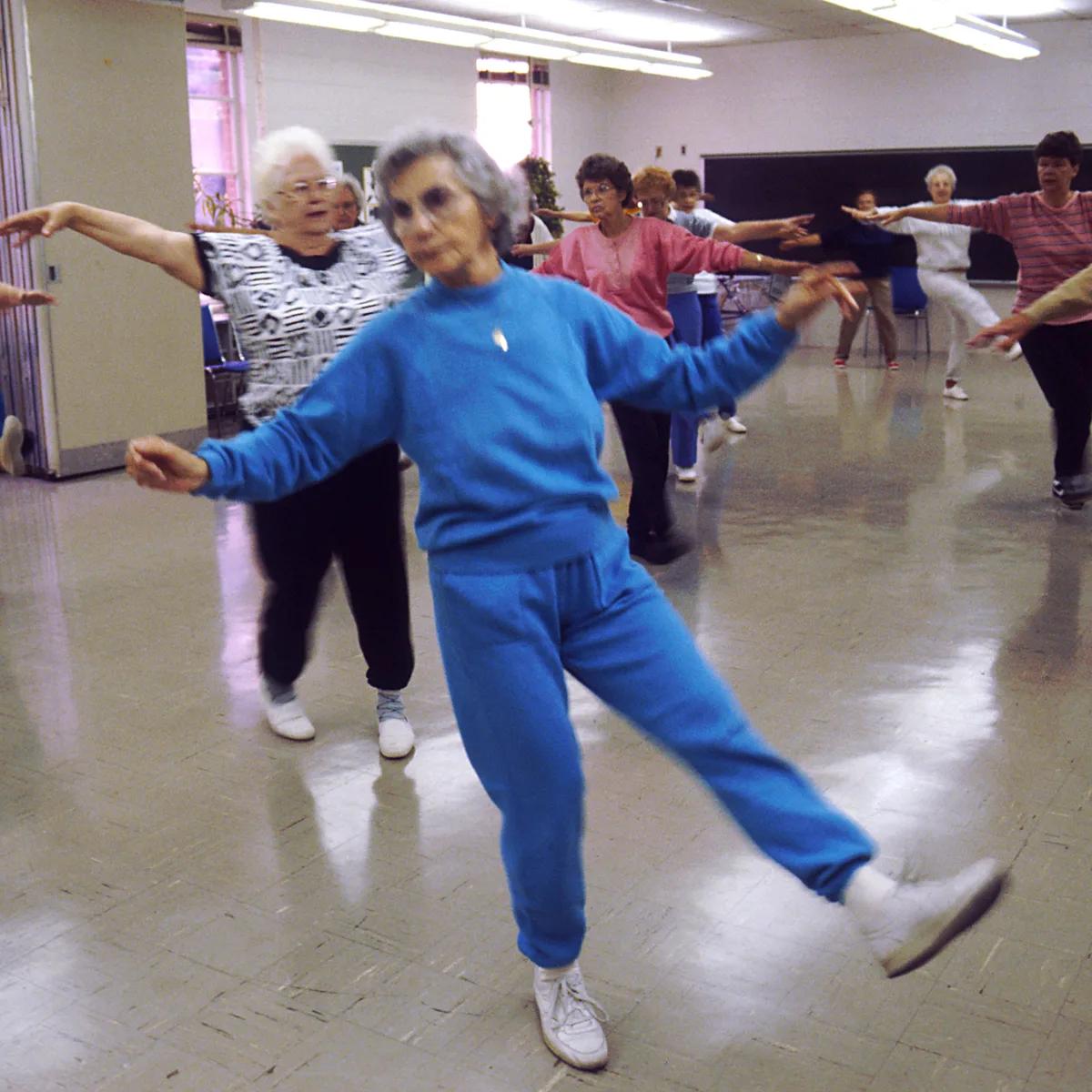
Balance. Balance declines with age and inactivity but responds quickly to practice. Stand on one leg while brushing your teeth. Walk heel-to-toe down a hallway. Do single-leg exercises in your strength sessions. Tai chi has good evidence for reducing falls in older adults and is a pleasant way to cover balance and mobility in one practice.
Pelvic floor. Few fitness articles mention it, and they should. Lower estrogen affects the tissues of the pelvic floor and urinary tract, and many women notice leaking when they jump, sneeze, or lift something heavy. It’s common, and it is very treatable. A 2018 Cochrane review found women with stress urinary incontinence who did pelvic floor muscle training were about eight times more likely to report being cured than women who received no treatment. If leaking stops you from lifting or jumping, a pelvic floor physical therapist can make a real difference, and you can usually keep training while you work on it. Exhaling during the hardest part of a lift, rather than holding your breath and bearing down, helps many women.
Starting points by fitness level
If you’re starting from scratch (no regular exercise in years):
- Two strength sessions a week of 30 to 40 minutes, full body, using bodyweight, bands, or light dumbbells to learn the movements
- Walking on most days, starting at whatever duration feels comfortable, even 10 minutes, and adding 5 minutes a week
- Aim to feel mildly challenged, not destroyed. You should feel like you could have done a bit more.
- After 4 to 6 weeks, begin progressing loads steadily
If you’ve been active, but mostly with cardio or classes:
- Swap two cardio sessions for structured strength training with progressive loads
- Learn the hinge and squat patterns properly; consider a few sessions with a qualified coach
- Keep your favorite cardio or classes, just not at the expense of lifting
If you already lift:
- Check whether you’ve actually been progressing over the past six months, or quietly using the same weights
- Add power and impact work
- Pay more attention to recovery: sleep, protein, and planned easier weeks (a “deload,” cutting volume by roughly half, every 4 to 8 weeks)
Modifications for joints, time, and equipment
Painful knees. Box squats to a comfortable height, leg press, step-ups onto a low step, and hinge movements, which load the hips more than the knees. Mild discomfort that doesn’t get worse during or after training is usually acceptable. Sharp pain, swelling, or pain that’s worse the next day means change the exercise.
Painful shoulders. Use a neutral grip (palms facing each other) for pressing and pulling, landmine presses instead of overhead presses, and keep pressing within a pain-free range. Frozen shoulder is more common in midlife women; if your shoulder’s range of motion is shrinking, see a clinician early.
Painful wrists or hands. Push-ups on dumbbell handles or with fists, straps for heavier pulls, and thicker handles if grip aggravates arthritis.
Short on time. Two 30-minute full-body sessions a week, with 4 or 5 exercises and 2 or 3 hard sets each, will preserve and build muscle in most people. Supersets, where you alternate an upper-body and a lower-body exercise with less rest, save time.
No gym. A pair of adjustable dumbbells, a couple of resistance bands, and a sturdy chair cover most patterns. A kettlebell adds hinge options. Backpacks loaded with books work in a pinch.
Safety notes worth taking seriously
Get medical clearance before starting vigorous exercise if you have heart disease, chest pain or unusual breathlessness with exertion, uncontrolled high blood pressure, or diagnosed osteoporosis with previous fractures. Stop and seek care for chest pain, fainting, severe shortness of breath, or sudden severe headache during exercise.
For osteoporosis specifically, the main movement to be careful with is loaded spinal flexion, such as sit-ups, toe-touches with weight, or rounding your back to pick something heavy off the floor. That’s a reason to learn the hinge properly, not a reason to avoid strength training.
Energy, fatigue, and the “why am I so tired?” question
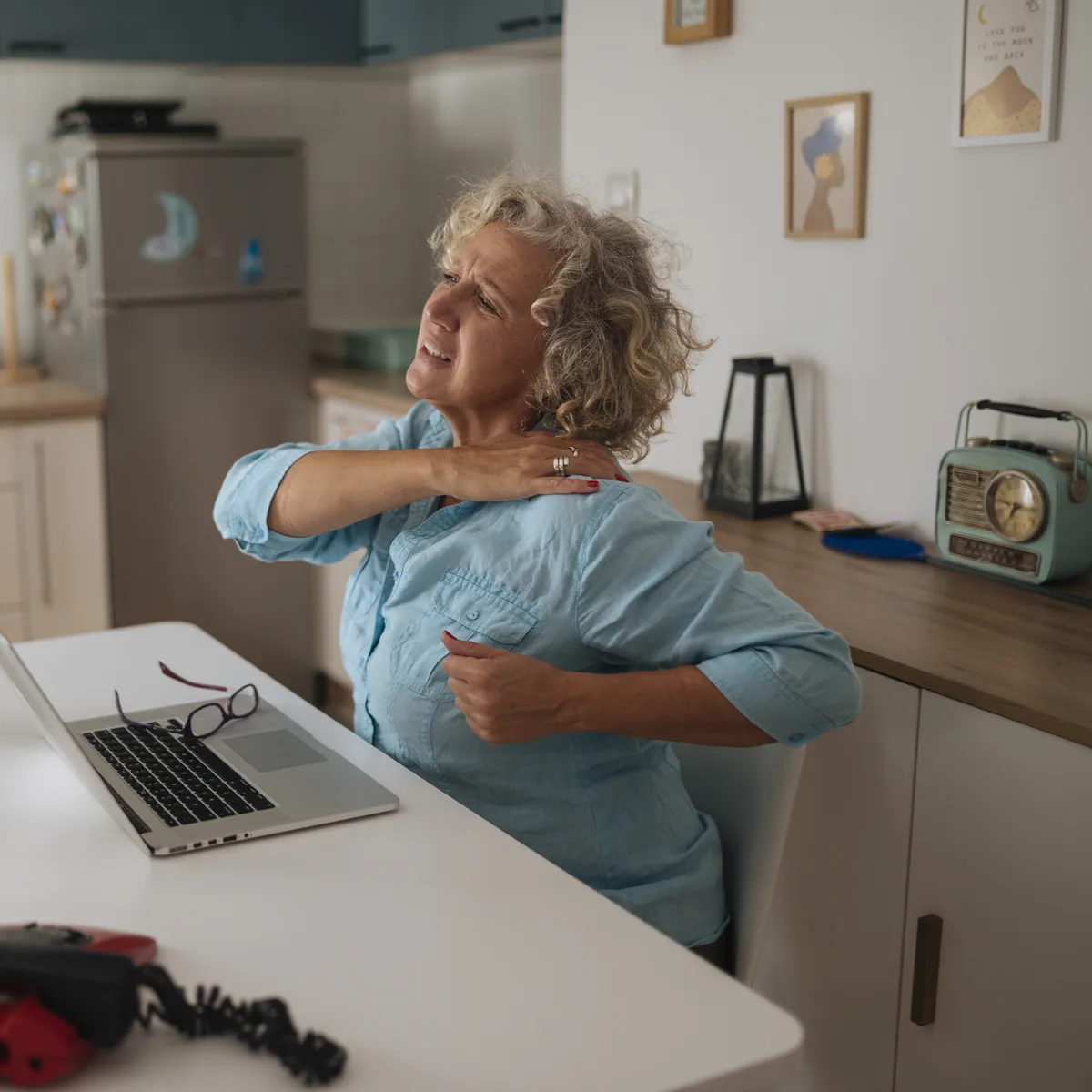
Fatigue may be the most underrated symptom of the menopause transition. It rarely makes the list alongside hot flashes, but ask a room of women in their late 40s and early 50s, and plenty will say exhaustion was the thing that got to them.
Fatigue in this stage of life tends to have several causes at once:
- Broken sleep from night sweats, more frequent waking, and changes in sleep architecture (more on that in the next section)
- Mood changes. The menopause transition is associated with a higher risk of depressive symptoms, especially in women with a prior history of depression, and depression shows up as fatigue as often as sadness
- Heavy periods in perimenopause, which can cause iron deficiency, with or without anemia
- Thyroid problems, which become more common in midlife women and overlap heavily with menopause symptoms
- Life itself. Midlife often means caring for teenagers and aging parents at once, peak work demands, and very little recovery time
- Muscle loss and deconditioning, which make every daily task cost more effort
Normal tiredness, or a medical problem?
Some tiredness is expected when sleep is disrupted. But it’s worth seeing a clinician, and asking specifically about these, if you notice:
- Exhaustion that doesn’t improve after several good nights of sleep
- Heavy or prolonged periods, dizziness, shortness of breath on stairs, or unusual paleness (possible iron deficiency anemia)
- Weight change, feeling cold, constipation, hair thinning, or dry skin out of proportion to the rest (possible thyroid problems)
- Loud snoring, gasping during sleep, morning headaches, or falling asleep during the day (possible sleep apnea)
- Persistent low mood, loss of interest in things you usually enjoy, or hopelessness
- Increased thirst and urination (possible diabetes)
Bloodwork that includes a complete blood count, ferritin (iron stores), thyroid function, and blood sugar can rule out several common culprits. Ferritin is worth asking for by name; it can be low long before hemoglobin drops.
The paradox: spending energy to get energy
When you’re exhausted, the last thing you want is a workout. But regular exercise is one of the most reliable ways to raise baseline energy over time. It improves cardiovascular fitness so daily tasks cost less, builds muscle so movement feels easier, improves sleep quality for many people, and lifts mood.
The key word is regular, at a dose you can recover from. Exercise that leaves you wiped out for two days is too much for where you are right now.
Practical strategies
Pace your week as well as your workout. Put your strength sessions on days when you tend to have more energy and fewer commitments. Many women find mornings work best because energy fades as the day goes on and because evening workouts can get pushed aside. Some find the opposite. Keep an informal log for two weeks and look for your patterns.
Use an energy rating before you train. Rate yourself from 1 to 10 when you start your warm-up:
- 7 to 10: Do the planned session; if you feel great, push your top sets a little
- 4 to 6: Do the planned exercises but cut one set from each, or use slightly lighter loads
- 1 to 3: Do a short walk or a 10-minute mobility routine instead, and call it a win
This approach, often called “auto-regulation,” keeps you consistent without digging a hole you can’t climb out of.
Watch total load. Hard workouts, poor sleep, work stress, and caregiving all draw from the same recovery account. When life’s demands rise, training should become easier for a while, not harder.
Movement snacks. Two or three minutes of movement every hour or so (a few squats, a walk to the mailbox, some stretches at the desk) helps blood sugar and keeps energy steadier than sitting for hours and then exercising hard.
Eat enough, and eat breakfast if training early. Under-fueling is a common, overlooked source of fatigue in women trying to lose weight. More on this in the nutrition section.
Hydrate deliberately, especially with night sweats. Mild dehydration can leave you sluggish and headachy. Keep water by the bed and drink a glass when you wake up.
Caffeine with a curfew. Caffeine has real benefits for training performance and alertness, but its effects can last 6 hours or longer. Some women find they become more sensitive to it during the transition. If sleep is a problem, try stopping caffeine by noon for two weeks and see what happens.
Sleep, recovery, and the 3 a.m. problem
If perimenopause has a signature complaint besides hot flashes, it’s waking in the small hours and not being able to get back to sleep. In large population studies, sleep problems are reported by roughly 16 to 42 percent of premenopausal women, 39 to 47 percent of perimenopausal women, and 35 to 60 percent of postmenopausal women. Those ranges are wide because studies measure sleep in different ways, but the direction is consistent.
Why sleep changes
Night sweats are the obvious culprit. A hot flash during sleep can wake you fully, leave you damp and cold, and make it hard to settle again.
But not all menopausal sleep problems come from hot flashes. Progesterone has a mildly sedating effect, and its decline may make sleep lighter. Changes in estrogen affect the brain’s temperature regulation and the internal clock. Anxiety and racing thoughts often peak in the middle of the night. Bladder changes can mean more trips to the bathroom.
And there’s one cause that is chronically under-diagnosed in women: sleep apnea. In the Wisconsin Sleep Cohort Study, postmenopausal women were about three and a half times as likely as premenopausal women to have moderate or worse sleep-disordered breathing, even after accounting for age and body size. A later study following women through the transition found that each additional year past menopause was linked to roughly 4 percent higher apnea severity. Women with apnea are less likely than men to report classic loud snoring and more likely to report insomnia, fatigue, or morning headaches, so it’s easily missed. If you’re exhausted despite what feels like enough time in bed, ask about a sleep study.
Sleep and training feed each other
Sleep and exercise run in both directions. Regular exercise, especially when done earlier in the day, tends to improve sleep quality over time. Sleep, in turn, is when much of your recovery and adaptation happens. Short or broken sleep raises perceived effort, lowers performance, and reduces the quality of your training.
Sleep loss also pushes appetite in an unhelpful direction, increasing hunger and making high-calorie foods more appealing. Several short nights in a row make sensible eating harder. That isn’t a willpower failure; it’s physiology.
How to train after a bad night
One rough night isn’t a reason to skip training. Several in a row probably are a reason to adjust it.
- One poor night: Train as planned, but skip any attempt at a new personal record. Use the energy rating described above.
- Two to three poor nights: Cut your hard sets by about a third and leave the intervals out. Walk instead.
- A run of poor sleep for a week or more: Treat it like a deload week. Keep strength training, at lighter loads and fewer sets, so you don’t lose the habit, and look harder at the causes of your sleep problems.
Avoid hard training in the two to three hours before bed if it leaves you wired, though some people sleep fine after evening exercise. Learn which group you’re in.

What actually helps sleep
Cognitive behavioral therapy for insomnia (CBT-I) is the first-line treatment for chronic insomnia, and it works for menopausal women with hot flashes too. In a trial from the MsFLASH research network, 106 peri- and postmenopausal women with insomnia and frequent hot flashes received either six telephone sessions of CBT-I over eight weeks or menopause education. Six months later, 84 percent of the CBT-I group had insomnia scores in the normal range, compared with 43 percent of the education group. The number of hot flashes didn’t change, but the women who had CBT-I reported that the flashes interfered less with their lives. CBT-I is available through therapists, some health systems, and several validated digital programs.
The core techniques of CBT-I are a little counterintuitive:
- Keep a consistent wake-up time, seven days a week, even after a bad night. This anchors your body clock more than anything else on the list.
- Only go to bed when sleepy, rather than merely tired.
- Get up if you can’t sleep. If you’ve been lying awake for what feels like 20 minutes or so, go to another room and do something quiet in dim light until you feel sleepy again. This retrains your brain to associate bed with sleep rather than frustrated wakefulness.
- Limit time in bed to roughly your actual sleep time at first, then extend it gradually. This is called sleep restriction, and it should ideally be done with guidance because it makes you sleepier before it makes you better.
- Challenge catastrophic thoughts about sleep (“If I don’t sleep, tomorrow will be a disaster”). These thoughts increase arousal and make sleep less likely.
Managing night sweats and bedroom heat
These are practical rather than research-proven solutions. The Menopause Society didn’t find strong enough evidence to formally recommend cooling techniques for hot flashes. But many women find them helpful for comfort, and they carry no risk.
- Keep the bedroom cool. Many sleep specialists suggest somewhere in the mid-60s Fahrenheit (around 18 to 19°C), and some women need it cooler.
- Use layers of bedding you can throw off rather than one heavy duvet.
- Choose breathable or moisture-wicking sleepwear and sheets.
- Keep a fan by the bed and a glass of cold water within reach.
- Keep a spare set of sleepwear nearby so a night sweat doesn’t mean a full wake-up.
- Notice personal triggers: alcohol, spicy food, and hot drinks late in the evening are common ones.
Alcohol needs its own paragraph. A glass of wine may help you fall asleep, but it fragments sleep in the second half of the night, often right when menopausal sleep is already at its weakest, and it can trigger hot flashes. If you’re struggling with 3 a.m. wake-ups, try two or three alcohol-free weeks and compare.
Recovery beyond sleep
- Active recovery: Easy walking, cycling, or swimming on the day after a hard session usually leaves you feeling better than complete rest.
- Planned easier weeks: Every 4 to 8 weeks, drop your training volume by about half for a week. You’ll often come back stronger.
- Stress management: Chronic stress and poor recovery go together. Brief daily practices, such as a 10-minute walk outside, a few minutes of slow breathing, or anything that reliably calms you, aren’t luxuries for women in this stage of life. They are part of the program.
Eating for strength and body composition
Most nutrition advice aimed at midlife women focuses on eating less. That’s the wrong starting point. The priority at this stage is eating enough of the right things to support muscle, bone, and energy, and creating a modest deficit only if fat loss is a goal.

Protein: the nutrient most women under-eat
Muscle responds to training, but it builds and repairs itself from dietary protein. With age, muscle becomes less responsive to protein, a phenomenon sometimes called “anabolic resistance.” That means older muscle needs a larger dose of protein at a meal to get the same building signal.
The official Recommended Dietary Allowance of 0.8 grams of protein per kilogram of body weight per day was set to prevent deficiency in healthy adults, not to optimize muscle in aging bodies. In 2013, an international expert group called PROT-AGE recommended that adults over 65 aim for at least 1.0 to 1.2 g/kg/day, and 1.2 g/kg/day or more for those who are exercising and otherwise active. Many sports nutrition researchers use similar or higher targets for midlife women doing strength training.
What that looks like in practice:
| Body weight | 1.0 g/kg/day | 1.2 g/kg/day | 1.6 g/kg/day |
|---|---|---|---|
| 130 lb (59 kg) | 59 g | 71 g | 94 g |
| 150 lb (68 kg) | 68 g | 82 g | 109 g |
| 170 lb (77 kg) | 77 g | 92 g | 123 g |
| 200 lb (91 kg) | 91 g | 109 g | 146 g |
For most women strength training at this stage, somewhere between 1.2 and 1.6 g/kg is a reasonable target. If you’re carrying a lot of extra weight, base the calculation on a reasonable goal weight instead of your current weight. And if you have kidney disease, talk to your clinician before increasing protein.
Distribution matters as much as the total. A common pattern is very little protein at breakfast, a little at lunch, and a large serving at dinner. A better approach is to aim for roughly 25 to 35 grams at each of three meals, which is closer to the per-meal dose that studies in older adults point to as needed to maximize muscle building in older adults.
What 25 to 35 grams looks like:
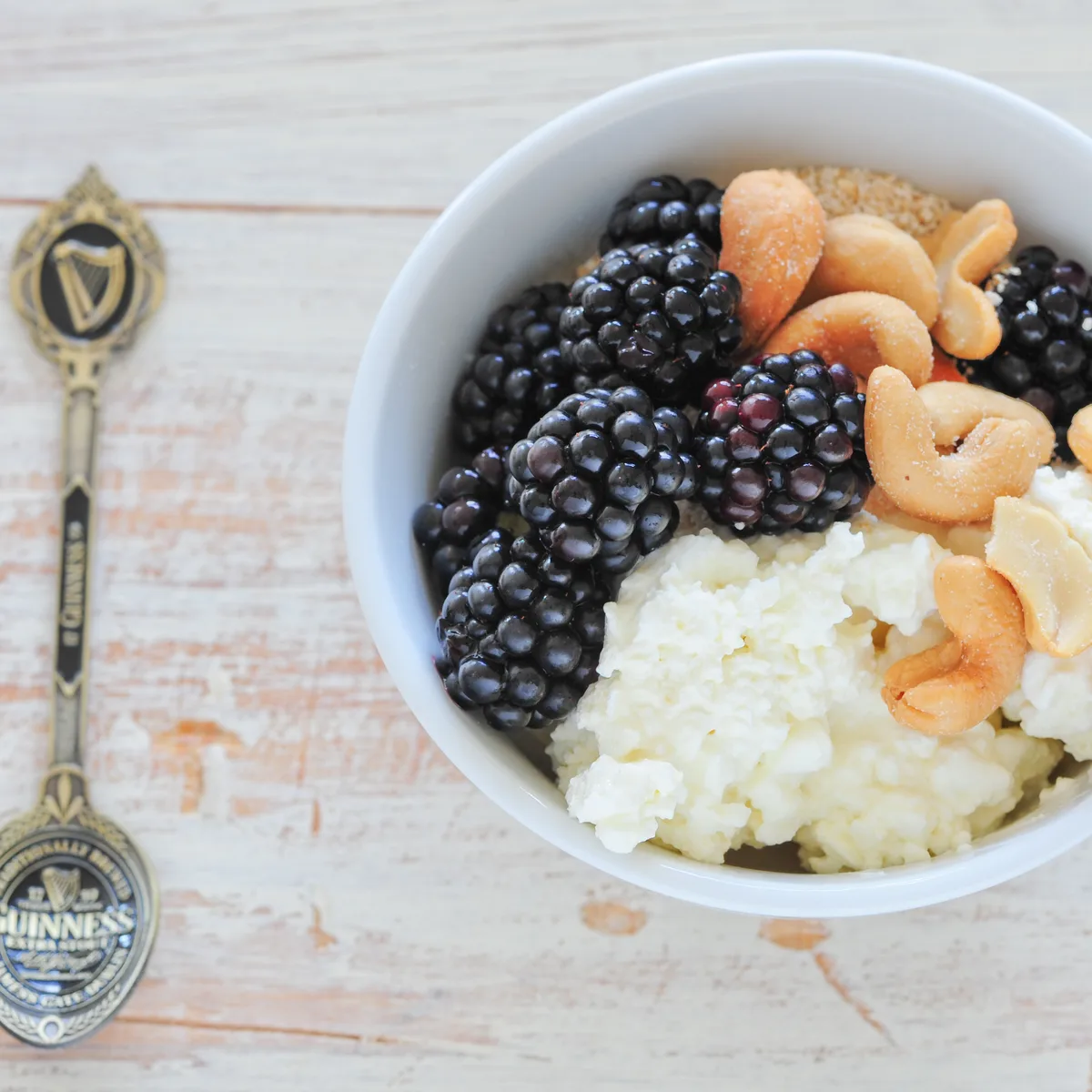
- 1 cup (about 225 g) of plain Greek yogurt plus a handful of nuts
- 3 eggs plus 1/2 cup cottage cheese
- 4 ounces (about 115 g) of cooked chicken, fish, or lean meat
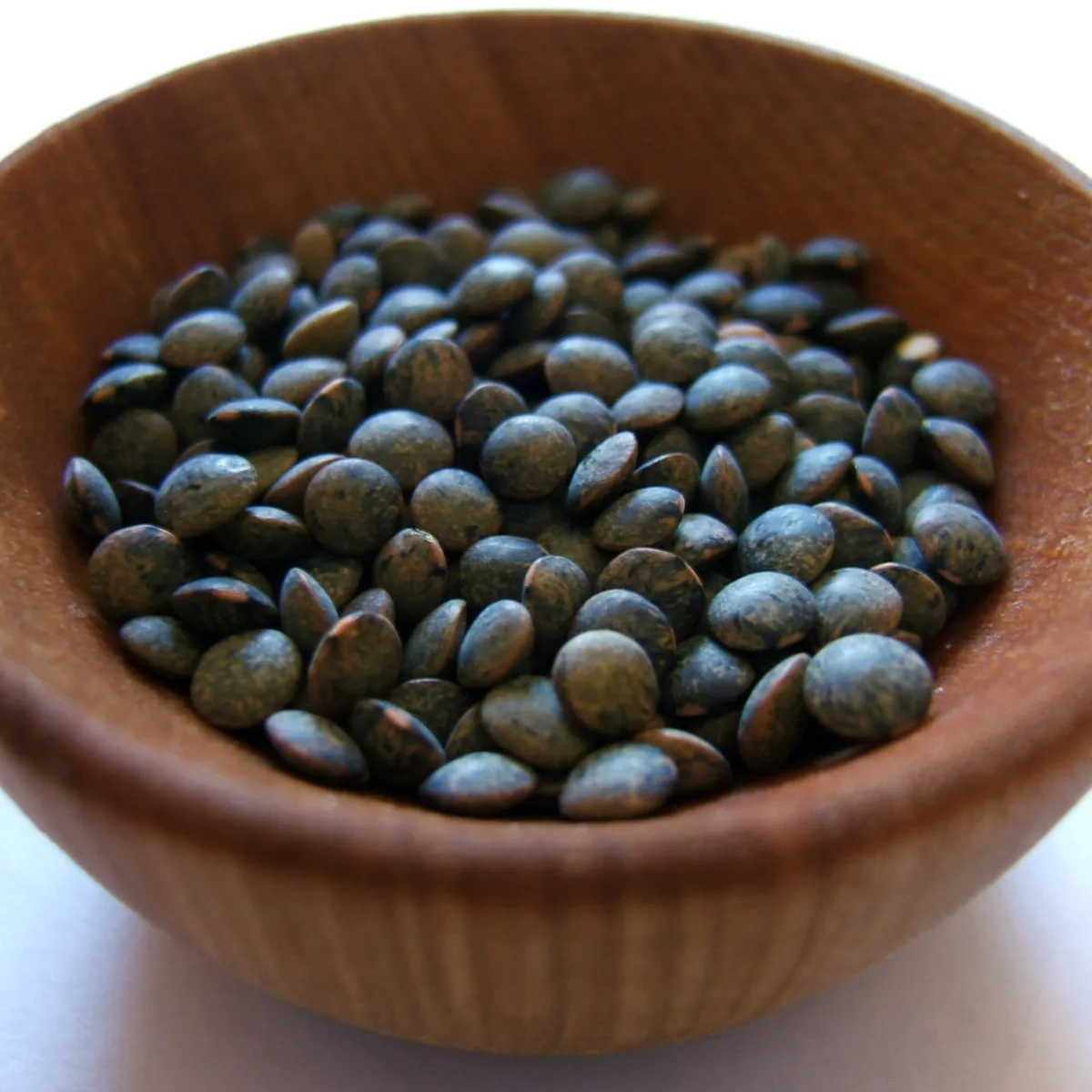
- 1 cup of cooked lentils plus 3 ounces of tofu
- A protein shake made with milk or soy milk
If you’re vegetarian or vegan, the targets are the same. Combining legumes, soy, grains, nuts, and seeds over the day covers your amino acid needs. You may need slightly larger servings, since plant proteins are a little less concentrated, and a pea or soy protein powder can make the numbers easier.
Energy availability: the hidden cost of chronic dieting
Many women have dieted for years, and midlife weight changes can provoke yet another round of severe restriction. Very low-calorie diets during menopause carry real risks: they accelerate muscle and bone loss, worsen fatigue and mood, and make strength gains much harder. Much of the weight lost on aggressive diets is muscle, and it’s typically regained as fat.
If fat loss is a goal:
- Aim for a modest deficit, roughly 300 to 500 calories a day below maintenance, and a loss of about 0.5 to 1 percent of body weight per week at most
- Keep protein high and keep lifting throughout, which helps protect muscle while you lose fat
- Don’t cut calories hard in the same weeks you’re dealing with terrible sleep or a heavy training block
- Consider alternating a few months of fat loss with a few months at maintenance; it’s easier to sustain and easier on your mood
If you’ve been eating very little and feel cold, exhausted, and irritable, with poor workouts, the solution may be to eat more, especially more protein and carbohydrates around training.
Carbohydrates and fats
Carbohydrates fuel high-quality training. They aren’t the enemy, though the quality and quantity matter. Prioritize high-fiber sources such as vegetables, fruit, beans, lentils, oats, and whole grains, which help blood sugar control and fullness. Many women find they train better with some carbohydrate in the meal before a workout: a banana with yogurt, oatmeal, or toast with eggs.
For fats, emphasize olive oil, nuts, seeds, avocados, and oily fish. Keep saturated fat moderate, since LDL cholesterol typically rises after menopause.
Micronutrients that matter more now
Calcium. The recommended intake for women over 50 is 1,200 mg a day. Food is the preferred source: dairy, calcium-set tofu, fortified plant milks, canned fish with soft bones, kale, and other leafy greens. Many women eat less than they think. If you use supplements, take only what’s needed to close the gap rather than megadoses, since very high supplemental calcium has been associated with kidney stones.
Vitamin D. The recommendation is 600 IU a day up to age 70 and 800 IU after. Vitamin D is found in few foods (oily fish, eggs, fortified milks), and production in the skin declines with age and in winter. Many clinicians check blood levels, especially in women with low bone density.
Iron. After menopause, iron needs fall from 18 to 8 mg a day because there’s no more monthly blood loss. But during perimenopause, heavy or frequent bleeding can deplete iron stores, causing fatigue, breathlessness, and reduced exercise capacity. If your periods are heavy, ask about checking ferritin. Don’t take iron supplements without a test, since excess iron is harmful.
Magnesium. Found in nuts, seeds, legumes, whole grains, and leafy greens, it plays a role in muscle and nerve function. The evidence for magnesium supplements improving sleep is limited, though they’re widely marketed for that purpose.
Omega-3 fats. Oily fish (salmon, sardines, mackerel, trout) twice a week covers this for most people. The evidence for supplements improving muscle or joint health is mixed.
Practical strategies for real life
- Build every meal around a protein. Decide on the protein first, then add vegetables and a carbohydrate.
- Upgrade breakfast first. It’s usually the lowest-protein meal and the easiest to fix: Greek yogurt bowls, eggs, cottage cheese, or a smoothie with protein powder.
- Cook protein in bulk. A tray of chicken thighs, a pot of lentils, or a dozen hard-boiled eggs on Sunday makes weekday meals easy.
- Keep emergency protein on hand: canned tuna or salmon, cottage cheese, edamame, jerky, protein bars with decent ingredients.
- Have protein after training if it’s convenient, but don’t stress about a narrow “anabolic window.” Total daily protein matters far more.
- Avoid the common traps: skipping meals then overeating at night, relying on “menopause diet” products, cutting out entire food groups without reason, and assuming a salad with no protein is a complete lunch.
Habits that survive hot flashes, bad weeks, and real life
The best program in the world is useless if it lasts three weeks. And in the menopause transition, consistency is harder than usual, because energy, sleep, mood, and symptoms change from week to week. A plan that only works when everything goes well will fail.
So the aim here isn’t perfection. It’s something you can keep doing on mediocre weeks.
Lower the bar on purpose
Define a minimum effective dose. Decide on the smallest version of your routine that still counts. For example: “On a bad week, I do one 20-minute strength session and walk three times.” When life falls apart, you drop to the minimum instead of to zero. That keeps the habit alive, and habits are much easier to rebuild from minimum than from nothing.
Use “if-then” plans. Researchers call these implementation intentions, and they work better than vague goals. “If I wake up after a bad night, then I’ll do the 15-minute version.” “If it’s raining, then I’ll walk at the mall.” “If I’m traveling, then I’ll pack a resistance band and do the hotel-room routine.” Decide in advance, when you’re calm, rather than at 6 a.m. when you’re exhausted.
Stack it onto something you already do. Habit stacking means attaching a new behavior to an existing one. “After my morning coffee, I put on my workout clothes.” “After I brush my teeth at night, I stand on one leg for a minute.” The existing habit becomes a cue.
Schedule it like an appointment. Put strength sessions on the calendar. Treat them as you would a meeting with someone you respect.

Common barriers, and what tends to work
“I don’t have time.” Two 30-minute sessions a week is a smaller commitment than most people imagine, and it covers the essentials. Short workouts done consistently beat long workouts done occasionally.
“I’m too tired.” Use the energy-rating system. Fatigue is a reason to adjust intensity, not to abandon the whole thing. And remember that exercise tends to build energy over a few weeks.
“My joints hurt.” Modify the exercise, not the commitment. There’s almost always a version of a movement that feels acceptable. Strength training often reduces joint pain over time, because stronger muscles support the joints better. Persistent or worsening pain needs an evaluation from a physical therapist or physician.
“I feel self-conscious in the gym.” Very common, especially for women who have never lifted. Options include training at home until you feel confident, going at quiet times, booking a few sessions with a coach to learn the main exercises, or joining a class designed for women at your stage. Most people at the gym are far more focused on themselves than on you.
“I always start strong and then quit.” That’s usually a sign the starting plan was too ambitious. Begin with less than you think you can handle. You want to finish each session thinking “that was doable,” not “I hope I survive next week.”
“Hot flashes make exercise miserable.” Train in a cool room or early in the day, wear layers you can shed, keep cold water nearby, and consider indoor swimming or a fan pointed at you on a bike. Some women find intense exercise triggers flashes; others notice no difference.
Track the right things
What you track shapes what you value. If you only weigh yourself, you’ll only care about weight.
Consider a simple weekly log that records:
- Strength sessions completed, and your main lifts (weight and reps)
- Average daily steps or walking minutes
- A rough rating of sleep quality (1 to 5)
- A rough rating of energy (1 to 5)
- Your waist measurement, once a month
- Anything notable: illness, travel, symptom flares
After a couple of months, you’ll see patterns. Most women find their strength going up steadily even when other measures bounce around, and that steady line is enormously motivating.
A shift in mindset
Many women go into menopause thinking of their bodies as problems to fix: weight to lose, symptoms to suppress, signs of aging to hide. That framing is exhausting, and it tends to backfire.
A more useful frame is to train for capability. Instead of “I need to lose 15 pounds,” try “I want to be able to carry my own luggage up the stairs at 80,” “I want to keep hiking,” or “I want to deadlift my body weight.” These goals are concrete, they give you something to celebrate along the way, and they don’t depend on things outside your control.
Identity matters too. People who think of themselves as “someone who trains” tend to keep training. Every session you complete is a small vote for that identity.
Don’t go it alone
Social support is one of the most reliable predictors of sticking with exercise. That might mean a friend you walk with twice a week, a partner who lifts with you, a small-group class, a running club, an online community, or a coach who checks in.
Groups designed specifically for midlife women can be particularly helpful, because the shared experience removes a lot of awkwardness. When someone else in the room is also fanning herself between sets, it’s easier to laugh about it.
Sample weekly plans

These templates are starting points, not prescriptions. Adjust exercises to your equipment, joints, and preferences. Choose weights that leave you with about 2 to 3 reps in reserve as a beginner, and 1 to 3 as you become experienced.
A warm-up for any strength session (about 8 minutes)
- Two to three minutes of easy cardio (march in place, brisk walk, bike)
- Cat-cow, 8 reps
- Hip circles, 5 each direction
- Bodyweight squats to a chair, 8 reps
- Glute bridges, 10 reps
- Band pull-aparts or arm circles, 12 reps
- One or two light warm-up sets of your first exercise
Cool-down (about 5 minutes)
Slow walking for a couple of minutes, then gentle stretches for the hips, hamstrings, chest, and calves, holding each for 30 seconds or so while breathing slowly. This is a good time to practice the long-exhale breathing that helps many people downshift after training.
Plan 1: Beginner, home-based (2 strength days + walking)
Week structure:
- Monday: Strength A
- Tuesday: Walk 20 to 30 minutes
- Wednesday: Walk or rest
- Thursday: Strength B
- Friday: Walk 20 to 30 minutes
- Saturday: Longer walk or other enjoyable activity
- Sunday: Rest or gentle mobility
Strength A
| Exercise | Sets x reps |
|---|---|
| Sit-to-stand from chair (hold a dumbbell when easy) | 3 x 8 to 12 |
| Incline push-up (hands on counter or sturdy table) | 3 x 6 to 12 |
| Glute bridge | 3 x 10 to 15 |
| One-arm dumbbell row (hand on chair) | 3 x 8 to 12 each |
| Dead bug | 2 x 6 to 8 each side |
Strength B
| Exercise | Sets x reps |
|---|---|
| Step-ups onto a low step | 3 x 8 each leg |
| Dumbbell or band overhead press (seated if needed) | 3 x 8 to 12 |
| Dumbbell Romanian deadlift (light) | 3 x 8 to 10 |
| Band pull-aparts | 3 x 12 to 15 |
| Farmer’s carry (walk holding dumbbells) | 3 x 30 to 40 seconds |
Progression rule: When you can complete all sets at the top of the rep range with good form, increase the load or move to a harder version (lower surface for push-ups, higher step for step-ups, heavier dumbbells). After 6 to 8 weeks, consider adding a third session or moving to Plan 2.
Plan 2: Intermediate, gym-based (3 strength days + cardio)
Week structure:
- Monday: Strength A
- Tuesday: Zone 2 cardio, 30 to 45 minutes
- Wednesday: Strength B
- Thursday: Zone 2 cardio, or an interval session
- Friday: Strength C
- Saturday: Long walk, hike, bike, or swim
- Sunday: Rest
Strength A (lower-body emphasis)
| Exercise | Sets x reps |
|---|---|
| Goblet squat or trap-bar deadlift | 3 to 4 x 5 to 8 |
| Romanian deadlift | 3 x 8 to 10 |
| Split squat | 3 x 8 each leg |
| Leg curl or Swiss ball hamstring curl | 2 x 10 to 12 |
| Side plank | 2 x 20 to 30 seconds each side |
Strength B (upper-body emphasis)
| Exercise | Sets x reps |
|---|---|
| Dumbbell bench press | 3 to 4 x 6 to 8 |
| Lat pulldown or assisted pull-up | 3 x 8 to 10 |
| Seated dumbbell overhead press | 3 x 8 to 10 |
| Seated cable row | 3 x 10 to 12 |
| Pallof press | 2 x 10 each side |
Strength C (full body + power)
| Exercise | Sets x reps |
|---|---|
| Low box jumps or pogo hops (if appropriate) | 3 x 5 to 10 |
| Hip thrust | 3 x 8 to 10 |
| Step-ups with dumbbells | 3 x 8 each leg |
| Push-ups (any level) | 3 x as many good reps as possible, minus 2 |
| Farmer’s or suitcase carry | 3 x 40 metres |
Progression rule: Use “double progression.” Pick a rep range (say 6 to 8). Stay at a weight until you can do all sets at 8 reps, then increase the weight and start again at 6. Plan a lighter deload week every 6 to 8 weeks.
Plan 3: Time-efficient (two 30-minute sessions + daily walking)
For busy weeks or busy seasons of life.
Session A
- Goblet squat, 3 x 6 to 10, superset with dumbbell row, 3 x 8 to 10 each arm
- Romanian deadlift, 3 x 8, superset with push-ups, 3 x as many as possible minus 2
- Farmer’s carry, 2 x 40 seconds
Session B
- Split squat, 3 x 8 each leg, superset with overhead press, 3 x 8
- Hip thrust or glute bridge, 3 x 10, superset with lat pulldown or band row, 3 x 10
- Ten low hops, if appropriate, then side plank, 2 x 20 seconds each side
Walking: Aim for 20 to 40 minutes on most days, with a few brisk stretches mixed in.

Adjusting on low-energy days
Use the 1-to-10 energy rating from the energy section. On a 4-to-6 day, drop one set from each exercise and keep loads the same or slightly lighter. On a 1-to-3 day, swap the session for 15 minutes of walking and mobility. You still showed up, and you’ll come back to the planned session stronger.
Tracking progress over months
Every 4 to 8 weeks, note:
- Your working weights on two or three key lifts
- Your 30-second chair stand score
- Your waist measurement
- Your average sleep and energy ratings for the past few weeks
- Any change in daily life: easier stairs, carrying groceries, playing with grandchildren, fewer aches
If two or three of these are moving in the right direction, the program is working, regardless of what the scale says.
Myths, sticking points, and the questions women actually ask
“I can’t lose weight no matter what I do.”
The frustration is real, so it gets a real answer rather than a pep talk.
First, check whether the goal should be weight loss or a change in body composition. Many women who start lifting see their waist shrink and their strength climb while the scale barely moves. That’s a good result.
Second, check the basics honestly for two or three weeks: protein at each meal, total intake (including drinks, snacks, and weekend meals), daily movement outside workouts, and sleep. Small changes in each add up.
Third, consider medical factors. Thyroid disease, certain medications (some antidepressants, steroids, and others), insulin resistance, and sleep apnea can all make weight loss harder. It’s reasonable to ask about them.
And finally, accept that the timeline may be slower than it was at 35. Losing half a pound a week while keeping muscle is a better outcome than losing two pounds a week of which a third is muscle.
“Should I do cardio or weights?”
Both, with weights as the foundation. Strength training protects muscle and bone; aerobic exercise is better for heart fitness and has stronger evidence for reducing visceral fat. If your time is very limited, two strength sessions plus daily walking is a strong combination.
“Can I tone my arms or burn belly fat with specific exercises?”
You can build the muscles in any area, but you can’t choose where fat comes off. That’s genetics and hormones. Crunches strengthen abdominal muscles; they don’t burn belly fat specifically. “Toning” is really just building muscle while reducing fat, and it happens through the same combination of strength training, total activity, and nutrition described above.
“Will lifting heavy make me bulky?”
Almost certainly not. Women build muscle more slowly than men, and building muscle becomes harder with age, not easier. The women you see with very large, defined muscles have usually trained for years with that specific goal, often alongside a very particular diet. Lifting heavier than you think you should will make you stronger and firmer, not bulky.
“I’m on hormone therapy. Do I need to train differently?”
Not really. Some studies indicate hormone therapy may help preserve muscle and bone, and it may make training more comfortable by reducing night sweats and improving sleep. But it doesn’t replace strength training, and the same training principles apply. If you aren’t on hormone therapy, you’ll still respond to training.
“Is it too late to start at 60? At 70?”
No. Strength-training studies in people in their 70s, 80s, and even 90s show meaningful gains in strength and function. The LIFTMOR participants averaged 65 and had low bone mass. Starting later means starting more gradually, paying close attention to form, and perhaps getting professional guidance at first. It doesn’t mean not starting.
“I’m coming back after years off. Where do I begin?”
With less than you think. Two short strength sessions a week and regular walking for the first month. Your heart and muscles adapt quickly, but tendons and ligaments adapt more slowly, and doing too much too soon is the most common reason people get hurt or quit. Expect to feel noticeably better within six to eight weeks.
“What about hot flashes during workouts?”
Train in the coolest environment you can, wear breathable layers, keep cold water handy, and favor mornings if afternoon sessions trigger flashes. Swimming and water exercise are excellent options for hot flash-prone women who want cardio, though they don’t load bone much, so pair them with strength training. If hot flashes are severe enough to stop you exercising, that’s a good reason to discuss treatment options with your clinician.
“What about joint pain?”
Joint pain is very common in the transition and often improves with strength training, which builds support around the joints. Choose pain-free variations, warm up thoroughly, and progress gradually. New swelling, locking, or pain that wakes you at night needs a medical evaluation.
“Are there supplements that help?”
Most products marketed for “menopause belly” or “hormone balance” have little or no evidence behind them. The Menopause Society’s 2023 review did not recommend any herbal remedy or dietary supplement for hot flashes because the evidence was negative or insufficient.
A few supplements have better support for specific purposes:
- Protein powder is simply food in convenient form, useful if you struggle to reach your protein target.
- Vitamin D and calcium are useful if testing or your diet shows you’re low, especially if your bone density is low.
- Creatine monohydrate is one of the most researched sports supplements. A 2026 meta-analysis of seven randomized trials in 608 postmenopausal women found that creatine, usually combined with resistance training, added a modest amount of lean mass (about 0.37 kg, or under a pound) and meaningfully more leg-press strength than placebo. Effects on bone density were unclear. The largest trial, two years long in 237 women, found no benefit for hip or spine bone density. A typical dose is 3 to 5 grams a day. It’s generally considered safe for healthy people, but check with your clinician if you have kidney disease.
Anything promising to “reset your hormones,” “melt belly fat,” or “boost metabolism” should be treated with deep suspicion.
Measuring progress and adjusting over the years
Progress through menopause isn’t a straight line. Symptoms shift, life changes, injuries happen. The goal is to notice trends and adjust, not to judge every week.
What to track, and how often
| Measure | Frequency | Why it matters |
|---|---|---|
| Main lifts (weight x reps) | Every session | The clearest signal of progress |
| Chair stand test | Every 2 to 3 months | Lower-body strength and endurance |
| Waist measurement | Monthly | Visceral fat trend |
| Sleep and energy ratings | Weekly | Recovery and life load |
| Bone density (DEXA) | As your clinician advises | Osteoporosis risk |
| Blood pressure, blood sugar, lipids | At regular check-ups | Cardiometabolic risk, which rises after menopause |
When to change the plan
Progress the training when you’ve completed all sets at the top of your rep range with good form for two sessions, when workouts feel consistently easy, or when you’ve been doing the same routine for 8 to 12 weeks and progress has stalled.
Ease off when sleep has been poor for more than a week, when you feel persistently drained, when performance drops for two weeks or more, or when you’re sick, injured, or under unusual stress.
Adjust nutrition if you’re losing strength while losing weight (likely too large a deficit or too little protein), if your waist is growing despite stable training (look at total intake and alcohol), or if you’re constantly hungry and tired (likely eating too little).
Getting help
A good coach, trainer, or physical therapist can shorten your learning curve considerably. Look for someone with recognized qualifications who asks about your health history, prioritizes technique, progresses gradually, and doesn’t treat you as either fragile or 25. A physical therapist is especially valuable if you have osteoporosis, pelvic floor symptoms, or persistent joint pain. A registered dietitian can help with nutrition, particularly if you have diabetes, kidney disease, or a history of disordered eating.
Some clinicians have specific training in menopause. The Menopause Society maintains a searchable directory of certified practitioners.
Thinking in years, not weeks
The most important thing about training through menopause is that it compounds. A woman who builds strength at 50 and keeps it going arrives at 70 with a body that can do far more than it would otherwise. Small gains made now pay off for decades.
So plan in seasons. Some years you’ll push for strength. Some years, because of caregiving, illness, or work, you’ll just hold on with the minimum. Both count. Both keep the long line pointing the right way.
As long as you live, keep learning how to live.

Seneca was passing along a proverb, and he meant it about wisdom. It works just as well for your body. The version of you at 50 learned to train one way. The version at 55 may need more recovery, more protein, and heavier weights than you ever expected to lift. The version at 70 will need something different again. The women who do best are the ones who keep adjusting.
Resources and a one-page action plan
Trusted places to learn more
- The Menopause Society (menopause.org): patient information and a directory of certified menopause practitioners
- SWAN, the Study of Women’s Health Across the Nation (swanstudy.org): the long-running study behind much of what we know about the transition
- U.S. Physical Activity Guidelines for Americans (health.gov): official recommendations for adults and older adults
- NIH Office of Dietary Supplements (ods.od.nih.gov): fact sheets on calcium, vitamin D, iron, and more
- Bone Health and Osteoporosis Foundation (bonehealthandosteoporosis.org): bone-health guidance and exercise resources
Your action checklist
This week
- [ ] Do the 30-second chair stand test and write down your score
- [ ] Measure your waist
- [ ] Schedule two strength sessions in your calendar
- [ ] Add a protein source to breakfast
This month
- [ ] Complete 8 strength sessions (twice a week) using Plan 1, 2, or 3
- [ ] Walk most days
- [ ] Set a fixed wake-up time and keep it seven days a week
- [ ] Decide on your “minimum effective dose” for bad weeks
Within three months
- [ ] Increase the weight on your main lifts at least once or twice
- [ ] Add a little power or impact work if appropriate
- [ ] Book a check-up if you have unexplained fatigue, heavy bleeding, or suspected sleep apnea
- [ ] Ask your clinician whether you need a bone density scan
Try this
This week, do the chair stand test, then do two short strength sessions using Plan 1 or Plan 3. Pick one exercise from each session, such as the goblet squat or sit-to-stand, and write down the weight and reps. That’s all. Next week, try to do one more rep or use slightly more weight. In six weeks, retake the chair stand test and compare. Most people are surprised by how quickly the number changes.