Nutrition for Healthy Aging After 50: How Much Protein You Need and What a Good Plate Looks Like
Eating for strength, energy, and a healthier future doesn't require a complicated diet. A few smart choices can make a remarkable difference.

A bowl of oatmeal, a piece of toast, and coffee might seem like a perfectly respectable breakfast. And it is. But if you're trying to stay strong, energetic, and active into your 60s, 70s, and beyond, that breakfast may be missing something important: enough protein.
The interesting thing about nutrition after 50 isn't that you suddenly need an entirely different diet. It's that familiar foods can play slightly different roles. Protein becomes especially valuable for maintaining muscle. Fiber helps with far more than digestion. And the number on your bathroom scale tells only part of the story.
You don't need an expensive supplement cabinet, an elaborate meal plan, or a refrigerator full of foods you don't particularly enjoy.
You need to understand a few principles, then make them work in your actual life.
Your muscles are paying attention to what you eat
Muscle is not just what helps you lift weights or look good in a photograph. It's what gets you out of a low chair, carries your groceries, powers a bicycle up a hill, and lets you enjoy an afternoon exploring a new city.
And muscle is remarkably responsive to how you live.
As we get older, our muscles can become less responsive to the muscle-building signals from dietary protein. Scientists call this anabolic resistance. It doesn't mean your muscles stop responding. It means maintaining them may require more deliberate attention to protein and resistance exercise.
In a study following more than 2,000 adults in their 70s, those consuming the most protein lost substantially less lean mass over three years than those consuming the least. The study couldn't prove protein caused the difference, but it reinforced an important idea: eating enough protein may help protect the physical capabilities we value.
And here's the encouraging part. Strength training still works at older ages. Your muscles don't have an expiration date.
So how much protein do you actually need?
The standard adult Recommended Dietary Allowance is 0.8 grams of protein per kilogram of body weight per day. That's about 55 grams for someone weighing 150 pounds.
But that recommendation isn't necessarily the ideal target for someone who wants to preserve muscle while staying physically active.
Expert groups studying older adults have suggested approximately 1.0–1.2 grams per kilogram daily for many healthy older people, with higher amounts often appropriate for those who exercise regularly.
For many active adults over 50, 1.2–1.6 grams per kilogram is a reasonable range to consider, depending on health, training, and individual needs.
| Body weight | Daily protein at 1.2–1.6 g/kg |
|---|---|
| 130 lb | 71–95 g |
| 150 lb | 82–109 g |
| 175 lb | 95–127 g |
| 200 lb | 109–145 g |
Those numbers can look intimidating until you start looking at ordinary foods.
A cup of plain Greek yogurt might provide around 20–25 grams. Three eggs provide roughly 19 grams. A modest serving of cooked chicken breast can deliver about 30 grams. A cup of cooked lentils offers about 18 grams, along with a generous helping of fiber.
No complicated cooking required.
If your breakfast currently contains almost no protein, adding yogurt or eggs may be a more useful change than buying another bottle of vitamins.
And you don't have to hit an exact number every day. Think of your target as a helpful guide, not a daily examination.
One important exception: people with kidney disease or certain other medical conditions may need individualized protein recommendations. Check with your clinician or dietitian before significantly increasing your intake.
Build a plate you actually want to eat
Nutrition advice has a peculiar habit of turning dinner into mathematics.
Count the calories. Calculate the macros. Measure the portions. Track the carbohydrates. Weigh the olive oil.
Some people enjoy that precision. Most would rather eat.
Fortunately, a Mediterranean-style eating pattern offers a simpler approach. Its foundations are familiar: vegetables, fruit, beans, whole grains, nuts, olive oil, fish, and other minimally processed foods.
In the PREDIMED trial, researchers studied thousands of older adults at elevated cardiovascular risk. Mediterranean-style diets supplemented with olive oil or nuts were associated with fewer major cardiovascular events than the comparison diet. The trial had randomization issues that prompted a reanalysis, but the revised findings continued to support the pattern.
What makes this especially useful is that it's not a restrictive menu. It's a flexible way of putting meals together.
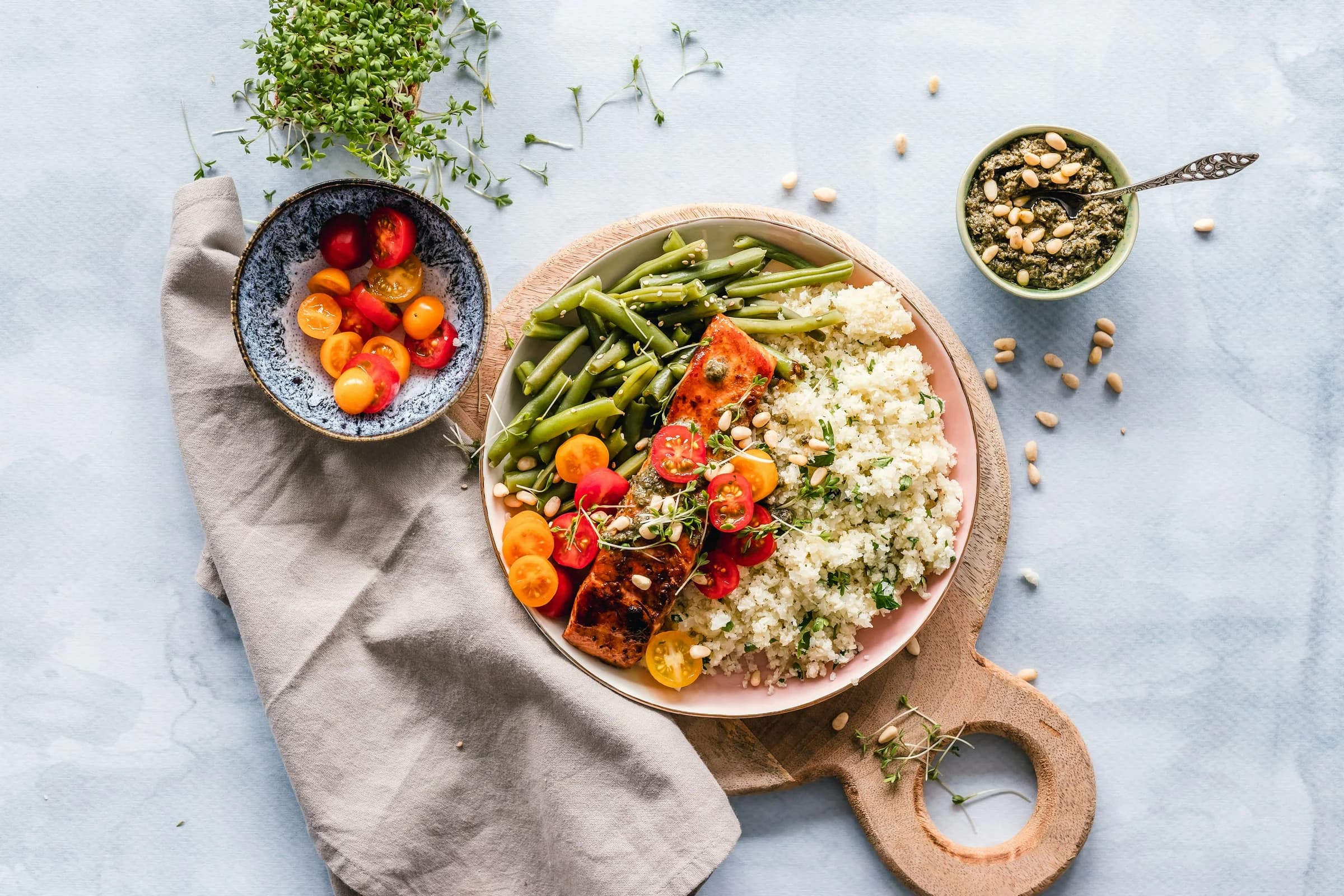
Think roughly half vegetables and fruit, a quarter protein, and a quarter whole grains or starchy vegetables. Add some healthy fat and adjust portions to your appetite and activity.
Your plate might be salmon, roasted potatoes, and asparagus. Or lentil curry, brown rice, and vegetables. Or chicken tacos with beans, cabbage, salsa, and avocado.
There's no requirement to eat quinoa if you dislike quinoa.
The point is variety, nourishment, and consistency.
Fiber is doing more work than you think
Fiber has an image problem. Mention it, and people immediately think of bran cereal and digestive regularity.
But fiber is one of the most interesting nutritional tools available.
Certain fibers help slow carbohydrate absorption, while others are fermented by bacteria in your gut. Fiber-rich foods can also help with fullness and cholesterol management.
A major analysis published in The Lancet examined evidence from 185 observational studies and 58 clinical trials. Higher fiber intake was associated with lower rates of several chronic diseases and premature death. Benefits were particularly evident around 25–29 grams daily.
You can move toward that amount without memorizing a food database.
Oatmeal and berries at breakfast. Beans in your lunchtime soup. An apple for a snack. Vegetables at dinner. A handful of nuts.
The important part is to increase fiber gradually, particularly if your current intake is low. Your digestive system may need time to adapt.
And don't overlook one of the cheapest foods in the supermarket: beans. They're rich in fiber, provide plant protein, and work in everything from chili to salads.
The scale can't tell you what you're made of
Imagine two people who weigh exactly 170 pounds.
One has relatively more muscle and less body fat. The other has less muscle and more body fat.
Their bathroom scales show the same number. Their physical capabilities may be quite different.
That's why nutrition after 50 should focus on body composition and function, not just weight.
When people lose weight through calorie restriction alone, they often lose some muscle along with fat. That can be especially undesirable later in life.
Research suggests resistance training during weight loss helps preserve lean tissue. Adequate protein supports that effort.
If weight loss is one of your goals, a sensible strategy is to make changes gradually while continuing to challenge your muscles.
And measure progress in more than pounds.
Can you climb stairs more comfortably? Are you getting stronger? Do your clothes fit differently? Do you have enough energy to do the things you enjoy?
Those are meaningful outcomes, too.
Eating well when life gets complicated
It's easy to recommend cooking nutritious meals when someone has plenty of time, money, energy, and enthusiasm.
Real life is rarely that cooperative.
Maybe you live alone and don't feel like preparing a full dinner. Maybe your appetite isn't what it used to be. Maybe you're caring for a spouse, traveling, or working long hours.
The solution isn't to become more disciplined. It's to make good eating easier.
Keep frozen vegetables, canned beans, eggs, yogurt, and a few convenient proteins available. A rotisserie chicken can become dinner tonight, a sandwich tomorrow, and soup the following day.
If your appetite is small, try smaller meals containing more protein and useful calories. Greek yogurt with walnuts and berries, for example, delivers a surprising amount of nutrition without requiring a large meal.
And don't confuse convenience with poor nutrition. Frozen vegetables can be excellent. Canned fish is practical. Instant oatmeal is perfectly respectable.
The objective is to eat well, not win a cooking competition.
Persistent loss of appetite, unintended weight loss, or difficulty swallowing deserves medical attention rather than simply another meal-planning trick.
You probably don't need a cabinet full of supplements
The supplement industry is exceptionally good at making ordinary aging sound like a nutritional emergency.
But most people benefit more from improving their meals than from adding expensive powders and pills.
Protein powders can be useful if eating enough protein is difficult. They aren't inherently superior to food.
Vitamin B12 deserves attention because absorption can become less efficient with age, particularly with certain medications. Vitamin D and calcium matter for bone health, although supplements aren't automatically necessary for everyone.
And products promising to reverse aging, rebuild joints, or dramatically sharpen memory deserve skepticism.
A good rule: identify an actual nutritional need before buying something to solve it.
A day of eating that doesn't feel like a diet
Here's an example of how ordinary foods can provide approximately 100 grams of protein without supplements or unusual ingredients.
| Meal | What to eat | Approx. protein |
|---|---|---|
| Breakfast | Two eggs, spinach, whole-grain toast | 14 g |
| Morning snack | Plain Greek yogurt with berries | 25 g |
| Lunch | Lentil and vegetable soup, salad | 18 g |
| Afternoon | Almonds and an apple | 6 g |
| Dinner | Grilled chicken, brown rice, roasted vegetables | 30 g |
| Evening | Cottage cheese or milk | 8–12 g |
| Daily total | 101–105 g |
Notice what isn't on the menu: a meal replacement shake, a complicated recipe, or a food marketed specifically to people over 50.
If you prefer vegetarian meals, tofu, tempeh, lentils, beans, edamame, soy milk, eggs, and dairy can help you reach similar targets. People eating entirely plant-based diets should also pay particular attention to vitamin B12.
And if you're physically active, don't forget carbohydrates. Oats, potatoes, rice, fruit, and whole grains provide useful fuel. Protein builds and maintains tissue; carbohydrates help power the work.
The overlooked ingredient: enjoyment
There's something nutrition advice often forgets.
Food is one of life's pleasures.
It's Sunday dinner with family. Fresh peaches in summer. A favorite restaurant. A meal cooked with someone you love.
You can eat thoughtfully without turning every celebration into a nutritional calculation.
One dessert doesn't erase a week of nutritious meals. Neither does a vacation or an occasional indulgent dinner.
What matters most is the pattern you return to.
In fact, the best nutrition plan may be the one that leaves you healthy enough to enjoy many more dinners, adventures, holidays, and ordinary Tuesdays.
Try this: improve one meal this week
Don't overhaul your kitchen tomorrow.
Choose the meal you eat most consistently and improve it in one meaningful way.
If breakfast is toast and coffee, add Greek yogurt or eggs. If lunch is usually a sandwich, add fruit or vegetables. If dinner rarely includes plants, start with a generous serving of something you actually like.
Repeat that improvement for a week.
Then choose another.
You don't need to eat perfectly to grow stronger, feel better, and support your long-term health. You need a way of eating that nourishes your body and fits the life you want to live.
And that's a far more appealing goal than following another diet.
Sources
- Bauer J, et al. (2013). Evidence-based recommendations for optimal dietary protein intake in older people. Read source
- Houston DK, et al. (2008). Dietary protein intake is associated with lean mass change in older, community-dwelling adults. Read source
- Morton RW, et al. (2018). Protein supplementation and resistance training-induced gains in muscle mass and strength. Read source
- Reynolds A, et al. (2019). Carbohydrate quality and human health. Read source
- Estruch R, et al. (2018). Primary Prevention of Cardiovascular Disease with a Mediterranean Diet. Read source
- USDA FoodData Central. Read source