
You're standing in the bread aisle with a white loaf in one hand and a whole-grain loaf in the other. On fiber after 50, at least for adults with prediabetes or diabetes, a systematic review of the research leans toward the whole-grain one. Its authors recommend increasing fiber by 15 grams a day, or reaching 35 grams a day.
Blood sugar and survival in diabetes
In the trials the authors pooled, higher fiber went with better blood sugar control. The benefit appeared across fiber types and types of diabetes, and the biggest improvements came from people moving from low intake to moderate or high intake. The trials also varied a great deal, so your own results may differ from the average.
Survival data come from a different kind of study. Two groups of studies followed 8,300 adults with type 1 or type 2 diabetes for an average of 8.8 years. People who ate 35 grams of fiber a day had about 14 fewer deaths per 1,000 people than those who ate the average of 19 grams. Because these studies observed eating habits rather than assigning them, they show a link and cannot show that fiber caused the difference. The authors say 35 grams "might be a reasonable target," and they name as a limitation the lack of controlled trials of higher fiber lasting 12 months or longer in adults with diabetes.
All of these numbers come from people with prediabetes or diabetes. The review does not set them as a target for everyone, and the evidence here gives no cholesterol, blood pressure or heart disease results.
Where beans and whole grains fit
The review's practical advice is to replace refined grain products with whole grain foods. It gives no serving count and does not compare whole grains with one another. Earlier trials in people with diabetes, which the review cites as background, found benefits only when the carbohydrate foods were rich in fiber.

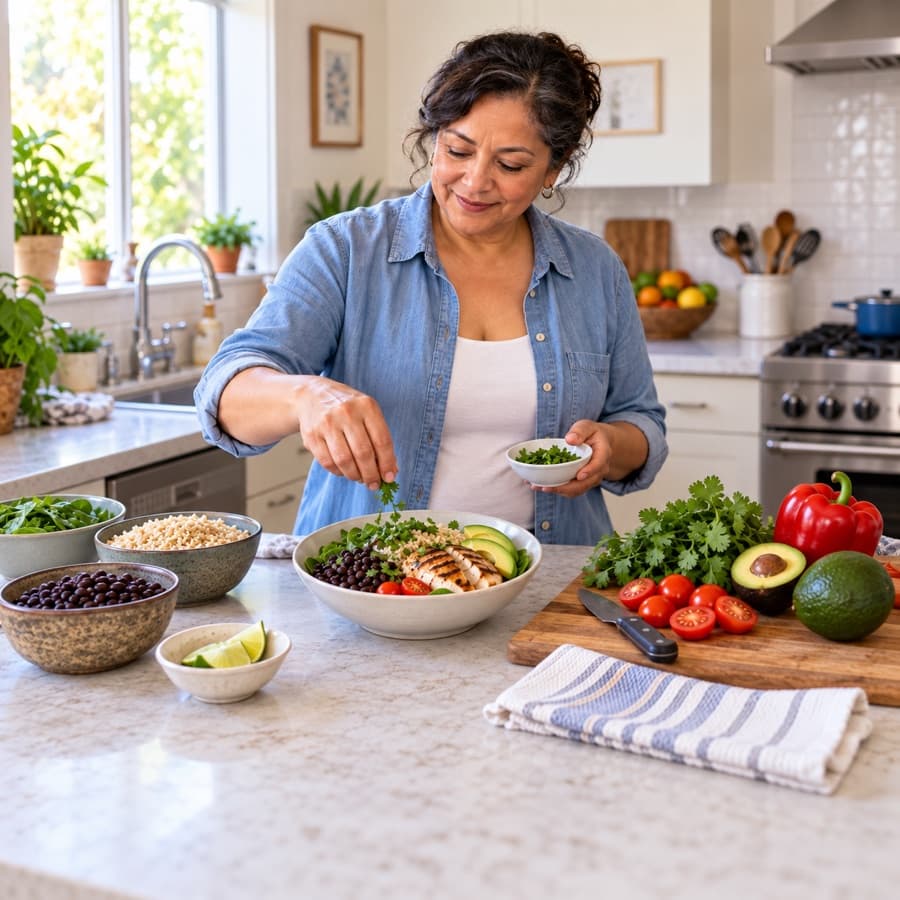
Neither review tested beans. A background line in the constipation paper says fiber from pulses, the group that includes beans, and whole grains helps maintain regular bowel movements. That line cites another source, and the meta-analysis itself did not test pulses. Beans are one way to add fiber, and how much they help is not measured here. For how beans fit into protein needs, see protein after 50.
Fiber and constipation after 50
A meta-analysis of seven small trials with 187 older adults who had chronic constipation found no significant improvement in stool frequency with fiber supplements. It did find that people taking fiber needed laxatives or enemas less often. The authors call the evidence for fiber in older adults inconclusive and say the best dose and duration are still unknown. The trials tested supplements; food was not tested. If you use laxatives, talk with a clinician before changing how you use them.
Earlier work the authors cite suggests insoluble fiber may worsen abdominal pain and bloating. The paper does not say how often that happens or which foods are responsible.
Where to start
After you make lunch tomorrow, put whole grain bread or another whole grain in place of the refined version you usually use. Keep a can of beans in the pantry or whole grain bread in the freezer so the swap takes no planning. Once that feels automatic, make the same swap at dinner. The sources do not say how fast to raise fiber, and earlier work they cite says insoluble fiber may worsen bloating, so add one swap at a time and see how your gut responds before adding another. If you take diabetes medication, mention your new eating pattern at your next appointment.