
Imagine two people, both 58, who each lose 20 pounds over six months. On paper they're twins. Same starting weight, same finish line, same congratulations from the doctor.
Now look closer. The first one got there on a crash diet: skipped breakfast, survived on salads and willpower, didn't exercise because she was "too hungry to bother." A good share of what she lost was muscle. She climbs stairs a little more slowly than she did in January, and she's already hungry enough that the weight is creeping back.
The second one ate somewhat less, ate a lot more protein than he used to, lifted weights twice a week and walked most days. Almost all of what he lost was fat. He can carry the groceries up from the car in one trip now, which he couldn't do last year.
Same scale reading. Completely different bodies. And the difference between them is the whole story of weight management after 50.
This guide is long because the subject deserves it. It covers what actually changes in your body (less than you've been told, in some ways, and more in others), how to lose fat while holding on to muscle and bone, how to eat without following anyone's branded plan, how to read the fad-diet sales pitch for what it is, where the new weight-loss drugs fit, and how sleep, stress, hormones, joints and friendships all push the scale around. Read it straight through or jump to the parts you need.
The scale only knows one number
Body weight is the sum of a lot of things: fat, muscle, bone, organs, water, the contents of your gut, the sandwich you ate an hour ago. When the scale goes down, it doesn't report which of those left.
That didn't matter much at 30, when most people had muscle to spare. It matters a great deal at 55 or 70, because muscle is the tissue that keeps you capable. It's what gets you out of a low chair, catches you when you trip on a curb, lets you lift a carry-on into an overhead bin and keeps your blood sugar in check after a meal. Skeletal muscle is the largest place your body stores and disposes of glucose, which is one reason losing it tends to make metabolic health worse, not better.
Muscle also doesn't come back easily. Adults tend to lose some muscle each decade from midlife on, a process called sarcopenia when it becomes severe, and periods of inactivity (an illness, a hospital stay, a long winter on the couch) speed it up sharply. Researchers have found that even two weeks of very low step counts can reduce fat-free mass and blunt muscle-building responses in older adults. Rebuilding that lost tissue later is slow work.
"Inaction weakens the body, work strengthens it; the former brings premature old age, the latter prolongs youth."
Celsus wrote that about two thousand years before anyone measured muscle loss during bed rest. The step-reduction studies are a modern footnote to his point: muscle you stop using is muscle you start losing.
So a better goal for weight management after 50 is this: lose fat, keep muscle, protect bone, and stay strong enough to enjoy your life. Every recommendation in this article flows from that.
There's a name for the worst-case combination, by the way: sarcopenic obesity, meaning too much fat and too little muscle at the same time. It's common, it's sneaky (a person can look "normal" in clothes), and it's linked to more disability than either problem alone. It's also the exact outcome that careless dieting can produce.
Better ways to keep score
If the scale is a blunt instrument, what should you watch instead? A few options, from cheapest to fanciest:
- A tape measure. Waist size tells you about the fat that matters most, the visceral fat packed around your organs. U.S. health agencies have long used a waist over 40 inches for men and over 35 inches for women as a marker of higher risk. In one large National Institutes of Health study of people aged 51 to 72, even participants with a normal weight for their height had roughly a 20 percent higher risk of dying during the study if their waists were that large. (The cutoffs aren't perfect for everyone; people of Asian descent, for example, appear to carry higher risk at smaller waist sizes.) Measure just above your hip bones, relaxed, after breathing out.
- How your clothes fit. Low-tech, surprisingly informative. Belts don't lie.
- Strength and function. Can you do more sit-to-stands from a chair in 30 seconds than you could last month? Carry heavier bags? Walk farther before you want to sit? If those numbers are improving while your weight goes down, you're losing the right tissue.
- Body-composition scans. A DXA scan (the same machine used for bone density) estimates fat and lean mass. It's useful for tracking trends, though it has quirks we'll come back to. Home "smart scales" that estimate body fat through your feet are entertaining but unreliable; treat them as weather vanes, not lab instruments.
Your metabolism did not fall off a cliff at 40
Ask a room full of 55-year-olds why it's harder to stay lean than it used to be and a good chunk will say the same thing: "My metabolism slowed down."
It's a reasonable guess. It also turns out to be mostly wrong, at least for the decades most people blame.
In 2021, an international team led by Duke University anthropologist Herman Pontzer pooled measurements from more than 6,600 people, aged eight days to 95 years, across 29 countries. They used a technique called doubly labeled water, considered the gold standard for measuring how many calories people burn while going about their normal lives. Once they adjusted for body size and composition, the results were startling. Daily energy expenditure was remarkably stable from about age 20 to about age 60. No midlife crash. No decline at 30 or 40.
After 60, metabolism does begin to slow, but gradually, about 0.7 percent a year. That adds up over time (the researchers estimated that someone in their 90s needs about 26 percent fewer calories a day than someone in midlife), and the drop held even after they accounted for loss of muscle, which suggests cells themselves become a little less metabolically busy with age.
The study also found enormous variation between individuals, even after controlling for size, sex and age. Two people of the same build can burn noticeably different amounts. So if your friend seems to eat whatever she likes, she might not be lying.
So why does the weight creep on?
If metabolism holds steady through middle age, the usual culprits are less mysterious and more fixable:
You probably move less than you used to. Not necessarily your workouts; the rest of the day. Desk jobs, cars, delivery apps, remote controls, elevators. Researchers call the calories burned outside formal exercise NEAT (non-exercise activity thermogenesis): fidgeting, pacing, gardening, carrying, standing. NEAT varies enormously between people and tends to shrink quietly over the years.
You may have less muscle. Muscle isn't a furnace (a pound of it burns only a modest number of calories at rest), but losing it lowers your total daily burn a little, makes activity harder, and reduces the body's capacity to handle carbohydrates well.
Life changed around you. Kids leave home and meals get more restaurant-heavy. Retirement brings freedom, and also a refrigerator ten steps from wherever you're sitting. Work stress, caregiving, grief, poor sleep, new medications, menopause, a knee that started complaining: all of these nudge eating and movement in the wrong direction.
The food got easier to overeat. More on this later, but the modern food supply is built for convenience and craveability, and it's very good at both.
None of this is a moral failing. It's mostly drift. And drift can be redirected.
The practical upside of the Pontzer findings is real: if you're 52 and convinced your body has become a calorie-hoarding machine, you can let that belief go. Your physiology is not working against you nearly as much as you thought. If you're 72, the slowdown is real but modest, and the right response is not to eat like a bird. It's to keep your muscle, keep moving, and make your calories count more.
First, a fair question: should you lose weight at all?
Not everyone over 50 needs to, and it's worth saying plainly.
Researchers have debated for years over the so-called obesity paradox, the observation that in some studies older adults with modestly higher body weight seem to live as long or longer than thinner peers. Some of that pattern is an artifact: people who are seriously ill often lose weight before they die, which makes thinness look dangerous. But part of it may be real. A little extra reserve can help someone weather a major illness or surgery, and being underweight in later life is clearly linked to worse outcomes.
What seems to matter more than the number is the composition and the trend. Carrying a lot of visceral fat, having blood sugar heading toward diabetes, or having knees that ache with every step are good reasons to lose some fat. Being a sturdy, strong 68-year-old with good blood work and a BMI of 27 may not be.
A few situations call for a conversation with your doctor before you try to lose anything:
- Unintentional weight loss. If you're losing weight without trying, that needs investigating, not celebrating.
- Frailty, recent falls, or recent hospitalization. The priority here is usually rebuilding strength and nutrition first.
- Advanced kidney, heart, or liver disease, diabetes treated with insulin or drugs that can cause low blood sugar, or a history of eating disorders. Weight change in these situations needs medical guidance.
"Your waistline is your lifeline."
LaLanne was selling exercise, not epidemiology, but the tape-measure data back him up. If you only track one number besides your strength, make it the one around your middle.
When losing some fat clearly pays off
For many people over 50 who carry excess fat, especially around the middle, modest weight loss does real good. Two findings stand out.
The first comes from the Diabetes Prevention Program, a large U.S. trial of people with prediabetes. Participants in the lifestyle group aimed to lose about 7 percent of their body weight and get roughly 150 minutes of activity a week. They cut their risk of developing type 2 diabetes by 58 percent. Among participants aged 60 and older, the reduction was 71 percent. Older adults didn't just keep up; they got the biggest benefit of anyone in the study.
The second concerns joints. Researchers at Wake Forest University studied 142 overweight and obese older adults with knee osteoarthritis and found that every pound of weight lost was associated with about four pounds less force through the knee with each step. That sounds small until you multiply it. By the lead researcher's estimate, someone who loses 10 pounds spares each knee roughly 48,000 pounds of compressive load for every mile walked.
Notice the size of these goals. Seven percent of body weight. Ten pounds. You don't need to get back to your wedding weight to change your health. For most people, losing 5 to 10 percent of starting weight, and keeping it off, is where much of the medical benefit lives.
Why dieting after 50 is different
Most diet books skip an uncomfortable fact: when you eat less, your body doesn't politely burn only fat. It takes some of everything, including muscle and bone. In younger people, the muscle part is a nuisance. In older people, it can be a real setback.
The clearest demonstration comes from a 2017 trial in the New England Journal of Medicine. Dennis Villareal and colleagues enrolled 160 sedentary adults aged 65 and older with obesity and assigned them to a control group or to a six-month weight-loss program combined with one of three exercise plans: aerobic training alone, resistance (strength) training alone, or both.
Every dieting group lost about 9 percent of body weight. The interesting part is what that weight was made of.
- In the aerobic-only group, lean mass fell about 5 percent.
- In the combined group, it fell about 3 percent.
- In the resistance-only group, about 2 percent.
Hip bone density followed a similar pattern, declining less when strength training was part of the plan. And when the researchers measured physical function (walking speed, balance, getting up from a chair, overall frailty), the combined aerobic-plus-strength group improved the most. Strength training protected the muscle; cardio added fitness; together they made people more capable.
One thing this trial did not include: a diet-only group without exercise. Other work by the same team and others has shown that weight loss without exercise in older adults tends to cost more lean tissue and bone. The weight comes off. Some of your future capability goes with it.
Three things that tip the balance
Whether the weight you lose comes mostly from fat or partly from muscle depends on a handful of controllable factors:
- Whether you give your muscles a reason to stay. Resistance training sends that signal more clearly than anything else.
- Whether you eat enough protein to build and repair them. Older muscle needs more protein than younger muscle to get the same response, a phenomenon researchers call anabolic resistance.
- How fast you lose. Aggressive deficits make muscle loss more likely and are harder to sustain.
A fourth factor, sleep, sneaks up on people, and it gets its own section later. For now, here's the short version: in one carefully controlled study, people dieting on short sleep lost the same amount of weight as when they slept normally, but far less of it was fat.
Get these right and dieting after 50 becomes something else entirely: a chance to come out the other side leaner and stronger.
"It is a disgrace to grow old through sheer carelessness before seeing what manner of man you may become by developing your bodily strength and beauty to their highest limit."
Swap "disgrace" for "waste" and the line holds up well. Most people over 50 have never found out how strong they could get, and a calorie deficit is a fine time to start finding out.
Strength training: the part you can't skip
If you take one idea from this article, take this one. When you're trying to lose weight after 50, lifting something heavy-ish two or three times a week is the insurance policy on everything else.
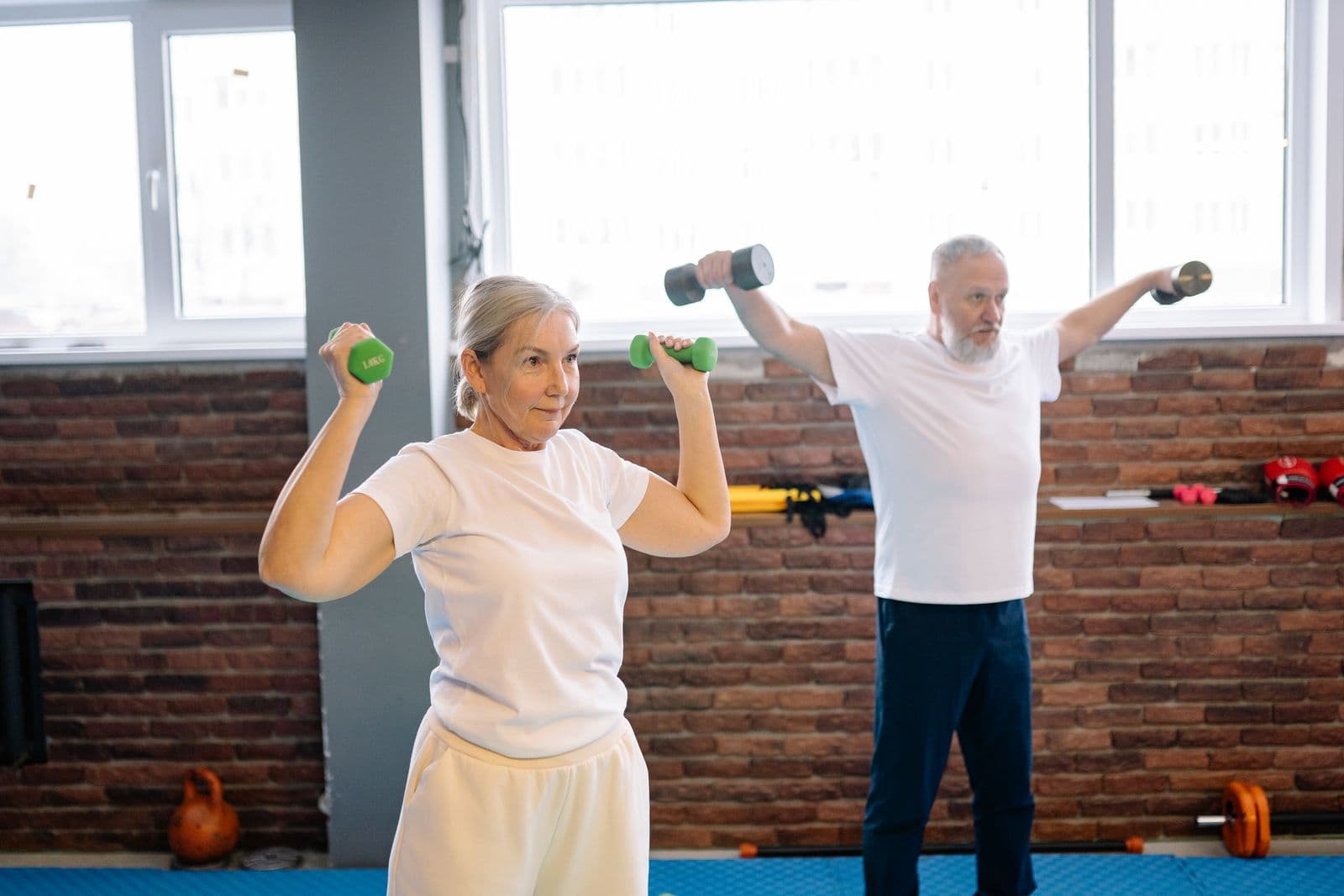
Current U.S. physical activity guidelines already ask older adults to do muscle-strengthening work at least two days a week, hitting all the major muscle groups: legs, hips, back, abdomen, chest, shoulders and arms. The guidance on effort is refreshingly concrete. Work each muscle to the point where it's hard to do another repetition without help. Not to failure, not to collapse, just to "that was genuinely hard."
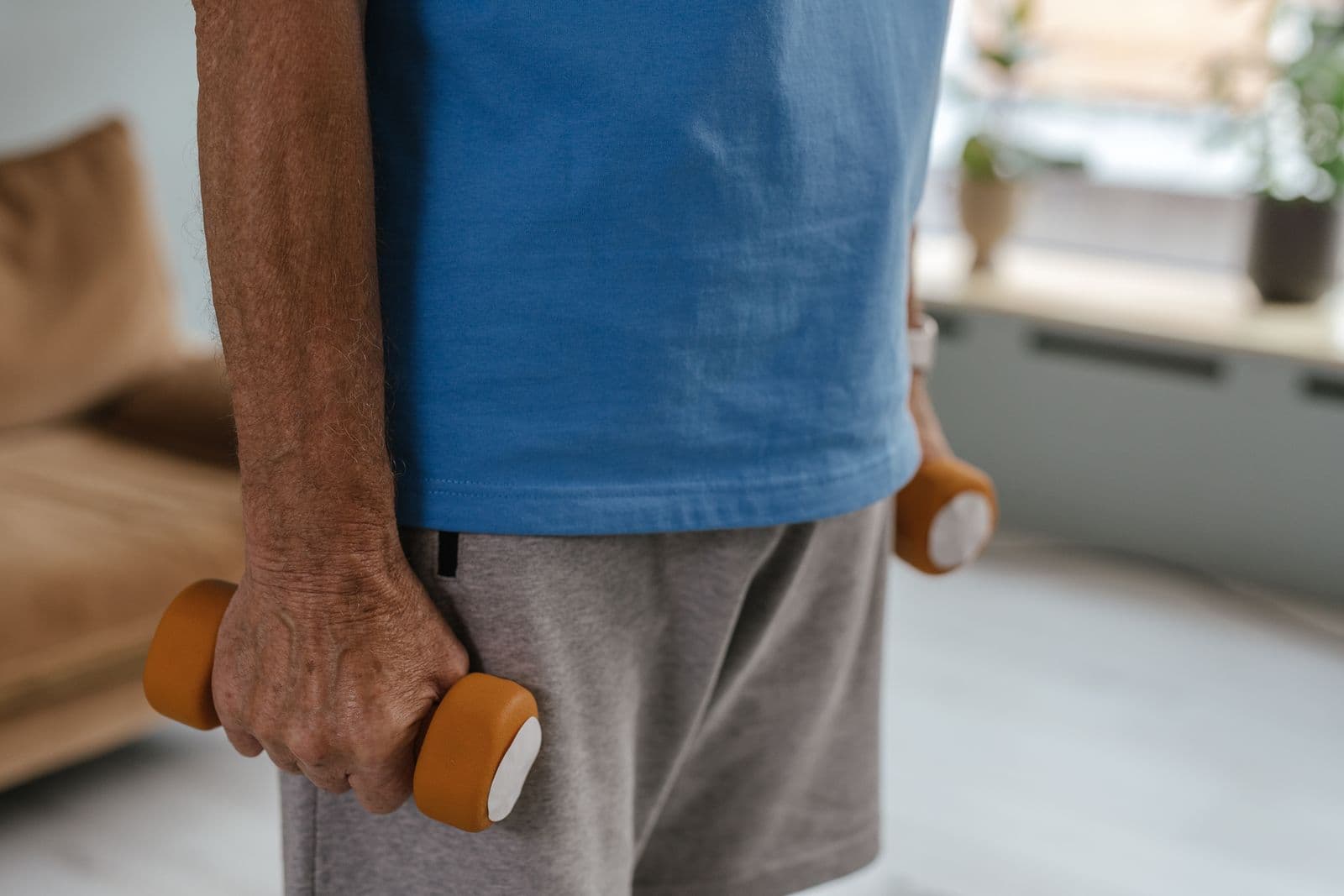
That last detail is where most people go wrong. They do strength training that isn't. Three sets of 15 with a weight they could lift 40 times is a pleasant way to spend time, but it doesn't send a strong enough signal to hold on to muscle during a calorie deficit.
What a sensible program looks like
You don't need a gym, though one helps. You need a few movement patterns, done with enough effort, consistently, with the load nudged upward as you get stronger. A simple framework:
- Squat (a lower-body push): sit-to-stand from a chair, box squat, goblet squat holding a dumbbell at your chest, leg press.
- Hinge (bending at the hips): hip bridge on the floor, Romanian deadlift with dumbbells, kettlebell deadlift from a raised surface.
- Push: wall push-up, countertop push-up, floor push-up, dumbbell chest press, overhead press.
- Pull: resistance-band row, one-arm dumbbell row with a hand on a bench, seated cable row, lat pulldown.
- Carry: walk with a heavy bag or dumbbell in each hand (a "farmer's carry"), or one hand at a time to challenge your trunk.
- Single-leg work: step-ups onto a low step, split squats holding a counter, lunges if your knees welcome them.
Pick one exercise from each of the first four or five categories. Do two or three sets of each, aiming for a weight you can lift somewhere between 8 and 15 times with good form, where the last two reps feel hard. When you can comfortably do more reps than your target on every set, increase the load a little. That's the entire system. Progressive overload sounds like gym jargon, but it simply means asking a bit more of your muscles over time.
Twice a week is plenty to start. Three times works well once you're settled. Sessions can be 30 to 45 minutes.
If you're starting from zero
Begin with your own body weight and a sturdy chair. A first week might be:
- Sit-to-stand from a chair, arms crossed if you can: 2 sets of as many as you can do with good control, stopping a couple of reps short of failure.
- Countertop push-ups (hands on the kitchen counter, body in a straight line): 2 sets of 8 to 12.
- Band rows, with a resistance band anchored in a door: 2 sets of 10 to 15.
- Hip bridges on the floor or the bed: 2 sets of 10 to 15.
- A slow walk around the house carrying two full grocery bags: 2 lengths.
That's it. Twenty minutes. After two or three weeks, lower the chair height, move push-ups to a lower surface, use a stiffer band, or hold a weight during the bridges.
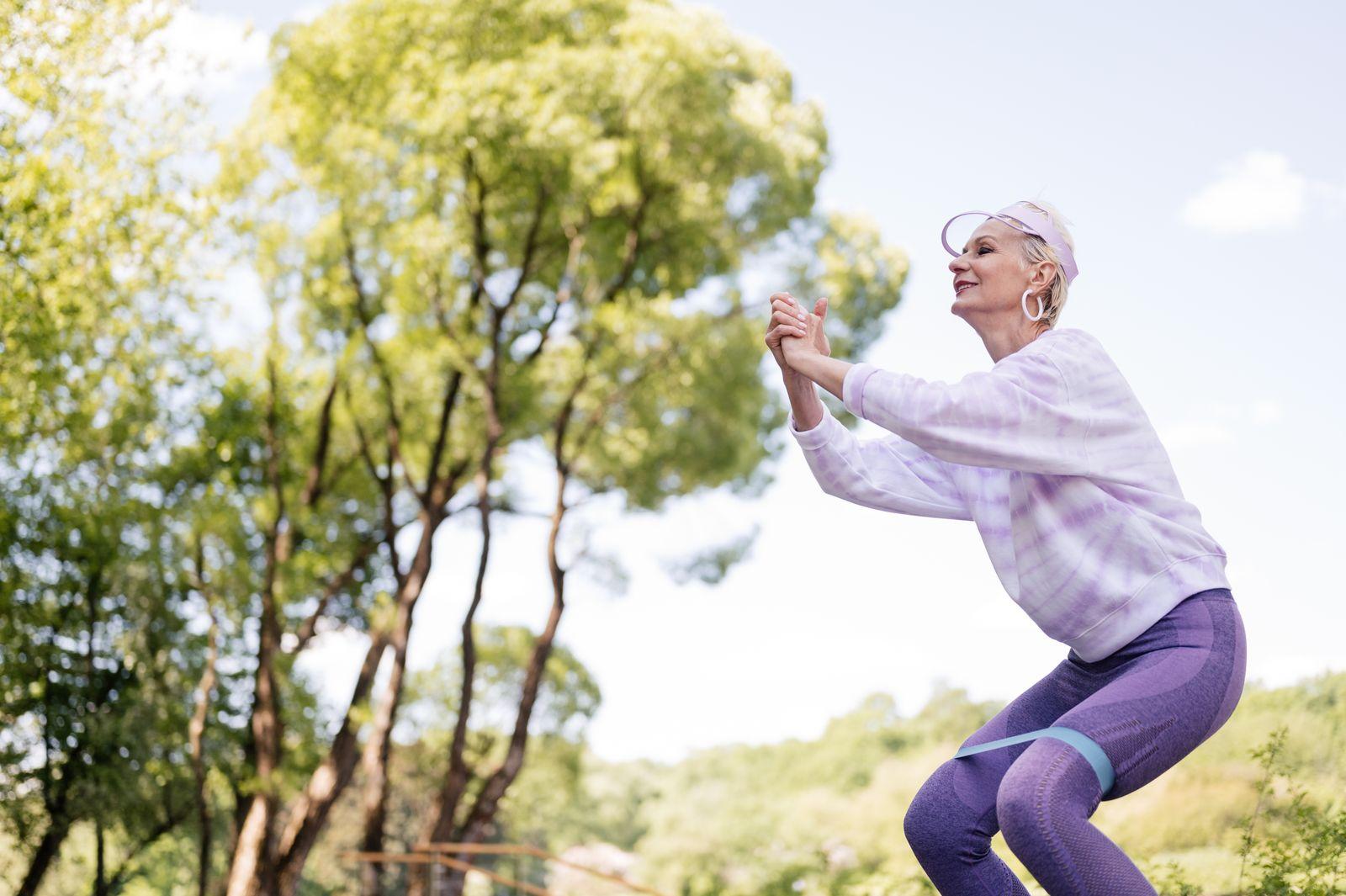
A common pattern for beginners in their 60s and 70s is rapid early progress. The first few weeks of gains come largely from your nervous system learning to recruit muscle better, which is why people often feel noticeably stronger long before they look any different. Enjoy it. It's real, and it's motivating.
If you're already strong
Then the job is to keep the intensity up while you diet. People who train regularly often make the mistake of switching to "lighter weights, more reps, to tone" when they start losing weight. That's backwards. Keep lifting heavy enough to challenge yourself. You may not set personal records in a calorie deficit, and that's fine. Maintaining your strength while the scale drops is a win in itself; it's strong evidence you're losing fat, not muscle.
"Strength does not come from winning. Your struggles develop your strengths."
In a deficit, the struggle is often just holding on to the weights you lifted last month. That counts. Strength you keep while the scale drops is strength you'd otherwise have lost.
Safety, briefly and specifically
Strength training is very safe for most older adults when it's progressed sensibly, and the risks of not doing it are much larger than the risks of doing it. Still, a few precautions:
- If you have heart disease, uncontrolled blood pressure, recent surgery, osteoporosis with previous fractures, or a joint replacement, ask your clinician or a physical therapist which movements suit you. Many people with osteoporosis can and should strength train, but some movements (heavy spinal flexion, for instance) may need modifying.
- Breathe. Don't hold your breath while straining; exhale on the effort.
- Pain that's sharp, or that lingers into the next day and gets worse, is a signal to change the exercise. Muscle fatigue and mild soreness are normal.
- A session or two with a qualified trainer or physical therapist, especially one who works with older adults, is money well spent. Learning to hinge properly can save your back for decades.
Cardio: still important, just not the main event for fat loss
For decades the standard prescription for losing weight was "do more cardio." The research has complicated that picture.
Aerobic exercise burns calories, but the body compensates in sneaky ways. Some people get hungrier. Others become slightly less active the rest of the day without noticing. In a separate 2016 study of more than 300 adults, Pontzer and colleagues found that daily energy expenditure rose with activity among less active people but plateaued among the most active, as if the body found ways to economize elsewhere. That's one reason exercise alone, without changes to eating, tends to produce modest weight loss.
That's a point about the scale. Health is a different ledger. Aerobic fitness is one of the strongest predictors of longevity we know of. It protects the heart and brain, improves mood and sleep, steadies blood sugar, and, as the Villareal trial showed, combining it with strength work produces the best real-world function. And for keeping weight off after a loss, regular activity appears to be one of the most consistent habits among people who succeed.
The general target for older adults is at least 150 minutes a week of moderate-intensity aerobic activity, such as brisk walking (30 minutes, five days a week, is the classic split), or 75 minutes of vigorous activity, or a mix. Moderate means you can talk but not sing. Vigorous means you can only get out a few words at a time.
Walking is underrated
You may have heard that the magic number is 10,000 steps a day. That figure grew out of a 1960s Japanese marketing campaign for a pedometer, not out of research.
A 2022 analysis in The Lancet Public Health pooled data from 15 studies covering about 47,000 adults on four continents. More steps were associated with lower risk of death, up to a point. For adults 60 and older, the benefit leveled off at around 6,000 to 8,000 steps a day. For younger adults, it was around 8,000 to 10,000. Walking pace mattered less than total volume once steps were accounted for.
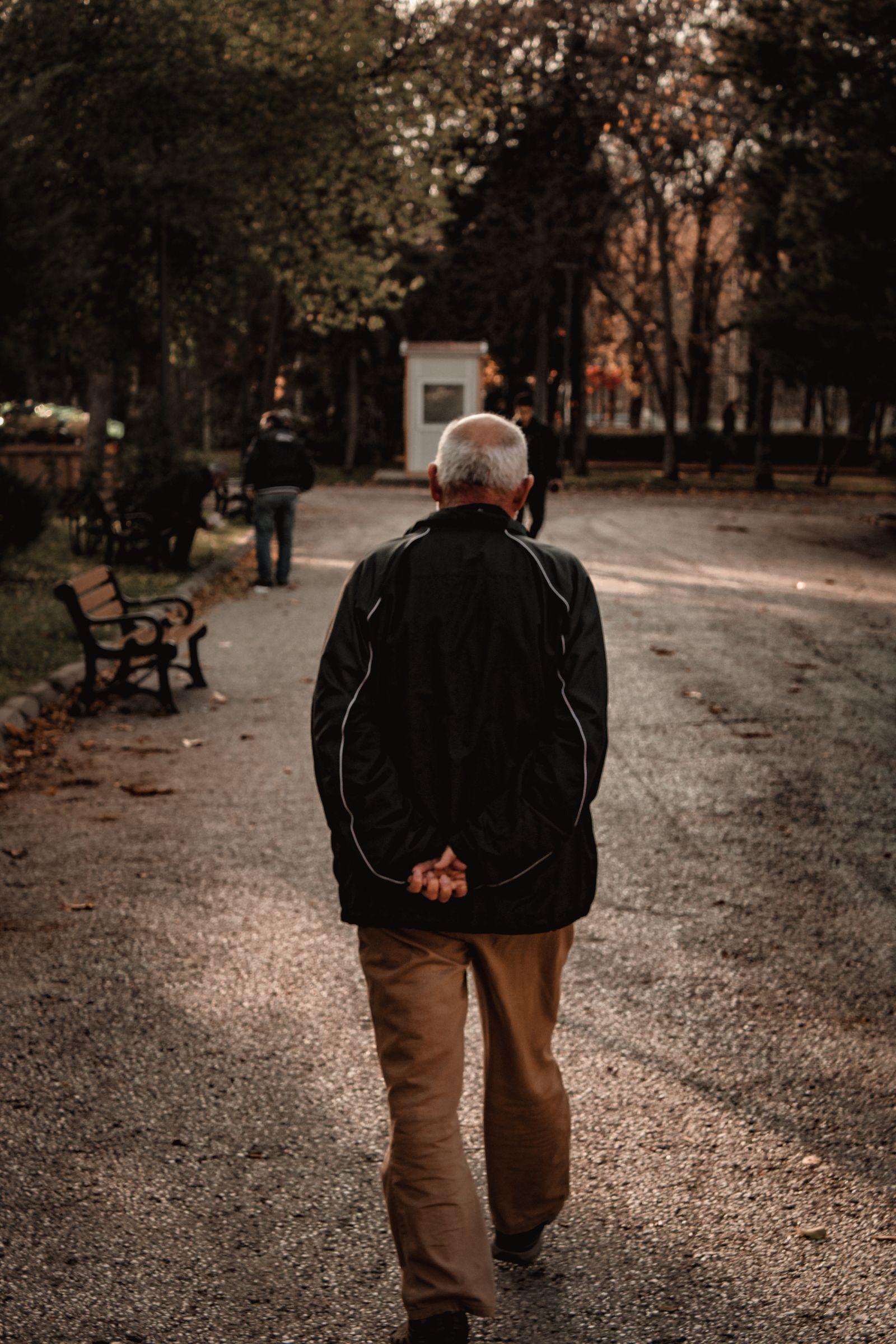
That's an achievable target for most people, and it scales nicely. If you currently average 3,500 steps, adding 1,000 a day for a few weeks, then another 1,000, is a manageable path. A 10-minute walk after each meal adds roughly 3,000 steps, and post-meal walking has the added bonus of blunting blood-sugar spikes.
When your joints have opinions
If walking hurts, you have options that still count:
- Cycling, outdoors or on a stationary bike, takes body weight off the knees.
- Swimming and water aerobics offer resistance without impact, and many community pools run classes aimed at older adults.
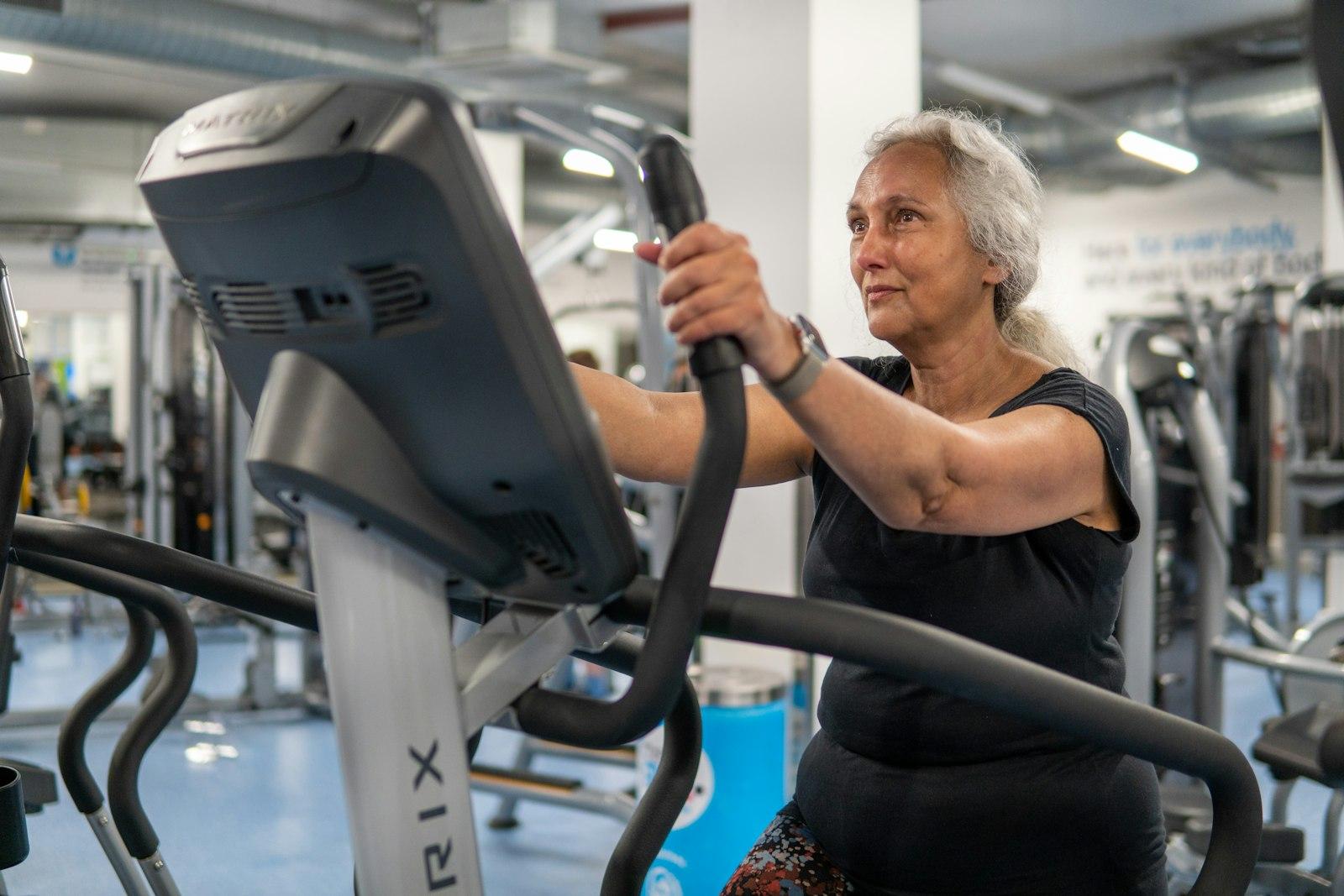
- Rowing machines and ellipticals provide whole-body work with little pounding.
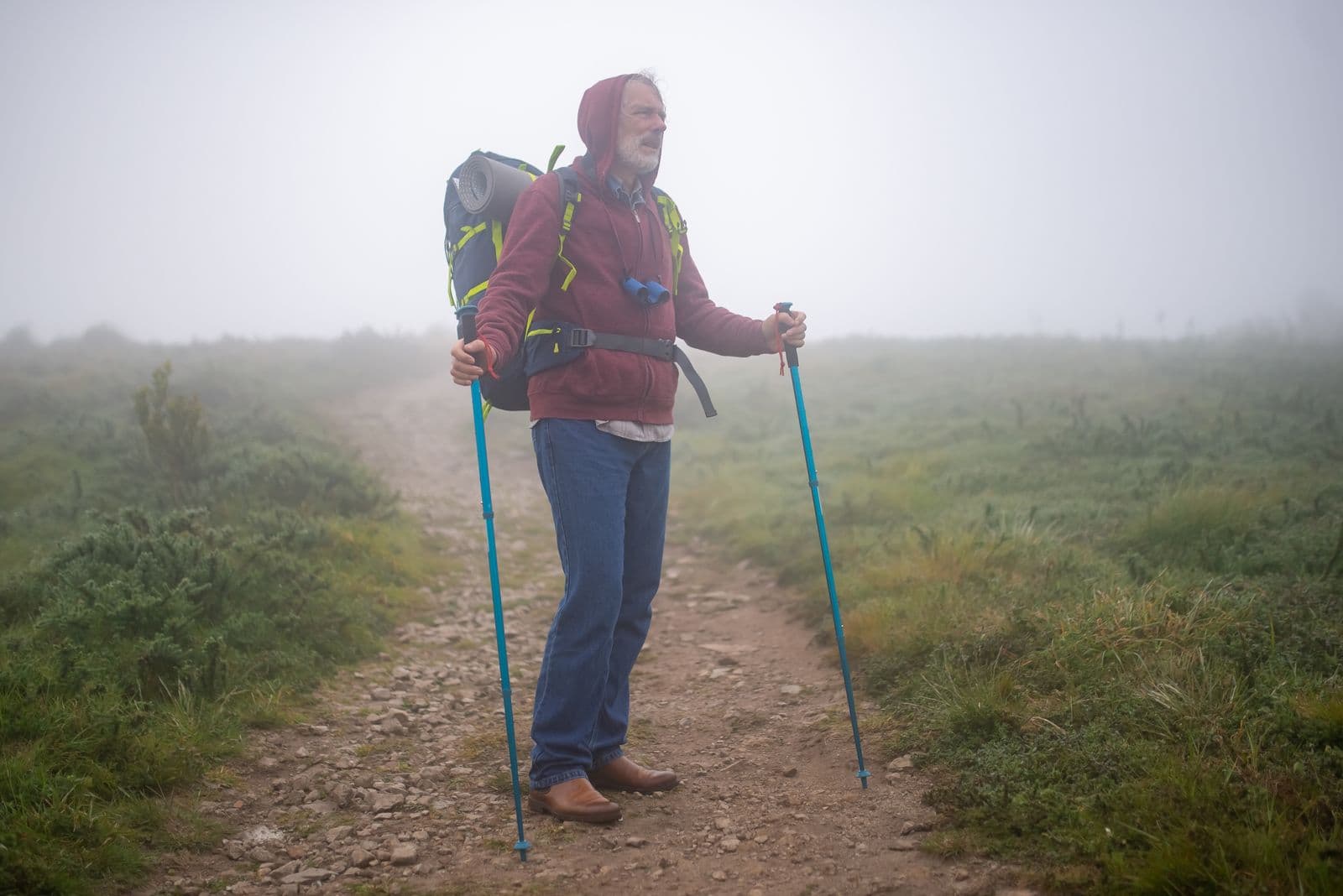
- Nordic walking with poles spreads the work to the upper body and improves stability on trails.
Remember the knee research: as weight comes down, walking often becomes more comfortable. Many people find that the activity they couldn't tolerate at the start becomes easy a few months in.
A word on intensity
You don't need to suffer. But adding a little intensity once or twice a week, such as short intervals of faster walking up a hill, or 30-second pushes on a bike followed by easy recovery, improves aerobic fitness efficiently. Build up gradually, and if you have heart disease or chest symptoms with exertion, get medical clearance first.
The movement that doesn't count as exercise (but counts)
Think about the last time you watched a hotel breakfast crowd. Some guests make three trips to the buffet, stand while they chat, take the stairs back to their room. Others sit down once and stay put. Neither group is "exercising," but by the end of a day, the gap in calories burned between restless people and still people can be substantial.
That's NEAT again, and it's one of the most overlooked levers for weight management after 50, especially after retirement, when the built-in movement of commuting and workplace errands disappears.
Ways to rebuild it without scheduling anything:
- Stand up for phone calls and walk while you talk.
- Put the things you use daily on a different floor of the house, or at least across the room.
- Carry groceries in instead of using a cart to the door.
- Garden, wash the car by hand, sweep the walk.
- Park at the far end of lots. Get off the bus one stop early.
- Every hour you sit, stand up and move for two or three minutes. A timer helps.
- Play with grandchildren, or dogs, at their pace.
People who maintain large weight losses tend to be very active. The National Weight Control Registry, which tracks more than 10,000 people who have lost at least 30 pounds and kept it off for at least a year, reports that about 90 percent of its members exercise roughly an hour a day on average, most often by walking. An hour sounds like a lot. Spread across a dog walk, an after-dinner stroll, gardening and a strength session, it's less daunting than it sounds.
"Excellence is not an isolated act but a habit."
The line is really the historian Will Durant summarizing Aristotle, but the idea is Aristotle's, and it fits the registry data neatly. The people who keep weight off aren't doing anything heroic. They're walking the dog again tomorrow.
Already at a healthy weight? Change what it's made of
Some readers don't need to lose much at all. They're at a reasonable weight but feel softer than they'd like, have noticed their strength slipping, or have a waistline that crept up while the scale held still. (The SWAN study of women in midlife, covered later, shows how much body composition can shift while weight stays flat.)
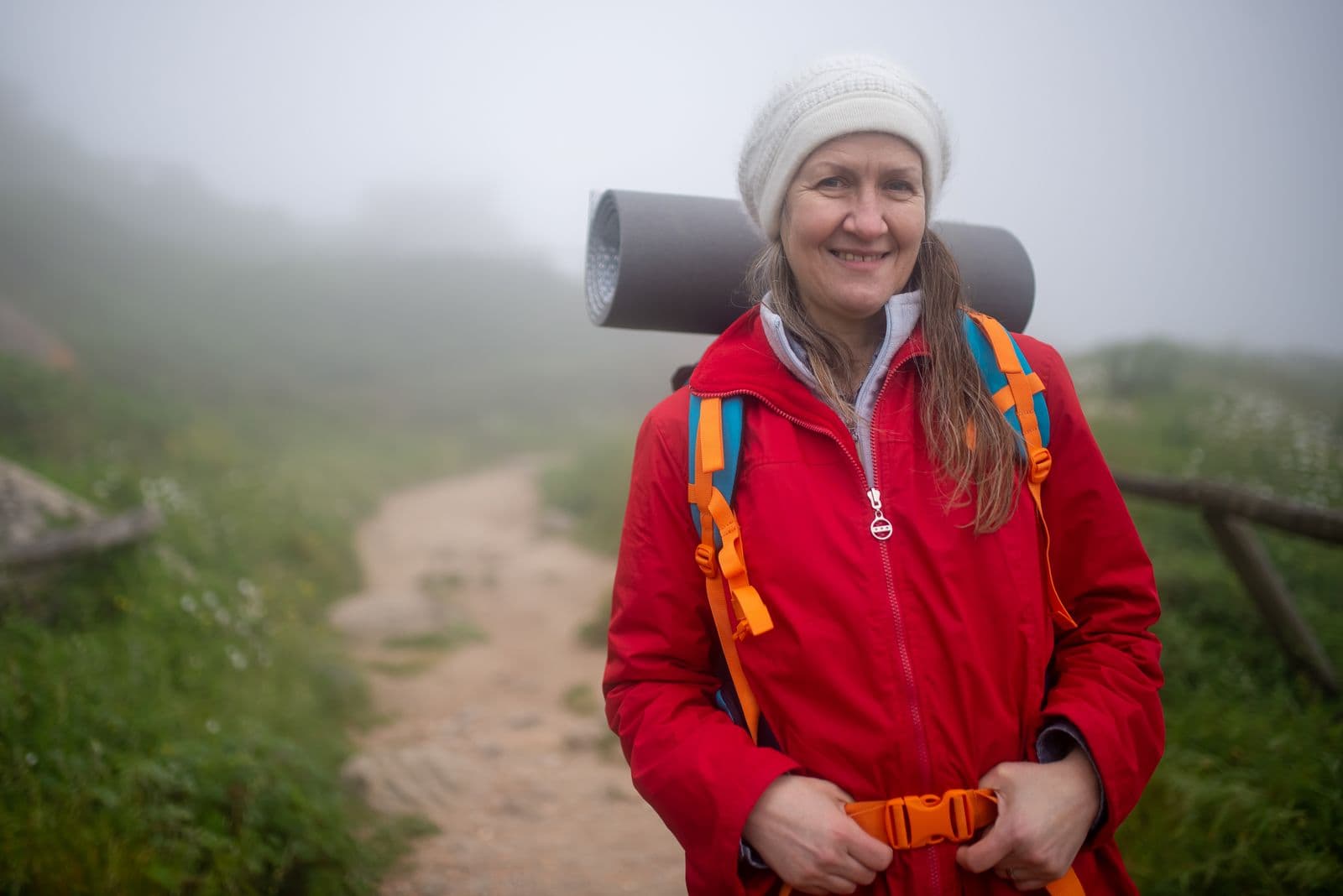
For this group, the goal is body recomposition: gaining or holding muscle while slowly losing some fat, with little change on the scale. It's slower than straightforward weight loss and harder to see in the mirror month to month, but it's very achievable, even in later decades. Resistance-training studies in people in their 70s, 80s and even 90s have repeatedly shown meaningful gains in strength and muscle size.
What recomposition looks like in practice:
- Eat at roughly maintenance, or a very small deficit. No crash diets.
- Train with real intensity, two or three days a week, and keep adding load over months.
- Push protein toward the higher end of the ranges discussed above, spread across meals.
- Track strength and waist, not weight. If your lifts go up and your waist comes down, you're winning, even if the scale doesn't budge.
- Be patient. Think in seasons, not weeks.
This approach also suits people who've already lost weight and want to rebuild the muscle that went with it.
Eating to lose fat, not muscle
Now the food. There's good news here: the science of eating for fat loss is much simpler than the diet industry wants you to believe. There's also less-good news: simple isn't the same as easy, and the details that matter most after 50 aren't the ones most diets emphasize.
A modest deficit beats a dramatic one
To lose fat, you have to take in less energy than you use over time. Every diet that works does this, whatever it claims about hormones, toxins or "metabolic confusion." The question is how big a gap to create.
For older adults, smaller is usually smarter. A daily shortfall of roughly 300 to 500 calories tends to produce steady loss (often in the range of half a pound to a pound a week) while leaving enough fuel and protein to protect muscle and keep training. Large deficits produce faster scale drops, but they also make muscle loss, fatigue, irritability and rebound eating more likely, and they make it harder to get enough protein, calcium, vitamin D and fiber.
You don't have to count calories to create a deficit, though some people find a few weeks of tracking eye-opening. Many succeed by changing the structure of their meals instead: more protein and vegetables, fewer refined starches and sweets, fewer drinks with calories, smaller portions of the energy-dense stuff. We'll get practical in a moment.
One caution worth repeating: rapid weight loss raises the risk of gallstones, and very-low-calorie diets should only be done with medical supervision. If someone promises you 20 pounds in a month, they're promising you a problem.
"Eating alone will not keep a man well; he must also take exercise. Food and exercise… work together to produce health."
The ancient physicians treated diet and exercise as one prescription. Weight management after 50 works the same way: the food decides how much you lose, the training decides what you lose.
Protein: the nutrient that changes after 50
The official recommended dietary allowance for protein, 0.8 grams per kilogram of body weight per day, was set as a minimum to prevent deficiency in healthy adults. It was never meant as the optimal target for an older adult trying to hold on to muscle while eating less.
In 2013, an international expert group known as PROT-AGE reviewed the evidence and recommended that healthy adults over 65 aim for at least 1.0 to 1.2 grams of protein per kilogram of body weight per day. For those who are exercising and active, they advised 1.2 grams per kilogram or more. For older adults with acute or chronic illness, they suggested 1.2 to 1.5. The main exception: people with severe kidney disease who aren't on dialysis may need to limit protein, so check with your doctor if your kidney function is reduced.
In everyday numbers, for a 170-pound (77 kg) person, 1.2 grams per kilogram works out to about 92 grams of protein a day. For a 140-pound (64 kg) person, about 77 grams. During a calorie deficit, many sports nutrition researchers suggest aiming toward the higher end of these ranges, since protein needs rise when energy intake falls.
How you spread it out matters too. Older muscle is less responsive to small doses of protein. A 2015 analysis from Daniel Moore, Stuart Phillips and colleagues compared muscle-building responses in older men (around 71) and younger men (around 22). The older men needed about 0.4 grams of protein per kilogram of body weight in a single meal to get a maximal response, versus about 0.24 grams for the younger men. For a 77 kg person, that's roughly 30 grams per meal.
Many people over 50 eat in a lopsided pattern: a light breakfast of toast and coffee, a modest lunch, then most of the day's protein at dinner. That pattern may leave two meals below the threshold. Shifting protein earlier in the day is one of the simplest, most useful changes you can make.
What 25 to 35 grams of protein looks like:
- 3 eggs plus a cup of milk or a small container of Greek yogurt
- A cup of plain Greek yogurt or cottage cheese with nuts or seeds
- A palm-and-a-half sized portion (about 4 ounces cooked) of chicken, fish, lean beef or pork
- A cup and a half of lentils or beans plus a sprinkle of cheese, or tofu or tempeh in similar portions
- A can of tuna or salmon on whole-grain toast with a side of edamame
Protein also happens to be the most filling of the macronutrients, which makes a deficit more tolerable. It's a rare case where the muscle-protecting choice and the hunger-taming choice are the same choice.
When appetite is the problem, not overeating
Not everyone over 50 struggles with eating too much. Many people in their 70s and 80s face the opposite: smaller appetites, earlier fullness, changes in taste and smell, dental problems, or simply less interest in cooking for one. Researchers sometimes call this the anorexia of aging, and it's one reason protein intake tends to fall as people get older.
If that sounds familiar, the strategy shifts. Rather than cutting portions, focus on making each bite count:
- Lead with the protein portion of the meal, before you fill up on bread or salad.
- Use protein-dense, easy foods: eggs, yogurt, cottage cheese, milk, soft fish, beans, nut butters.
- Eat smaller meals more often if large ones feel overwhelming.
- Make meals social when you can. People tend to eat more, and more varied food, in company.
- Mention unexplained appetite loss to your doctor, especially if you're losing weight without trying.
For someone in this situation, "weight management" may mean protecting weight and muscle rather than losing anything. The strength training advice still applies, fully.
Food quality matters more than food rules
One of the most interesting experiments in modern nutrition took place in 2019, when Kevin Hall and colleagues at the National Institutes of Health admitted 20 adults to a metabolic ward for a month. For two weeks they ate a diet of mostly ultra-processed foods; for two weeks, a diet of mostly minimally processed foods. The menus were matched for the calories, sugar, fat, fiber, sodium and macronutrients presented at each meal, and participants could eat as much or as little as they wanted.
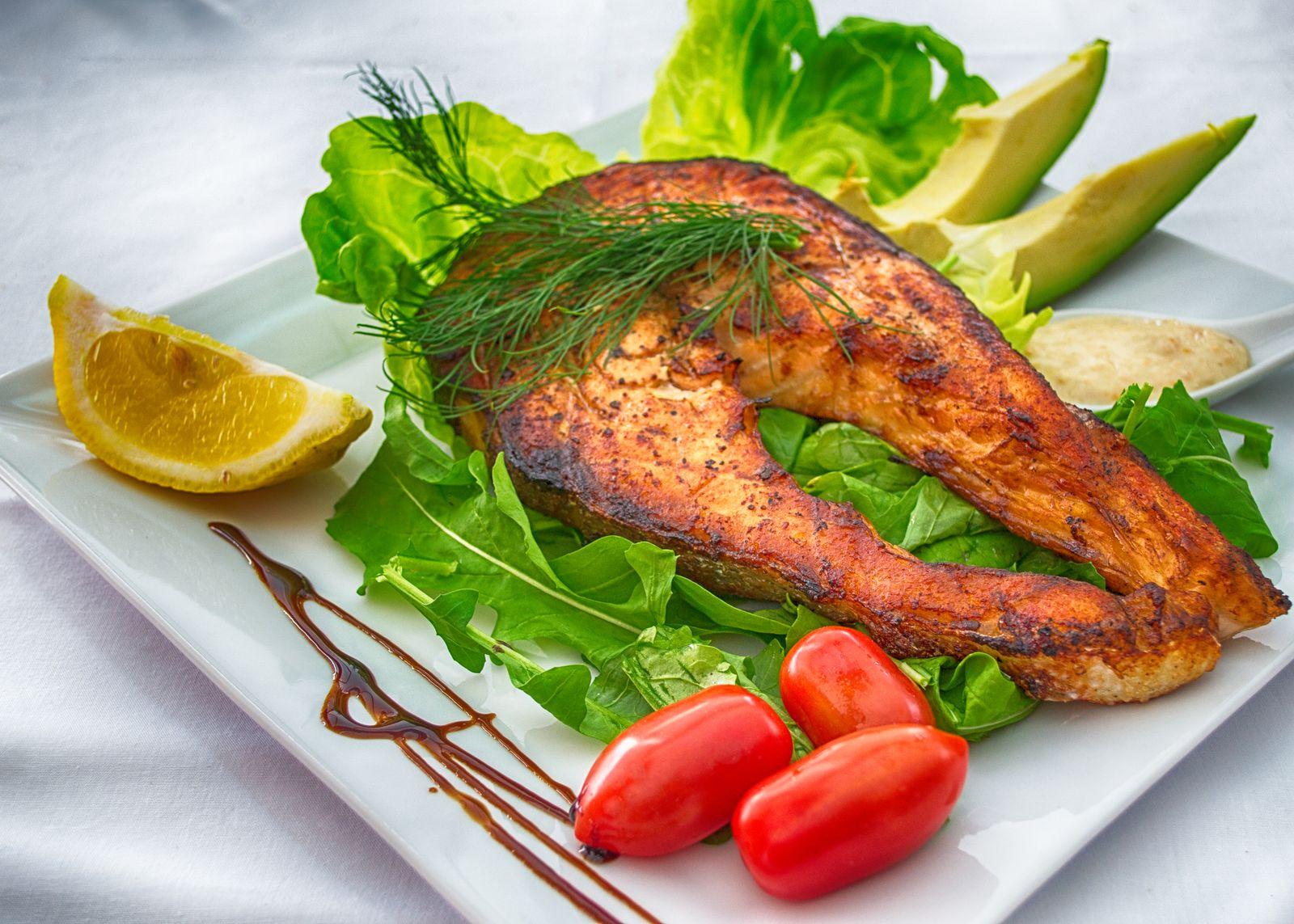
On the ultra-processed diet, people ate about 500 more calories a day. They ate faster. They gained about two pounds over the two weeks. On the minimally processed diet, they lost about two pounds. Nobody was told to eat less. The food itself changed how much they ate.
It was a small, short study, and scientists are still sorting out exactly which properties of ultra-processed food drive overeating (energy density, texture, speed of eating and the engineered combination of fat, sugar and salt are leading suspects). But the practical lesson is sturdy: building meals around foods that look like they came from a farm, a sea or a tree, rather than a factory, makes it easier to eat less without white-knuckling it.
That doesn't mean everything in a package is bad. Canned beans, frozen vegetables, plain yogurt, rolled oats, tinned fish and whole-grain bread are processed in a technical sense and are excellent staples. The problem foods are the ones designed to be eaten quickly and without stopping: chips, pastries, sweetened cereals, most fast food, candy, many snack bars, sugary drinks.
Fiber, volume and the plate that does the work for you
Vegetables, fruit, beans, lentils and whole grains bring fiber and water, which add bulk and slow digestion for very few calories. They're also where much of the nutrition in an eating pattern lives: potassium, magnesium, folate, polyphenols.
A practical template many dietitians use:
- Half the plate: non-starchy vegetables or salad.
- A quarter: a solid portion of protein.
- A quarter: a high-fiber starch (beans, potatoes with skin, brown rice, whole-grain bread or pasta) or a piece of fruit.
- A thumb or two of fat: olive oil, nuts, avocado, cheese.
Treat it as a default that does most of the work on most days, and don't fuss when a meal doesn't fit.
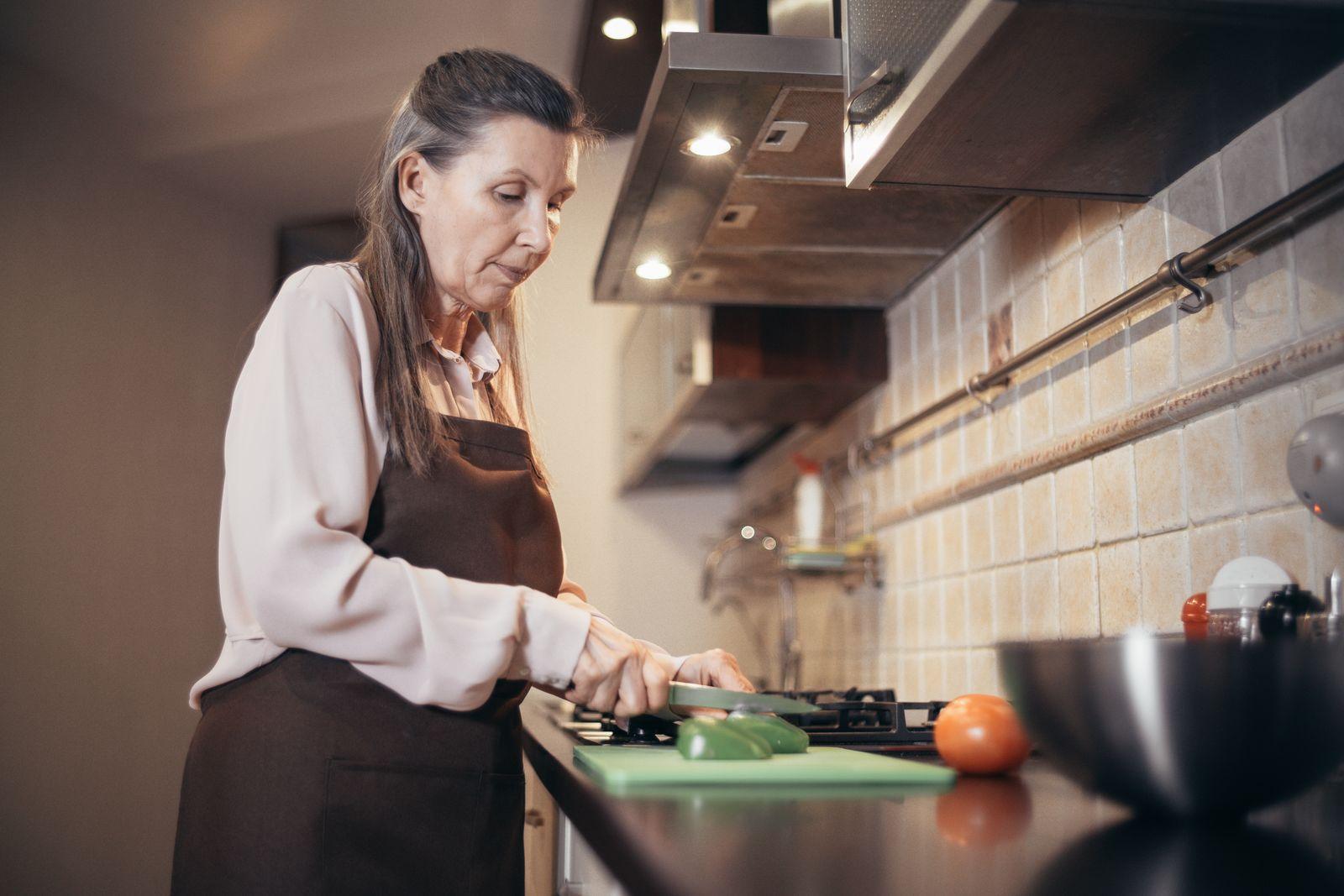
Eating patterns built along these lines, such as the Mediterranean and DASH diets, have strong evidence for heart and metabolic health in older adults, and they're flexible enough to fit nearly any culture's cuisine. You can eat this way with tortillas and black beans, with rice and dal, with fish and boiled potatoes.
The drink problem
Liquid calories are easy to underestimate because they don't fill you up the way food does. A large sweetened coffee drink can carry 300 to 400 calories. A couple of glasses of wine add 250 or so.
Alcohol deserves a moment of its own. It supplies about 7 calories per gram, nearly as much as fat, and it tends to loosen resolve about what you eat alongside it. It also disrupts sleep quality, which, as you'll see, works against fat loss. With age, the body handles alcohol less efficiently, and it interacts with many common medications. You don't have to give it up entirely to lose weight, but cutting back is one of the highest-yield moves many people can make.
Water, on the other hand, may genuinely help. In a 12-week trial at Virginia Tech, 48 adults aged 55 to 75 followed a reduced-calorie diet. Half of them also drank about two cups (500 ml) of water before each main meal. That group lost roughly 2 kilograms (about 4.4 pounds) more than the diet-only group. The likely reason is simple: water takes up space and modestly reduces how much people eat at the meal.
It's a cheap experiment, with two caveats. People with heart failure or significant kidney disease often need to restrict fluids, and anyone with bladder urgency or prostate issues may want to time the water so it doesn't wreck their sleep.
Older adults are also more prone to dehydration in general, because the sense of thirst tends to weaken with age. Keeping a glass or bottle in view is a small habit that pays off in energy and in fewer "hunger" pangs that are really thirst.
"He who knows that enough is enough will always have plenty."
Lao Tzu wasn't thinking about the second glass of wine, but it applies. Enough, served with a meal you enjoy, tends to feel like plenty. Extra mostly ends up as one more thing to undo.
What a day might look like
Treat this as one illustration, not a meal plan, of how the principles fit together for someone aiming for about 90 grams of protein:
- Breakfast: Greek yogurt with berries, a spoonful of walnuts and some oats, plus coffee or tea. (About 25 to 30 g protein.)
- Lunch: Big salad with a can of salmon or a chicken breast, chickpeas, olive oil and lemon, whole-grain bread on the side. (About 30 to 35 g.)
- Afternoon: Apple and a piece of cheese, or a glass of milk. (About 7 to 10 g.)
- Dinner: Baked fish or tofu, roasted vegetables, a modest scoop of brown rice or potatoes. (About 25 to 30 g.)
- Water before meals; alcohol on a few days a week, not most.
What's missing: anything you couldn't buy at an ordinary grocery store, any supplement that's essential, or any food group that's banned.
Restaurants, travel and holidays
Real life happens in restaurants, at weddings, on cruise ships and at the grandkids' birthday parties. A few habits keep these from derailing everything:
- Decide on the protein first when you read a menu, then build around it. Grilled fish, chicken, a steak, a bean dish.
- Ask for swaps without apology. Vegetables instead of fries, dressing on the side, half the pasta and a side salad. Kitchens field these requests all day.
- Split or box early. Restaurant portions are often two meals. Asking for a to-go container when the plate arrives works better than trusting yourself to stop halfway.
- Pick your indulgence. Bread, a drink or dessert: choose the one you'll enjoy most and skip the ones you're eating out of habit.
- On trips, walk. Travel is a gift for step counts. Explore on foot, take stairs, skip the shuttle when the distance is reasonable.
- Pack a resistance band. It weighs almost nothing and turns any hotel room into a place to do rows, presses and squats.
- Holidays are a few days, not a season. Enjoy the feast. Go back to your normal breakfast the next morning.
None of these are about perfection. They're about making the default choice slightly better, often enough that it adds up.
A field guide to fad diets
Every January, a new eating plan promises effortless results. Most are old ideas with new names. Some work in the short term, few deliver lasting results, and several are a poor fit for older bodies.
Low-carb versus low-fat: the fight that ended in a draw
For decades, nutrition camps argued over whether carbohydrates or fat was the true enemy. A large Stanford trial called DIETFITS put the question to a serious test. Researchers randomly assigned 609 adults to a healthy low-fat or healthy low-carbohydrate diet for a year. Both groups were coached to eat high-quality foods, lots of vegetables, and as few refined and processed foods as possible.
After 12 months, the low-fat group had lost an average of 5.3 kilograms and the low-carb group 6.0 kilograms, a difference that wasn't statistically meaningful. The researchers also tested whether people's genes or insulin responses predicted which diet would work better for them. They didn't.
Participants in DIETFITS were 18 to 50, so it doesn't speak directly to older adults, but the pattern matches most comparisons of named diets: when the diets are of similar quality, they produce similar average results, and the individual variation within each diet is enormous. Some people lost 30 kilograms; some gained.
My take: pick the good-quality version you can actually keep doing, and stop worrying about which camp is right. If you love bread and pasta, a lower-fat approach may suit you. If carbs trigger cravings and you're happy with eggs, fish and vegetables, a lower-carb approach may be easier. Either way, protein and plants stay on the plate.
"Adapt what is useful, reject what is useless, and add what is specifically your own."
Lee was talking about fighting styles, but he could have been reviewing diet books. Take the vegetables from one plan, the protein habit from another, the meal timing that suits your mornings, and leave the rest on the shelf.
Intermittent fasting: watch the muscle
Time-restricted eating, such as fitting all your food into an eight-hour window, became hugely popular on the promise that when you eat matters as much as what you eat. A 2020 randomized trial called TREAT, published in JAMA Internal Medicine, tested a 16:8 schedule (eating only between noon and 8 p.m.) against three structured meals a day in 116 adults with overweight or obesity over 12 weeks.
Weight loss was small in both groups and not significantly different between them. But in the subgroup that had detailed body-composition measurements, the fasting group lost significantly more appendicular lean mass, meaning the muscle in arms and legs, than the regular-meals group.
TREAT included adults up to age 64, and its participants weren't strength training or targeting protein, so it doesn't prove that fasting must cost muscle. But it's a clear warning for older adults: squeezing the same day's protein into fewer meals makes it harder to hit the per-meal threshold that aging muscle needs. If fasting helps you control your eating and you enjoy it, it can work. Just make your meals protein-heavy, keep lifting, and don't assume the clock is doing magic.
The usual suspects
A quick tour of the others:
- Detoxes and cleanses. Your liver and kidneys handle detoxification. Juice cleanses mostly remove protein and fiber, cause water-weight loss that returns quickly, and leave you hungry.
- Single-food or "eliminate this one thing" diets. Cabbage soup, grapefruit, "never eat after 6": they work, briefly, because they restrict calories through monotony. They don't teach anything that lasts.
- Very-low-calorie and meal-replacement plans. These can be effective when medically supervised, especially for people with type 2 diabetes. Done alone, they risk muscle loss, gallstones and nutrient gaps.
- Supplements and "metabolism boosters." No pill has been shown to safely produce meaningful, lasting fat loss without a prescription. Many "fat burners" contain stimulants that can raise blood pressure and heart rate or interact with medications.
- Extreme exercise challenges. Six weeks of punishing daily workouts plus heavy restriction is a recipe for injury in older joints, and the habits rarely survive the challenge.
What happens after the extreme version
Researchers at the National Institutes of Health followed 14 contestants from the television competition The Biggest Loser for six years after the show. During the 30-week competition, they lost an average of about 58 kilograms through severe calorie restriction and hours of daily exercise.
Six years later, most had regained much of it, an average of about 41 kilograms. More striking, their resting metabolic rates were still about 500 calories a day lower than expected for their size and age. The body had adapted to the extreme deficit, and the adaptation persisted.

That's an extreme case with a tiny sample, and normal, moderate weight loss produces much smaller adaptations. But it illustrates a principle worth respecting: the more dramatically you try to force your body to change, the harder it pushes back.
Red flags in any diet pitch
- Promises of rapid loss (more than 1 to 2 pounds a week after the first couple of weeks)
- Claims that one food, hormone or toxin is the hidden cause of weight gain
- Required purchases of the seller's products
- Elimination of whole food groups without a medical reason
- Testimonials and before-and-after photos instead of trial data
- No mention of strength training, protein or long-term maintenance
- The words "secret," "trick," "melt" or "effortless"
Weight-loss medications: what older adults should know
No honest article about weight management in 2026 can skip the drugs. GLP-1-based medications such as semaglutide and tirzepatide have changed obesity treatment. In trials, they produce weight loss far beyond what most lifestyle programs achieve, along with improvements in blood sugar, blood pressure and other risk factors. For some people, they're life-changing. They're also expensive, not right for everyone, and come with side effects, most commonly nausea and other digestive complaints.
For readers over 50, two findings deserve attention.
They can cost muscle along with fat. In a body-composition substudy of the large STEP 1 trial of semaglutide, 140 participants had DXA scans. Those on the drug lost about 15 percent of their body weight. Fat mass fell about 19 percent, and lean mass fell about 10 percent. Roughly 40 percent of the weight lost registered as lean mass. Because fat fell faster than lean tissue, the proportion of the body made up of lean mass actually improved.
Two important qualifications. First, DXA's "lean mass" category includes water, organs and other non-fat tissue, not just muscle, and some researchers argue a meaningful share of that loss reflects things like shrinking liver fat and fluid shifts rather than skeletal muscle. Second, any rapid, large weight loss costs some lean tissue; diet-only weight loss commonly runs in the range of a quarter or so lean. Still, for an older adult who doesn't have much muscle to spare, the message is practical: if you take one of these medications, strength training and adequate protein become more important, not less.
The weight tends to come back if you stop. In an extension of STEP 1, researchers followed 327 participants for a year after they stopped semaglutide and the trial's lifestyle program. They regained about two-thirds of the weight they had lost, and most of the improvements in blood pressure, blood sugar and cholesterol drifted back toward where they started. The researchers concluded that obesity behaves like a chronic condition that needs ongoing treatment.
If you and your doctor decide one of these drugs makes sense, use it wisely: under the care of a clinician who knows your full medical history, paired with resistance training and protein-focused eating, and with a realistic plan for the long term. Imagine regaining fat, after the drug stops, without having rebuilt the muscle lost along the way. That's the scenario to avoid.
"Today is victory over yourself of yesterday."
Whatever tools you use, whether a prescription, a coach, an app or none of them, the only fair comparison is with yourself a month ago. Stronger, steadier and a little lighter than that person is the whole game.
Sleep: the fat-loss tool nobody wants to hear about
The study mentioned earlier deserves a closer look.
In 2010, researchers at the University of Chicago brought 10 overweight adults into a sleep lab for two separate two-week stretches of moderate calorie restriction. The diet was identical both times. The only difference: in one stretch, participants had 8.5 hours in bed each night; in the other, 5.5 hours.
They lost about the same amount of weight in both conditions. But with adequate sleep, about 1.4 kilograms of the loss was fat. With short sleep, only about 0.6 kilograms was fat, a 55 percent reduction, and the loss of fat-free mass rose by about 60 percent. Participants were also hungrier when sleep-deprived. As the study's director put it in a university news release, skipping sleep while dieting is like poking sticks into your bicycle wheels.
It was a tiny study of people in their 40s, so the precise numbers shouldn't be taken as gospel for a 65-year-old. But the direction fits a large body of research linking short sleep with increased appetite, cravings for energy-dense food, and poorer blood-sugar control. If you're trying to lose fat and keep muscle, sleep isn't a side issue.

Sleep also changes with age. Many people find they wake earlier, sleep more lightly, or get up more often at night. Some of that is normal. Some isn't: loud snoring with pauses in breathing, gasping awake, and daytime sleepiness can signal sleep apnea, which is both worsened by excess weight and a driver of weight gain and cardiovascular risk. It's worth getting checked; treatment often improves energy enough to make exercise easier.
Practical moves that help:
- Keep a consistent wake time, even on weekends. It anchors your body clock.
- Get bright light, ideally daylight outdoors, early in the day. Morning walks double-count.
- Finish large meals and alcohol a few hours before bed.
- Keep caffeine to the morning if you're sensitive to it; its effects linger longer than many people realize.
- Make the bedroom cool, dark and boring. Screens out if you can manage it.
- If you're lying awake for long stretches, get up and do something calm in dim light until you're sleepy.
Your body clock and your dinner plate
Circadian research is a lively field, and some of it bears on weight. Your body handles food differently depending on the time of day; glucose tolerance generally tends to be better earlier than late at night. Studies of shift workers and of people who eat most of their calories late suggest that misaligned eating and sleeping patterns can make weight and blood-sugar control harder.
The evidence isn't strong enough to justify rigid rules about meal timing, and as the TREAT trial showed, the clock alone doesn't melt fat. But a pattern that front-loads protein and calories toward breakfast and lunch, and keeps late-night snacking to a minimum, lines up with both the circadian research and the protein-distribution findings. It's a reasonable default for most people.
Stress, mood and the fridge
Anyone who has eaten a sleeve of crackers while worrying about a parent's health or a dwindling retirement account understands the link between stress and eating without needing a study to explain it.
Chronic stress raises cortisol, nudges appetite toward high-calorie comfort food, disrupts sleep and drains the energy you'd otherwise spend on a walk or a workout. Depression and anxiety, which are common and underdiagnosed in later life, can do the same. Loneliness and grief, both of which tend to arrive more often after 50, have similar effects.
"The quality of your life depends on the quality of your thoughts."
It's a modern paraphrase of the emperor's Meditations, which say much the same thing at greater length. Applied to the kitchen, it means noticing the thought ("I've earned this") before the hand reaches the cookie jar.
A few things help, and none of them involve willpower:
- Name the pattern. Before eating outside a meal, pause and ask whether you're hungry or something else (bored, tired, anxious, sad). You may still eat. That's allowed. The pause itself tends to shrink the portion.
- Find a non-food response for the most common trigger. A five-minute walk, a phone call, a shower, stepping outside, a few minutes of slow breathing.
- Exercise is an antidepressant for many people. Regular physical activity, including strength training, has good evidence for reducing symptoms of depression and anxiety. It's not a replacement for treatment when treatment is needed, but it's a powerful ally.
- Get help if mood is persistently low. Talk to your doctor or a mental health professional. Treating depression often makes every other part of weight management easier.
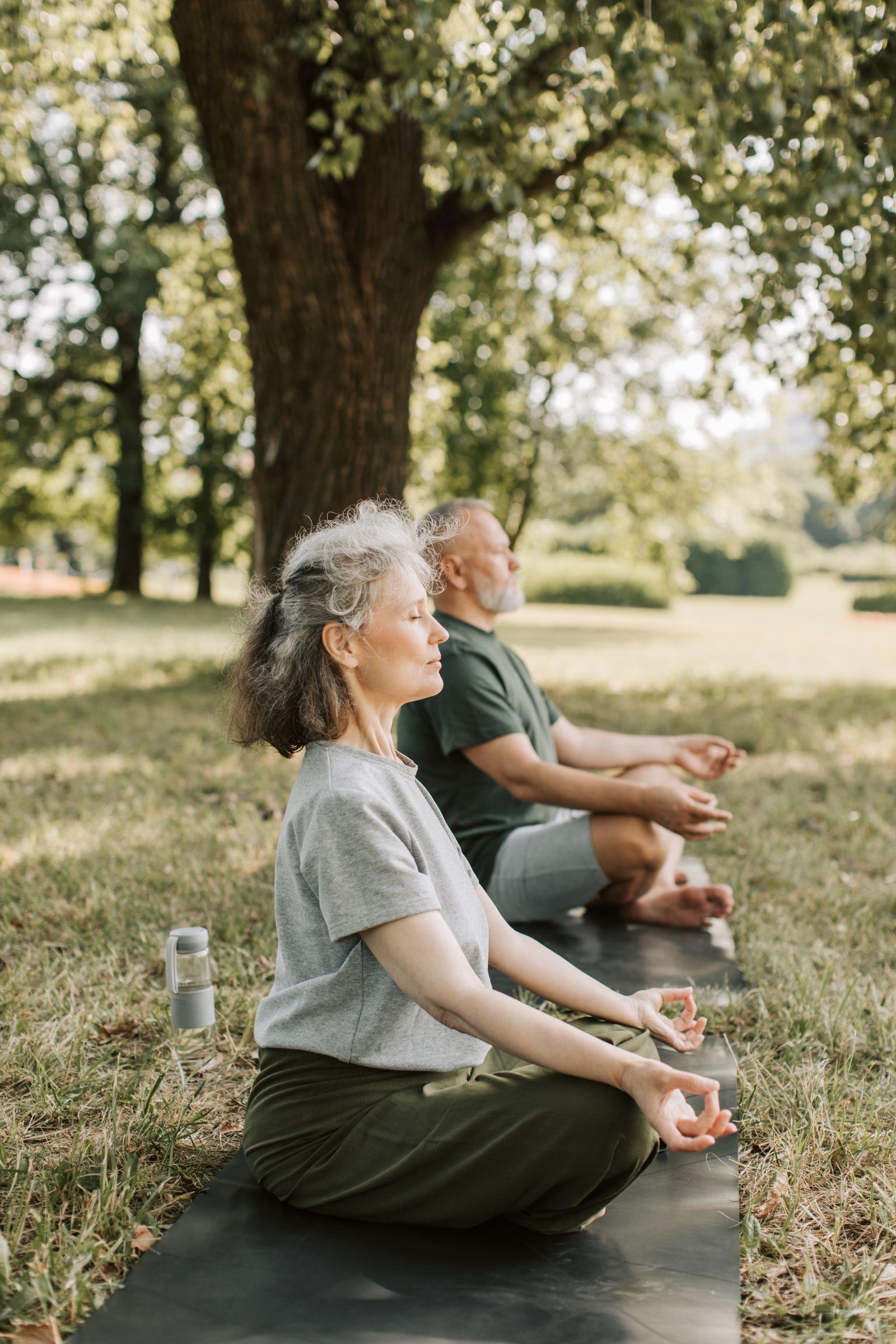
Mind-body practices like tai chi, yoga and meditation have a dual benefit here: they calm the stress response and, in the case of tai chi and many forms of yoga, train balance and strength at the same time.
Hormones, midlife and the medicine cabinet
For women: what menopause actually does
Women often notice their bodies changing shape during the menopause transition, with more fat settling around the middle, even when the scale barely moves. That observation is backed by solid data.
The Study of Women's Health Across the Nation (SWAN), which has followed a racially diverse group of women through midlife since the 1990s, used DXA scans to track body composition year by year. Researchers found that at the start of the menopause transition, the rate of fat gain doubled and lean mass began to decline. Those trends continued until about two years after the final menstrual period, then leveled off. Total body weight, interestingly, kept climbing at about the same steady rate the whole time; the scale didn't capture the shift because fat gained and muscle lost roughly offset each other.
That last detail is a perfect illustration of this article's opening point. A woman in her early 50s whose weight hasn't changed may still be losing muscle and gaining visceral fat. Strength training and adequate protein during and after the transition are among the best responses we have. Whether menopausal hormone therapy affects body composition is a separate question with mixed evidence, and decisions about it rest mostly on symptoms and other health factors; that's a conversation for your clinician.
For men: a slower slide
Men's testosterone tends to decline gradually with age rather than abruptly, and lower levels are associated with less muscle and more abdominal fat. Excess body fat itself also lowers testosterone, which creates a loop. Weight loss through diet and exercise often improves testosterone levels in men with obesity. Testosterone therapy is appropriate only for men with clearly diagnosed deficiency, and it carries its own risks; it's not a weight-loss tool.
Check the medicine cabinet
Several commonly prescribed medications can contribute to weight gain or make loss harder, including certain antidepressants, antipsychotics, corticosteroids such as prednisone, some diabetes medications (including insulin and sulfonylureas), some older beta-blockers and some anti-seizure drugs. Never stop a medication on your own. But if weight gain followed a new prescription, ask your doctor or pharmacist whether an alternative might work as well with fewer effects on weight.
An underactive thyroid can also contribute to weight gain and fatigue. It's easy to test for, and it's worth ruling out, especially if you also feel cold, sluggish or unusually tired. Treating it typically produces a modest change in weight rather than a dramatic one, but it helps with energy.
Screenings that matter here
If you're starting a weight-loss effort after 50, a routine check-up is a good opening move: blood pressure, blood sugar (fasting glucose or A1C), cholesterol, kidney function, and, where appropriate, a bone density scan. Knowing your starting numbers makes it easier to see the real health payoff later, which is often more motivating than the scale.
Joints, bones and balance: protecting the frame
"We must resist old age and counteract its weaknesses with care… moderate exercise and only as much food and drink as is needed to replenish our abilities…"
Cicero wrote that in his 60s, and he described weight management after 50 more briefly than this article does. Moderate exercise, enough food and no more, and the care to keep at both.
Joints
We've already seen how weight loss reduces load on arthritic knees. The combination works even better: in the Arthritis, Diet and Activity Promotion Trial (ADAPT) that preceded the knee-load study, older adults with knee osteoarthritis who combined modest dietary weight loss with exercise showed the most consistent improvements in function, pain and mobility of any group in the study.
If you have joint pain:
- Choose lower-impact cardio while you build up (cycling, swimming, walking on softer surfaces).
- Strengthen the muscles around the joint. Strong quadriceps and hip muscles take load off the knee.
- Work within a tolerable pain range. Mild discomfort during exercise that settles within a day is usually acceptable; sharp or escalating pain isn't.
- A physical therapist can tailor exercises to your specific joints. It's one of the best investments you can make.
Bone
Weight loss tends to reduce bone density modestly, and in older adults that's not trivial, because hip fractures can change a life in an afternoon. The Villareal trial showed that adding resistance training to weight loss reduced the decline in hip bone density compared with aerobic exercise alone.
To protect bone while losing fat:
- Strength train with progressively heavier loads.
- Include some weight-bearing impact if your joints and bone density allow it: brisk walking, stair climbing, step-ups, low hops for those cleared to do them.
- Get enough calcium (dairy, fortified plant milks, canned fish with bones, leafy greens, tofu set with calcium) and vitamin D. Ask your doctor whether you need supplements or a bone density test.
- Avoid very aggressive deficits.
Balance and falls
Falls are a leading cause of injury in older adults. Balance training reduces fall risk, and it fits neatly into a weight-management routine. The physical activity guidelines specifically recommend balance work for older adults: things like walking heel to toe, standing on one foot near a counter, rising from a chair without using your hands, and practices such as tai chi.
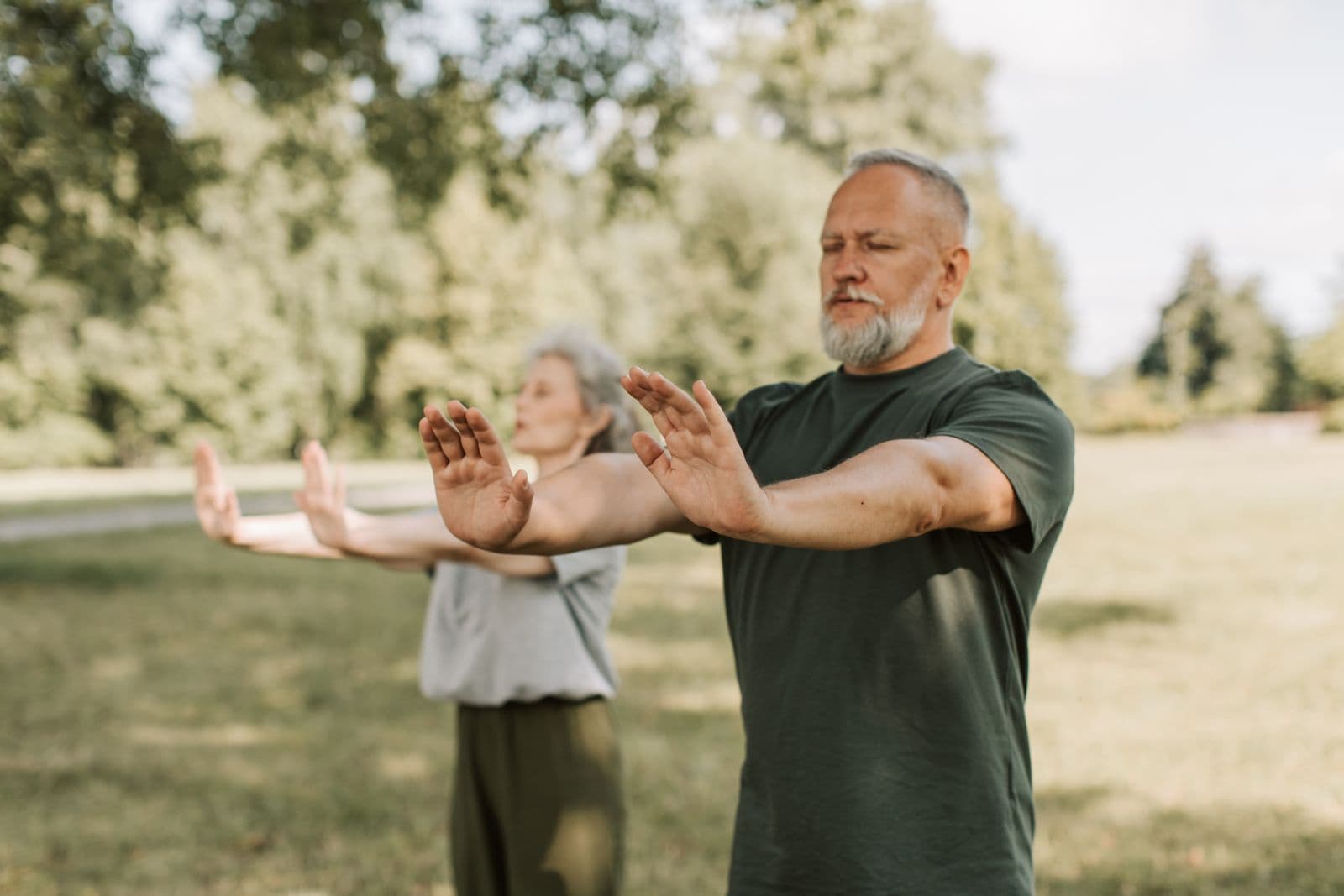
Strength training helps balance, too, especially work for the legs, hips and trunk. Losing excess weight can make balance easier, but losing muscle can make it worse. Lighter and more capable is the target. Lighter alone falls short.
One more thing that sneaks up on people: vision and hearing. Untreated cataracts, outdated glasses or hearing loss make people less steady and less confident moving around, and hearing loss in particular can make group classes and social activities feel exhausting, which nudges people toward the couch. Regular eye and hearing checks are part of staying active.
You're not doing this alone (or you shouldn't be)
A 1999 study should change how you approach this. In it, psychologists Rena Wing and Robert Jeffery recruited 166 people into a weight-loss program, either alone or with three friends or family members, and randomly assigned some groups to receive extra social-support training.
Among people who joined alone and got the standard program, 76 percent completed treatment, and just 24 percent maintained their full weight loss over the following six months. Among people who joined with friends and got the social-support version, 95 percent completed treatment and 66 percent maintained their full loss.
Same program. Different company. Nearly three times the maintenance.
Other research has found a "ripple effect" in households, where a spouse's weight-loss effort tends to help their untreated partner lose a little, too. Behavior is contagious. That cuts both ways, but it means you can use it.
"As iron sharpens iron, so one person sharpens another."
The Wing and Jeffery numbers make the same point in modern terms. You'll train harder, eat better and quit less often with somebody alongside you.
Ways to put it to work:
- Find a walking partner and set a standing time. Missing a walk is easy; standing up a friend is harder.
- Join a strength class at a community center, YMCA or senior center. Many have sessions designed for older adults.
- Cook with your partner or a friend. Share recipes that fit your goals.
- Tell people what you're doing, and what kind of support helps. Encouragement works better than policing.
- If your household eats differently than you'd like, negotiate one change at a time instead of overhauling everything.
Purpose beats punishment
People who manage their weight well over many years often stop framing it as a diet at all. The National Weight Control Registry's researchers have noted that members tend to describe a new way of living, not a temporary project. It helps to tie the effort to something you care about: hiking a trail you've wanted to try, keeping up with grandchildren, traveling without dreading the airport walk, staying independent in your own home.
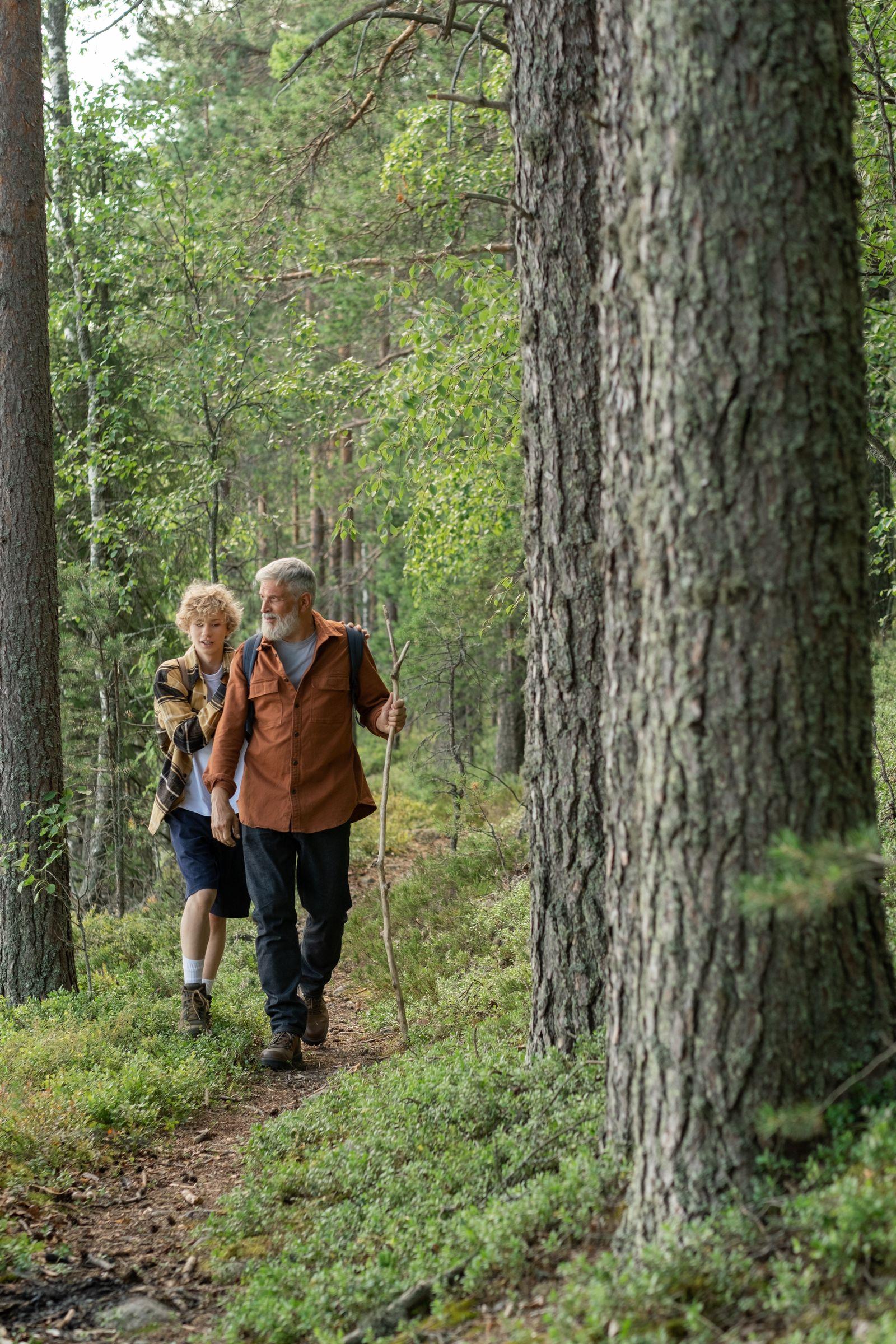
"I want to lose 20 pounds" is a goal. "I want to carry my own luggage up the stairs of that Italian guesthouse next spring" is a reason.
When things go sideways
They will. A holiday, an illness, a family crisis, a knee flare-up, a vacation with excellent bread. Setbacks are a normal part of every long-term change, not evidence that you've failed.
The single most damaging thought pattern in weight management is all-or-nothing thinking: "I blew it at lunch, so the day is ruined." One meal can't undo weeks of progress. The next meal can get you right back on track. Researchers who study weight maintenance often describe it as a skill of catching small slips early, not avoiding them entirely.
A useful plan: decide in advance what your "return to baseline" moves are. Maybe it's three days of protein-forward breakfasts, two strength sessions and a daily walk. When life knocks you off course, you don't need to start over. You just go back to the basics.
Keeping it off: the part that actually counts
Losing weight is the easy chapter. Keeping it off is the book.
The pessimistic view is that almost everyone regains. The evidence is more encouraging than that. In the Look AHEAD study, more than 5,000 adults with type 2 diabetes received an intensive lifestyle program that continued, at lower intensity, for years. After eight years, about half of them were still at least 5 percent below their starting weight, and about a quarter were at least 10 percent below. Those who succeeded tended to keep practicing the same weight-control behaviors.
The National Weight Control Registry paints a consistent picture of what long-term maintainers do. Among its members:
- About 78 percent eat breakfast every day.
- About 75 percent weigh themselves at least once a week.
- About 62 percent watch less than 10 hours of television a week.
- About 90 percent exercise, on average, around an hour a day.
These are observations from a self-selected group, not proof that each habit causes success. Plenty of people maintain weight while skipping breakfast. But the overall theme is hard to miss: consistency, self-monitoring and lots of movement.
A few principles for the maintenance phase:
- Keep weighing in weekly (or keep measuring your waist). A gain of three or four pounds is easy to reverse. A gain of fifteen is a project.
- Raise calories gradually after a loss, by a hundred or two a day at a time, while watching the trend.
- Keep protein and strength training exactly where they were. These are the habits that protect what you built.
- Expect the scale to bounce around by a few pounds from day to day. Water, salt and digestion move it. Watch the weekly trend, not the daily number.
- Treat maintenance like a skill you're still practicing, not a finish line you've crossed.
"As long as you live, keep learning how to live."
Maintenance is exactly that kind of learning. The body changes, the schedule changes, the knee changes its mind, and the habits have to keep adjusting with them.
A 12-week framework (adapt freely)
People like a plan, so this is a loose one. It's not a prescription; adjust it to your health, schedule and starting point.
Weeks 1 to 4: build the foundation
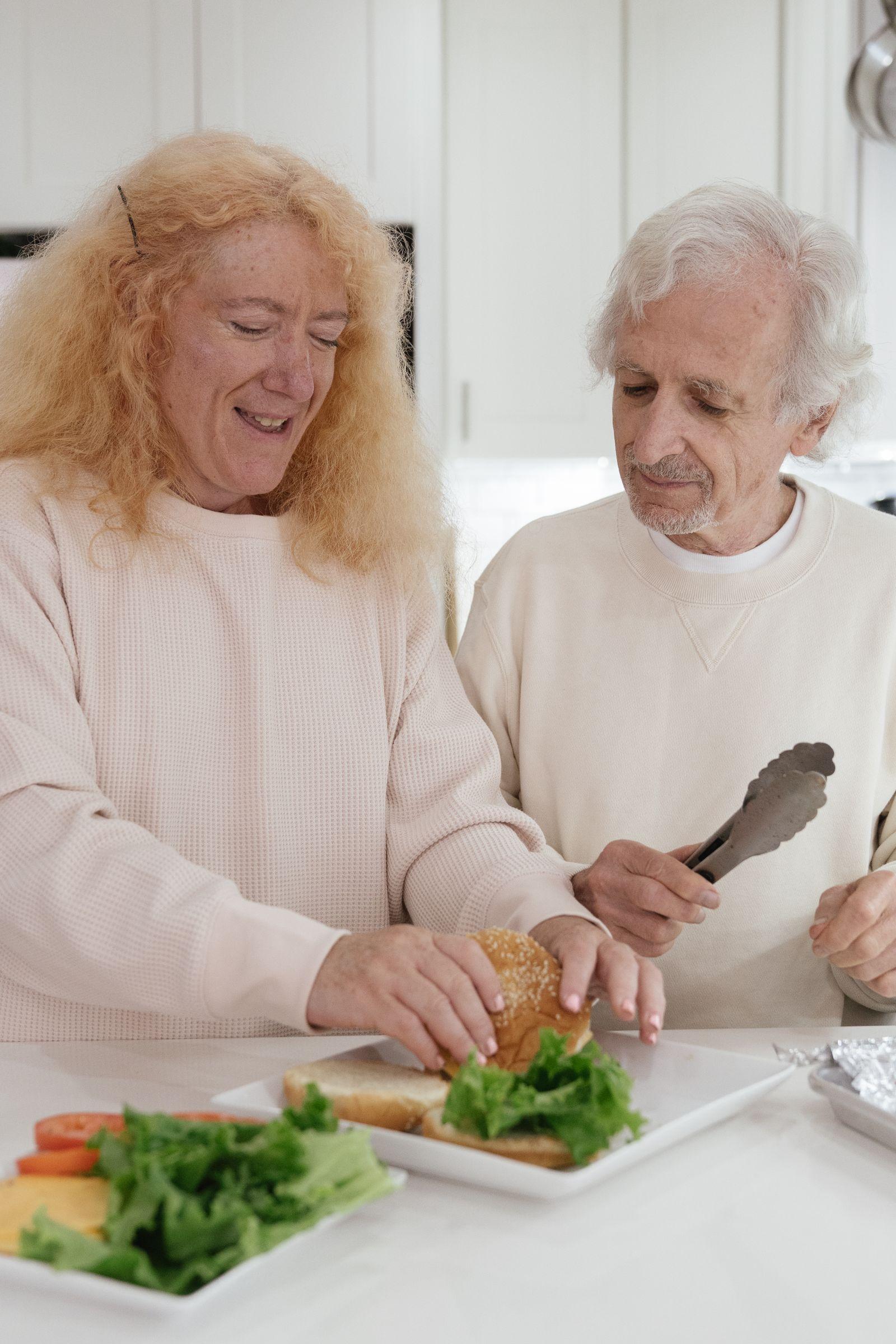
- Two strength sessions a week, using the beginner routine above or something similar.
- Find your step baseline, then add 1,000 a day.
- Get 25 to 30 grams of protein at breakfast.
- Swap one sugary drink or one nightly drink for water or tea.
- Pick a consistent wake time.
Weeks 5 to 8: add structure
- Progress your strength exercises (more load, lower chair, stiffer band).
- Move toward 150 minutes of moderate cardio a week, mostly walking or whatever your joints prefer.
- Use the half-plate-vegetables template for most lunches and dinners.
- Try two cups of water before main meals, if your health allows.
- Add a balance practice two or three days a week.
Weeks 9 to 12: fine-tune
- Consider a third strength session.
- Add one session of gentle intervals if you're cleared for it.
- Hit your protein target across all three meals most days.
- Measure your waist and retest your sit-to-stands and walking distance. Compare to week one.
- Decide which habits you're keeping for the long run.
What results are realistic? With a modest deficit and consistent training, a loss of roughly half a pound to a pound a week is common, with more variation week to week than you'd like. Strength often rises noticeably within the first month. Waist measurements can shrink even in weeks when the scale stalls. People who are already lean will see slower changes than those starting with more fat to lose, and that's fine.
Quick answers to common questions
Can you really build muscle after 60, or 70, or 80?
Yes. Older muscle responds more slowly and needs more protein and a stronger training signal, but it responds. In a classic 1990 study, ten frail nursing-home residents averaging 90 years old did eight weeks of high-intensity leg training. Their strength rose by an average of 174 percent, thigh muscle size grew about 9 percent, and walking speed improved. Small study, remarkable result. It's never too late to start, and the earlier you start, the more you have to work with.
How fast should I try to lose weight?
Slowly enough that you can keep training hard and eating enough protein. For many people that means roughly half a pound to a pound a week after the first couple of weeks. Faster loss raises the odds of losing muscle and of gallstones, and it's harder to sustain.
Is BMI useless?
Not useless, just crude. BMI can't tell muscle from fat, and in older adults it misses a lot: a muscular 70-year-old may score "overweight," while a frail one with little muscle and lots of visceral fat may score "normal." Use it alongside your waist measurement, your strength and your blood work.
Should I count calories?
You don't have to. Counting for a couple of weeks can be a useful education in where your calories actually come from. Long-term, most people do better with structure (protein at each meal, half-plate vegetables, fewer liquid calories) than with daily arithmetic. If tracking makes you anxious or obsessive, skip it.
Do I need protein shakes or supplements?
Not necessarily. Whole foods can meet protein needs for most people. Shakes are convenient if your appetite is small, you're short on time, or you struggle to reach your targets. Vitamin D and calcium needs vary; ask your doctor whether testing or supplementation makes sense for you. Be wary of anything sold as a fat burner.
Why is the weight not moving even though I'm doing everything right?
Common reasons: portion sizes have crept up, weekends undo weekdays, liquid calories are hiding, you've added muscle while losing fat (check your waist and strength), or you're retaining water from a new training routine. Look at a four-week trend, not a single week. If nothing changes over a couple of months, talk to your doctor about medications, thyroid function and sleep.
Is it harder for women after menopause?
It's different. The shift toward more abdominal fat and less lean mass during the transition is real, as the SWAN data show. The same strategies work, with strength training and protein carrying even more weight.
What if I have diabetes?
Weight loss can significantly improve blood-sugar control, but changes in eating and activity can also change how your medications work, especially insulin and sulfonylureas, which can cause low blood sugar. Work with your care team before you make big changes, and monitor more closely as you go.
Try this: one week, one change, one test
Pick one evening this week and do a 30-second chair test. Sit in a sturdy chair without armrests, arms crossed over your chest, and count how many times you can stand fully and sit back down in 30 seconds. Write the number down.
Then, for the next seven days, make one change: eat 25 to 30 grams of protein at breakfast every day. Greek yogurt with nuts, eggs with a glass of milk, cottage cheese with fruit, leftovers from dinner. Whatever works.
That's all. One test you can repeat next month, one habit that protects your muscle starting now.
The bottom line
Weight management after 50 is less about weight than it sounds. It's about what your body is made of and what it can do.
Your metabolism is probably steadier than you've been told. The gradual gain most people experience comes mostly from moving less, losing muscle, sleeping worse and eating foods designed to be overeaten, and every one of those can be changed. Fad diets mostly rearrange the same calories with better marketing; quality, protein and consistency matter more than the label on the plan. New medications can help, but they work best alongside the same fundamentals.
"Nobody grows old merely by a number of years. We grow old by deserting our ideals."
Ullman wrote that at 78. Neither number on your chart, the years or the pounds, settles how the next decade goes. The habits do.
The person who loses ten pounds, keeps them off, and can carry the groceries up from the car in one trip has done something more valuable than the person who loses thirty and can't climb the stairs. Aim to be the first one. Lift something heavy this week. Eat protein at breakfast. Go for a walk with someone you like. Then do it again next week.