Few worries land harder after 50 than the fear of losing your memory. It’s also one of the most heavily marketed: apps, supplements, puzzle books and programs that promise to keep your brain young. The honest picture is less dramatic and more useful.
No single activity protects anyone for sure. But some habits are good bets, and the best of them are things you may already enjoy.
Start with the one with the best backing: move
WHO’s 2019 guidelines on reducing the risk of cognitive decline and dementia recommend physical activity for adults with normal cognition, and rate the certainty of that evidence as moderate. That’s a careful phrase, but it’s the strongest recommendation in the document, and movement is good for your heart, bones and mood too.
A brisk walk counts. So does dancing, swimming, gardening or anything that gets you moving regularly. The best choice is the one you’ll keep doing.

Brain games are a weaker bet than they look
For cognitive training, meaning structured mental exercises, WHO’s recommendation is conditional and the certainty of the evidence is low. That’s why this site doesn’t claim crosswords or apps keep your memory sharp. Getting better at a game mostly makes you better at that game.
That doesn’t make puzzles pointless. If you enjoy them, they’re a fine way to spend an afternoon. Just don’t let them replace habits with better support.
Learn something you care about, and do it with people
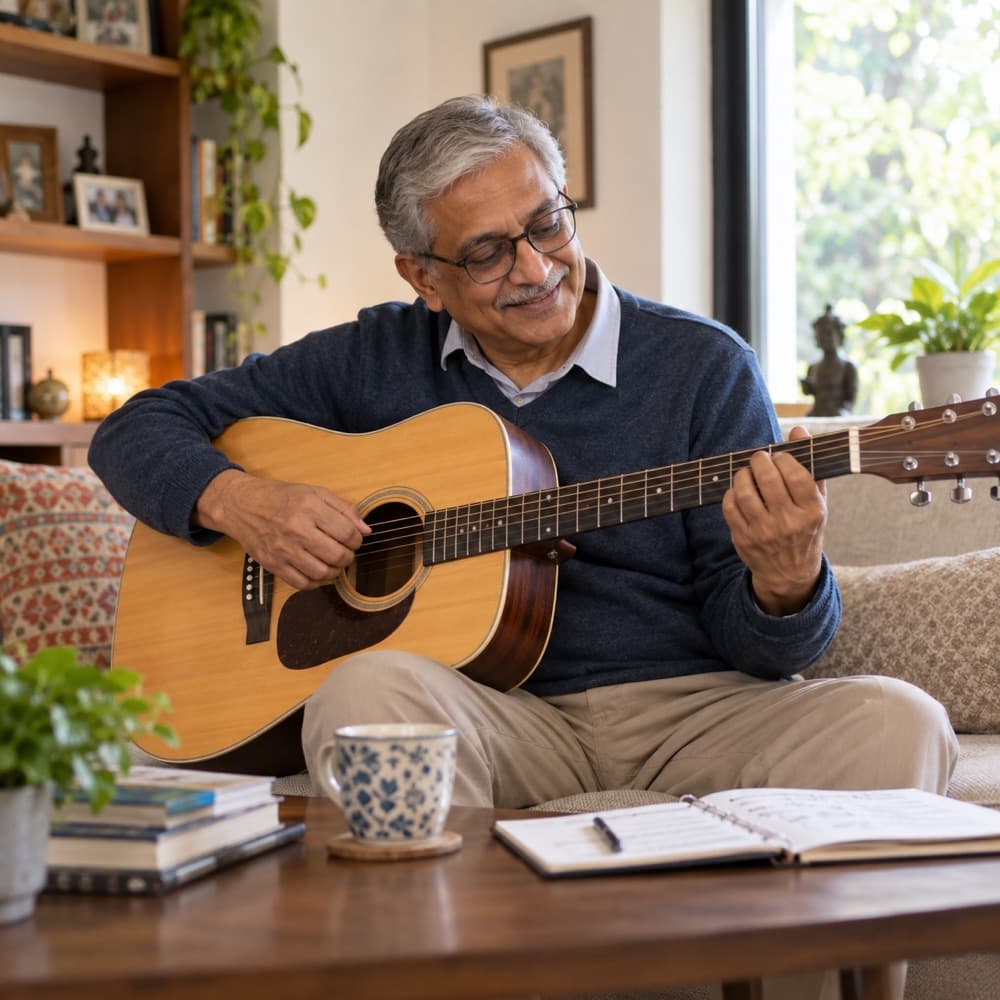
Learning something you actually want to know tends to be more satisfying than drills: a language, an instrument, a craft, local history, a card game with real stakes. New skills ask you to pay attention, make mistakes and try again, which is more interesting mental work than repeating what you already do well. Nobody can promise it protects your memory. It can make your days fuller, and that is reason enough.
Many mental activities are social ones too. A book club, a choir, a class, a volunteering shift or a weekly game night combine thinking, conversation and a reason to leave the house. If you’re torn between doing something alone and with company, company usually adds more.
Give ten minutes to something you want to learn
About 10 minutes · Easy. Enjoyment matters more than progress.
Choose a subject, puzzle, skill, book, musical piece, or creative project and begin for ten minutes.
Steps
- How to start
- Pick the one thing, set a 10-minute timer, and begin with the easiest part.
- You will need
- A subject, book, instrument, puzzle, or project you already have.
- Done when
- You spent the ten minutes, or got as far as you wanted.
Sleep, stress and hearing quietly matter too
Thinking feels harder when you’re tired, stressed or not hearing well. Before assuming something is wrong with your memory, ask whether you’re sleeping reasonably, whether you’re under a lot of strain, and whether you’re catching what people say. Each can make you feel foggy, and each is something you can often do something about. That’s a practical point, not a claim about preventing decline: a rested, calm, well-informed mind works better at any age.
- Keep keys, glasses and wallet in one place so you’re not searching.
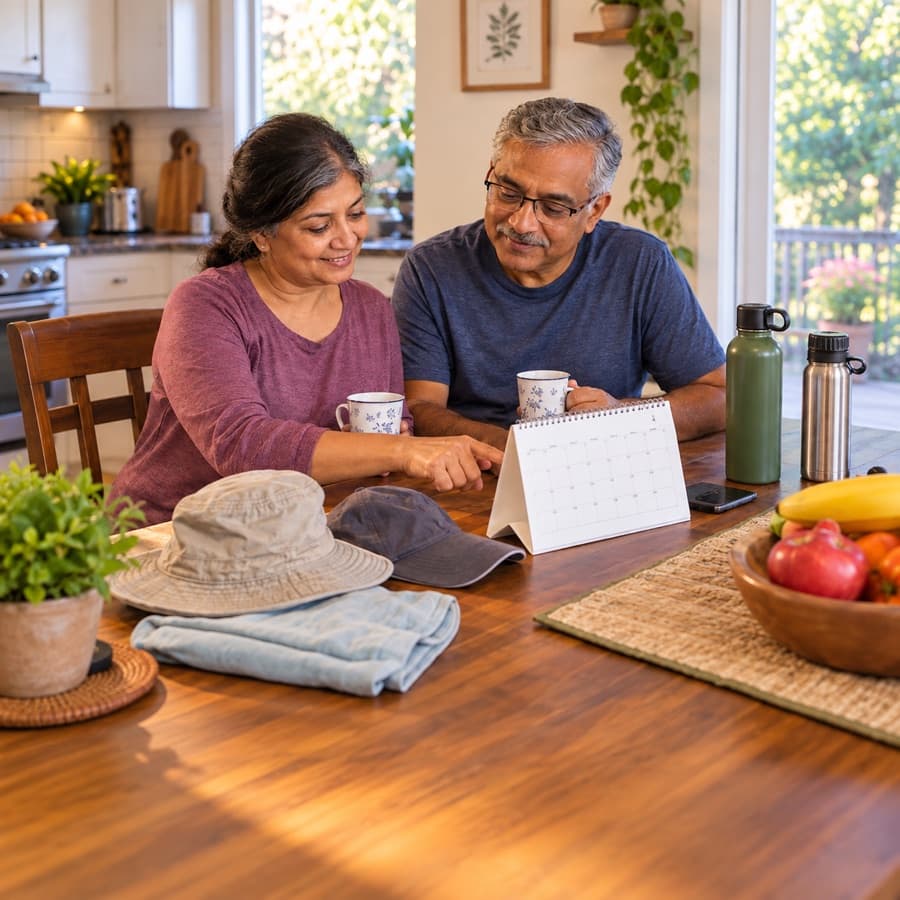
- Use a calendar or phone reminder without guilt. Writing things down is a good tool, not a failure of memory.
- Say names out loud when you meet people, and use them once in the conversation.
- Do one thing at a time when you want to remember it, such as turning off the stove.
A month of curiosity
Keep what you enjoyed and drop the rest. There’s no right answer.
| Week | Try | Why it’s a good bet |
|---|---|---|
| 1 | Walk somewhere new, even a different block | Movement plus fresh surroundings |
| 2 | Learn ten words of a language, or one song on an instrument | A skill that rewards practice |
| 3 | Invite someone to do something together | Thinking and company at once |
| 4 | Teach someone what you learned | Explaining something is the quickest way to find what you really know |
Be cautious of any product or program that promises to prevent memory loss or reverse cognitive decline. Fit after 50 can’t assess memory and doesn’t try to. If a change in your own thinking, or a family member’s, worries you, that’s a perfectly good reason to see a clinician.
Your next step
The best-supported habit is also the easiest to start. The walking guide builds from ten minutes.
Take a walkPhotos: Vitaly Gariev on Unsplash.