You're halfway down the basement stairs with a laundry basket when your foot lands a little differently than you meant it to. You catch the rail and keep going, but the question lingers: was that your ankle?
The research on ankle mobility for balance over 50 is mixed. Ankle and foot problems do show up in studies of balance and falls, but the findings on ankle stiffness are inconsistent. The one exercise with trial support in the material reviewed here is a calf stretch at a wall, tested in a small group of healthy adults aged 65 to 75.
What the research links to balance
A trial paper citing earlier studies says the ankle muscle response times needed to maintain balance are longer in older adults than in younger people, and that ankle muscle strength decreases with age. That describes differences between age groups. It doesn't show that your own stiff or weak ankles are causing a wobble.
The same paper says reduced dorsiflexion range of motion, meaning how far you can pull your foot up toward your shin, has emerged as an independent predictor of falls. A separate review that pooled studies following older adults over time found ankle range-of-motion results inconsistent or based on limited data. Stiffness hasn't been shown to be harmless, and a firm link to future falls hasn't been established either.
That review did find that foot pain, impaired sensation in the feet and weakness in the small muscles of the foot were associated with a higher risk of falling. Those were observational studies of varying quality, and a common problem was not adjusting for other factors, so part of the link may come from something else, such as general frailty.
Falls rarely have one cause. Most are linked to several risk factors, including muscle weakness, impaired balance control, gait disorders, vision problems, medications and hazards in the environment. Ankles are one piece of that picture.
What the stretching trial tested
In a randomized trial, 40 healthy adults aged 65 to 75 (36 women and 4 men) were split into two groups. Both stretched for 30 minutes a day, 5 days a week, for 3 weeks, 15 sessions in all, supervised by physical therapists. One group did a wall calf stretch. The other used a motorized board that stretched the calf and inner ankle muscles together.
Both groups improved their ankle range of motion, their score on a balance test, their step rate and the time both feet were on the ground during walking. There was no group that did nothing, so some of the gains could come from other factors. The motorized board group did better on outward ankle turning, side-to-side movement of the center of pressure under the feet, and a timed get-up-and-walk test.
The authors concluded that ankle stretching improved balance and gait in these healthy older adults, with greater effects from stretching the calf and inner ankle muscles together. Those were gains on test measures. Falls were not counted, and nothing here shows that the simple wall stretch gives the same gains as the board.
How the wall stretch was done
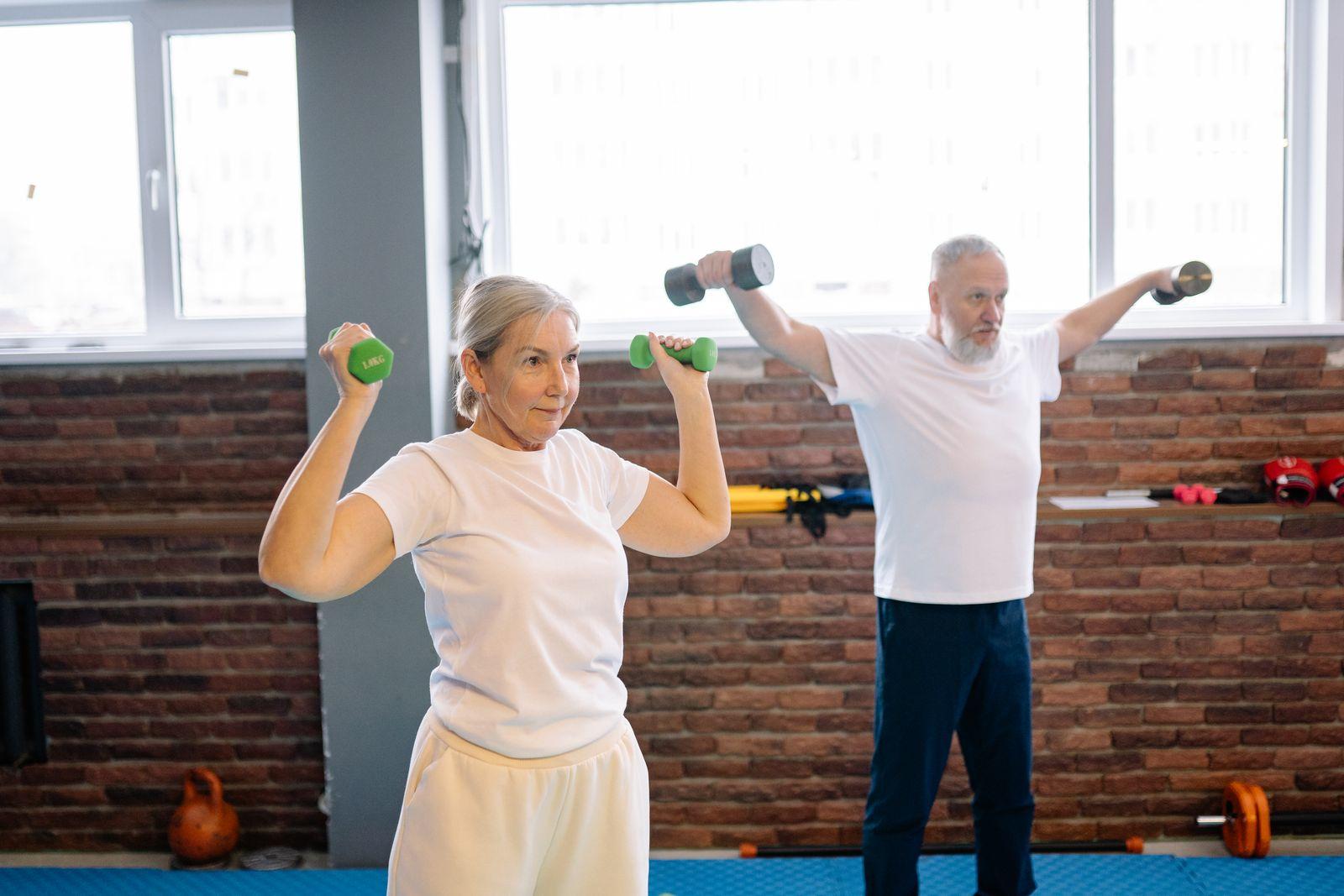
At a wall, step one foot back. Keep your trunk upright and bend the front knee until you feel a stretch in the calf of the back leg, with the back heel staying on the ground the whole time.

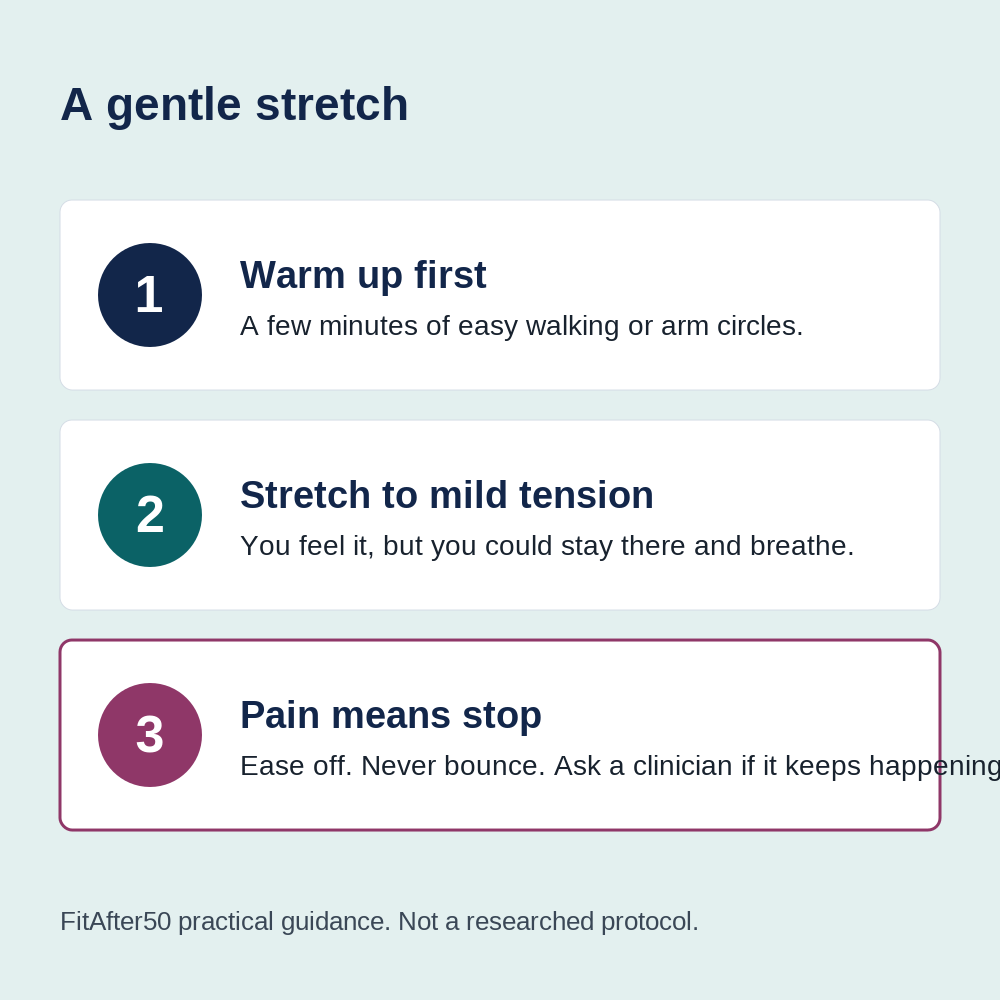
For effort, the motorized board was adjusted gradually until participants felt a painless stretching sensation in the Achilles tendon and surrounding muscles. A stretch you can feel but that doesn't hurt matches that cue. The paper does not give a hold time for the wall version, and the sessions took place in a clinic, so no home routine has been tested.
What stays unsettled
The trial's authors say earlier studies of stretching and balance have given inconsistent results, and that no exercise routine has been established as the best for balance in older adults. The wall stretch is therefore a single tested example. The participants were healthy, walked independently and had no problems with leg strength or thinking, so the results may not apply to people in their 50s, people over 75, or anyone with weakness, an injury or a nerve condition.
Fall prevention guidelines recommend assessing foot problems as part of a broader falls risk assessment, though they give no specific recommendations on what to check or how. If you've fallen or feel unsteady, that assessment is a conversation for a clinician.
Where to start
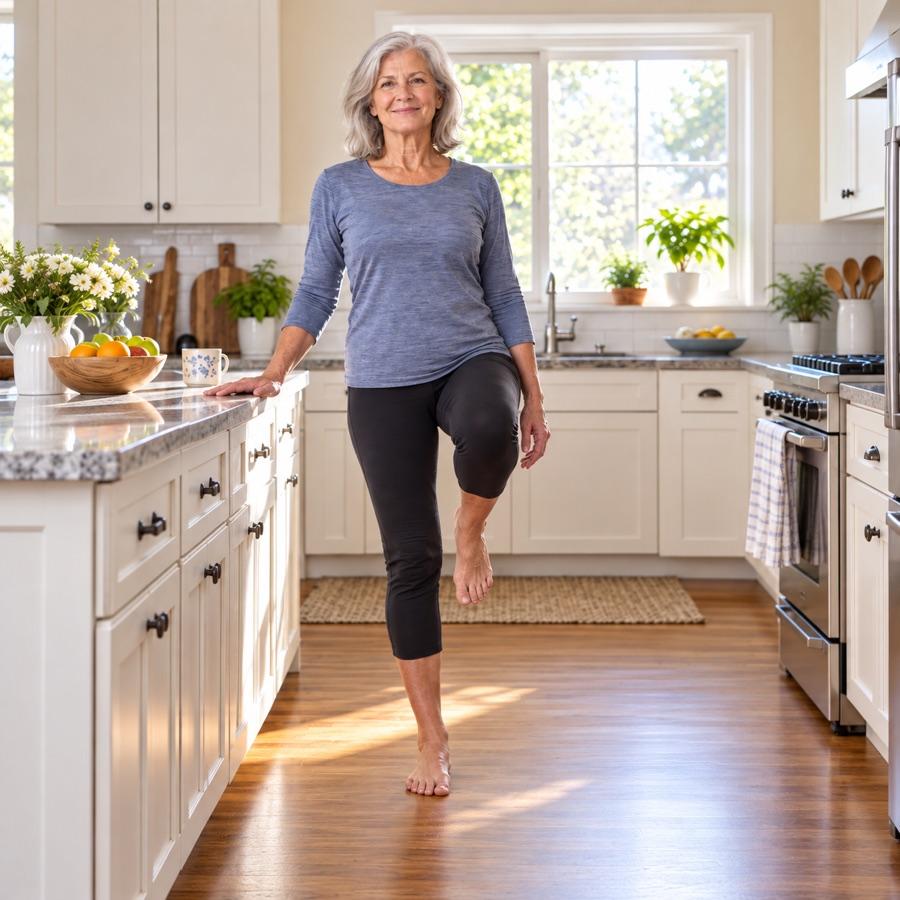
Attach the wall calf stretch to something that already happens every day, such as the minutes while the coffee brews. Stand beside the counter or a wall so you can steady yourself, and leave a sticky note on the coffee maker as a reminder. Do one leg, then the other, at a stretch you can feel without pain. That is a small starting habit, far below the 30-minute supervised sessions in the trial. Once it feels comfortable, add a second time of day, such as after lunch.