
Imagine two people, both 65 years old, arriving at a beautiful national park. They’ve been looking forward to this trip for months. The weather is perfect. The trail ahead winds through a forest toward a spectacular overlook. One person studies the trail map, sees the elevation gain, and decides to wait near the visitor center. The other tightens their shoelaces, picks up a water bottle, and starts walking.
There could be dozens of reasons for that difference. But one of them may be physical fitness. And that’s what makes fitness after 50 so interesting. Its greatest rewards often have very little to do with exercise itself. They’re about what exercise makes possible.
Being able to lift your suitcase into an overhead compartment. Spend an afternoon exploring a new city. Work in the garden without feeling completely exhausted afterward. Dance at a wedding. Carry a sleepy grandchild upstairs. Get back on a bicycle after years away. Or discover, to your considerable satisfaction, that you can do something at 70 that you couldn’t do at 55. None of these experiences requires the physique of a professional athlete. They require a body that’s been given reasons to remain strong, capable, and adaptable.
And there is a great deal you can do to build that body, whether you’re 52 and already running marathons, 68 and returning to exercise after a long absence, or 79 and determined to make everyday activities feel easier. The science of exercise offers plenty of encouraging evidence. But you don’t need a laboratory, expensive equipment, or an elaborate fitness program to put that evidence to work. You need to understand a few fundamental principles, choose activities that suit your life, and practice them consistently enough for your body to respond. This guide will show you how.
1. Your body has not stopped adapting
A birthday is not a biological switch. You don’t wake up at 50 and suddenly lose the ability to build muscle. Nor does your cardiovascular system stop responding to training when you turn 60. Your bones, joints, muscles, and nervous system continue responding to the demands placed upon them throughout life. That capacity is one of the most useful things to understand about physical fitness. Your body is continually adapting.
If you spend most of your day sitting, you become accustomed to sitting. If you walk regularly, the muscles and systems involved in walking become practiced at that task. If you progressively challenge your muscles with resistance, they can become stronger. The process changes with age, and not every adaptation happens as quickly as it once did. But the underlying principle remains.
What really changes with age? Several changes become increasingly relevant through middle age and beyond. Muscle mass and strength can decline, particularly when people become less active. Bone density may decrease. Tendons and other connective tissues may tolerate sudden increases in workload less comfortably. Cardiovascular capacity can fall. Recovery from unusually demanding exercise may take longer. Hormonal changes, health conditions, medications, sleep, nutrition, and previous injuries can influence these patterns.
But here’s the complication: much of what people casually attribute to aging is also influenced by inactivity. Consider someone who played recreational sports in their twenties, stopped exercising regularly in their thirties, spent their forties working long hours at a desk, and now feels stiff and easily winded at 55. They may conclude that age has caught up with them. Age certainly plays a role. But so might twenty years without regular strength training, challenging aerobic activity, or consistent mobility work. Those are different problems, and many of the consequences of inactivity can improve.
The National Institute on Aging explains that regular physical activity can improve physical function and support health across later life. The benefits can include better sleep, improved fitness, and lower risks of several chronic conditions.
A feeble body weakens the mind.
That is not a promise that everyone can achieve any physical goal. Genetics, health, disability, and personal circumstances matter. It is a reminder that your present condition is not necessarily your permanent condition.
Muscle strength and muscle size are not identical. One particularly useful distinction is the difference between building muscle and building strength. Muscle size contributes to strength, but your nervous system also matters. When you first begin resistance training, improvements can occur because your body becomes more skillful at coordinating muscles, recruiting muscle fibers, and performing movements. That explains why a beginner may become noticeably stronger before their muscles look much different. It also explains why practicing specific movements is valuable. If standing up from a low chair is difficult, regularly practicing appropriately challenging sit-to-stands can improve the coordination and strength involved. If carrying groceries is exhausting, gradually increasing your carrying capacity can make that task easier. The body gets better at what it practices.
Why strength matters even if you don’t care about muscles: Some people love lifting weights. Others would happily go through life without ever hearing the words bench press. Fortunately, strength training is not primarily about joining a particular fitness culture. It’s about developing useful physical capacity. Strong legs make climbing stairs easier. Strong hips help with lifting and walking. Strong back muscles contribute to pulling, carrying, and maintaining positions. Strong hands and forearms make many everyday tasks easier.
Strength also creates reserves. Suppose carrying a heavy suitcase requires nearly all the strength you can produce. That task will feel demanding. If you increase your strength substantially, the same suitcase represents a smaller percentage of your capacity. The suitcase hasn’t changed. You have. That difference can transform how demanding daily life feels.
2. The five abilities that make a well-rounded body
Fitness is not a single quality. Someone can be strong but have poor endurance. Another person can walk for hours but struggle to lift a moderately heavy object. A flexible yoga practitioner may lack the strength needed to carry furniture. A useful fitness program develops several complementary abilities.
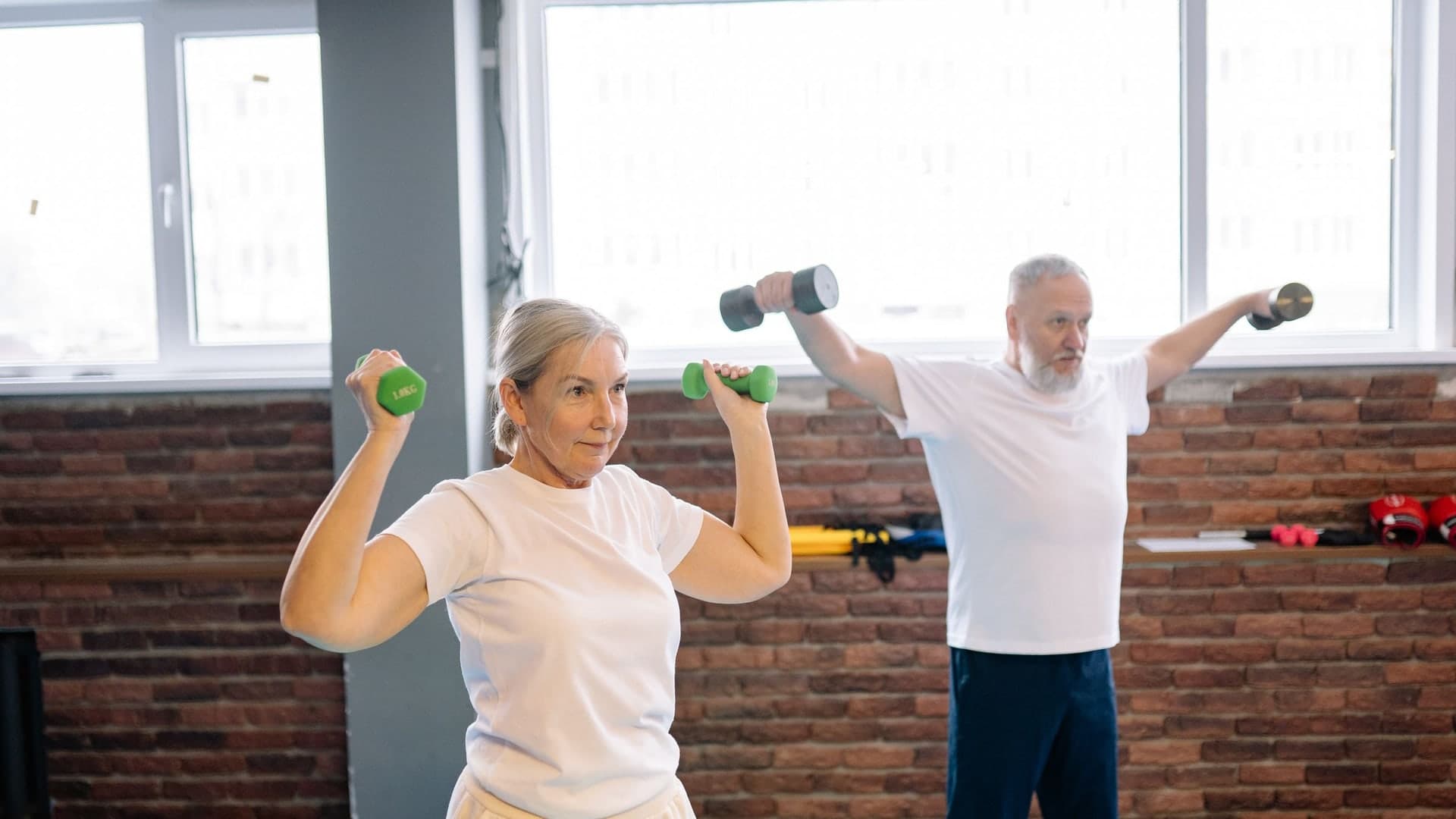
Strength is your capacity to produce force. It allows you to push, pull, lift, carry, stand, climb, and move objects. It is developed primarily through resistance training. The resistance might come from dumbbells, barbells, machines, resistance bands, your own body weight, or ordinary objects. The equipment is secondary. The important question is whether the exercise challenges the muscles enough to encourage adaptation.
Cardiovascular endurance is your staying power. It determines how well you sustain activity. Walking, cycling, swimming, rowing, dancing, jogging, and hiking can all challenge your cardiovascular system. Better endurance makes sustained activities feel easier and allows you to do more before fatigue becomes limiting.
Mobility is your usable movement. It concerns your ability to move joints through practical ranges with adequate control. It involves flexibility, strength, coordination, and joint function. You need enough ankle mobility to walk comfortably and negotiate stairs, enough shoulder movement to reach overhead, and enough hip mobility to bend, sit, and stand. Not everyone needs extraordinary flexibility. Most people benefit more from having comfortable, usable movement than from trying to perform impressive stretches.
Balance is your ability to remain in control. It allows you to maintain or recover your position. It matters when stepping off a curb, turning quickly, reaching into a cupboard, walking on uneven ground, or changing direction during sports. Balance combines information from your eyes, inner ears, muscles, joints, and nervous system. It is trainable.
Power is your ability to produce force quickly. It deserves special attention because it is often overlooked. Strength is the ability to produce force. Power involves producing force with speed. You use power when rising briskly from a chair, stepping quickly to recover your balance, or climbing stairs with energy. You don’t need explosive Olympic lifts to develop useful power. For an appropriately prepared person, standing up from a chair with a deliberate, brisk upward movement and lowering slowly can introduce the concept. The emphasis is on controlled speed, not recklessness. Older adults who are unfamiliar with fast movements should first develop adequate strength and technique.
How much exercise do you actually need? The U.S. Physical Activity Guidelines recommend at least 150–300 minutes of moderate aerobic activity per week, or 75–150 minutes of vigorous activity, or an equivalent combination, along with muscle-strengthening activity on at least two days. For adults 65 and older, the recommendations also emphasize balance and multicomponent activity. These are useful population-level targets, not a requirement that everyone immediately start with a full schedule. If you currently do very little activity, your first goal may be walking for ten minutes on several days and completing two short strength sessions. That’s a meaningful beginning. If you’re already active, you may benefit from training beyond the minimum recommendations. The right amount depends on your starting point, goals, and capacity to recover.
3. Strength training: the foundation of lifelong physical capability
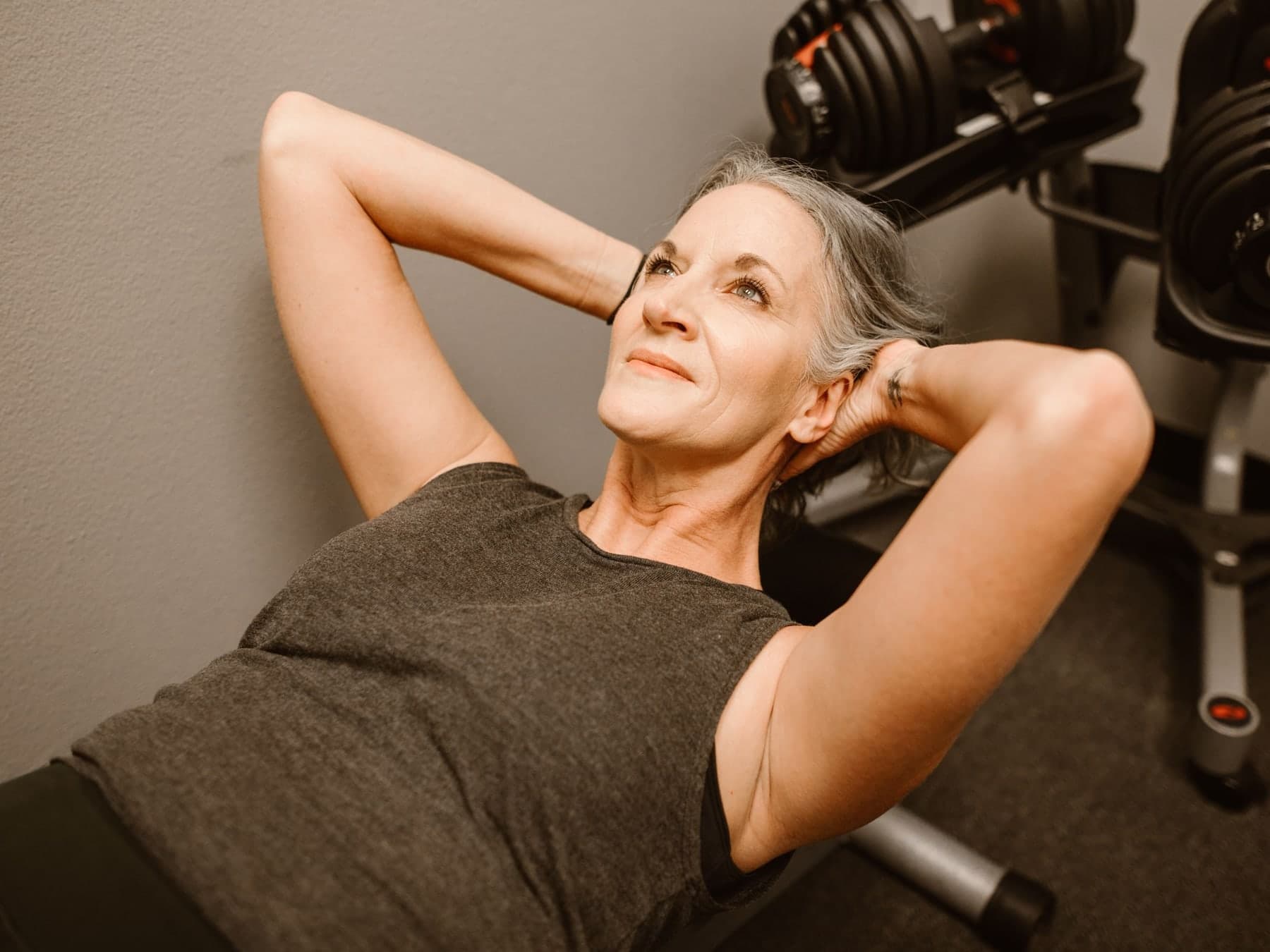
If this entire guide had to be reduced to one practical recommendation, it would be this: Make resistance training a regular part of your life. Walking is valuable. Swimming is excellent. Cycling can be wonderful. But none of these automatically replaces the broad strength stimulus provided by resistance training. A person who walks five miles every morning may have excellent endurance and still struggle with upper-body strength. Someone who swims regularly may have good cardiovascular fitness but benefit from additional resistance work for the legs and hips. Resistance training fills important gaps.
How muscles become stronger: When you challenge a muscle with sufficient resistance, you create a demand. Repeated over time, and supported by adequate recovery and nutrition, that demand can lead to adaptations in muscle tissue and the nervous system. This process is often called progressive overload. The phrase sounds technical, but the principle is simple. If you repeatedly perform an exercise that becomes easy, eventually you need to make it more challenging to continue improving. You might add weight, repetitions, sets, range of motion, or a more demanding exercise variation. The increase doesn’t have to be dramatic. Suppose you begin with eight wall push-ups. After two weeks, you can comfortably perform twelve. You might move your feet slightly farther from the wall or switch to a sturdy kitchen counter, making the exercise more challenging. Later, you might progress to a lower support. Each change gives your muscles a new reason to adapt.
How hard should strength training feel? For beginners, a useful starting point is an effort that feels moderately challenging. Imagine finishing ten repetitions of an exercise and thinking you could probably perform another two or three with good technique. That’s often an appropriate training effort. You don’t need to push every set to complete muscular failure. As you gain experience, you can learn to judge effort more precisely and use harder sets when appropriate. The final repetitions of a challenging set may slow down. That’s normal. But technique should remain controlled. If you begin twisting, jerking, holding your breath excessively, or losing your balance to complete a repetition, the exercise is probably too difficult in its current form.
How many sets and repetitions? The CDC describes 8–12 repetitions as a practical starting range for muscle-strengthening activity. One set can provide benefits, with two or three sets potentially providing more. For many beginners, one or two sets per exercise is enough to begin. More experienced exercisers may use three or more sets, depending on their goals and overall training volume. The best amount is not necessarily the maximum you can tolerate. It’s the amount that provides a productive challenge while allowing you to recover and repeat the work.
The movements every strength program should consider: A balanced routine should challenge the major muscle groups and common movement patterns. You don’t need twenty different exercises. You need enough variety to develop your whole body.
The squat involves bending at the hips, knees, and ankles to lower your body and then standing again. It develops the thighs, hips, and other muscles involved in standing and climbing. For beginners, the chair squat is an excellent starting point. Stand in front of a sturdy chair with your feet approximately hip-width apart. Reach your hips backward and lower yourself until you lightly touch the seat. Then stand again. Use your hands for assistance if necessary. As strength improves, reduce assistance, use a lower chair if appropriate, or hold a light weight. The goal is controlled movement, not achieving an arbitrary depth.
The hip hinge is the movement used when bending primarily at your hips. It’s fundamental to picking things up from the floor. Stand with your feet comfortably apart and your knees slightly bent. Push your hips backward while keeping your trunk controlled. You should feel the movement primarily around your hips rather than trying to bend exclusively through your lower back. Return to standing by driving through your feet and extending your hips. Once comfortable, you can practice with a light dumbbell or kettlebell.
The push exercises strengthen the chest, shoulders, and arms. A wall push-up is a practical beginner exercise. Place your hands against a wall at approximately shoulder height. Step backward until your body forms a comfortable incline. Bend your elbows and bring your chest toward the wall. Then push away. Keep your body aligned and avoid allowing your lower back to sag. As you become stronger, use a lower, stable surface.
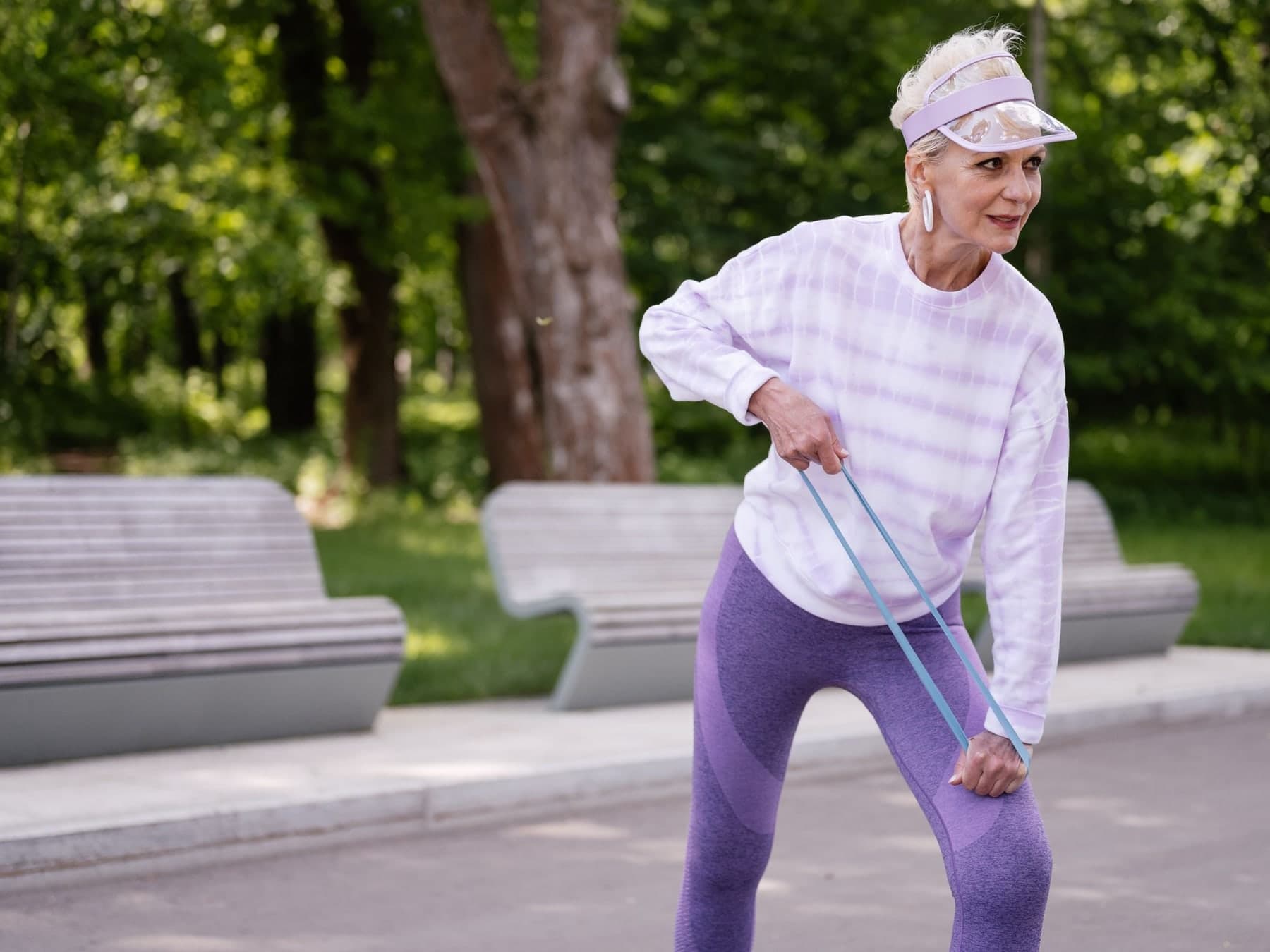
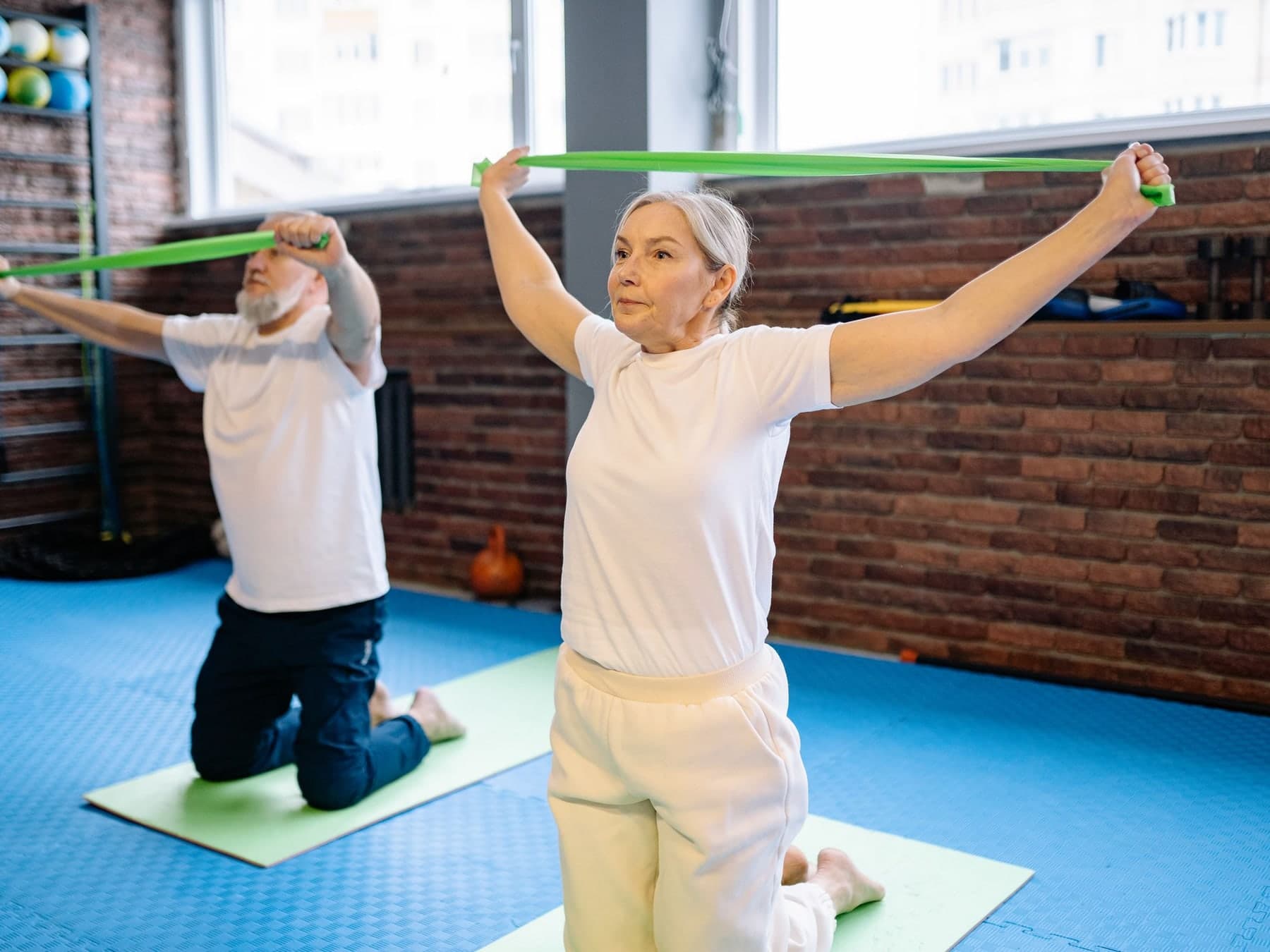
The pull exercises develop the upper back and arms. A resistance-band row is accessible at home, provided the band is securely anchored and in good condition. Hold the handles with your arms extended, then pull your elbows backward while bringing your hands toward your ribs. Avoid shrugging your shoulders toward your ears. Return slowly. You should feel your upper back working rather than simply jerking the band with your arms.
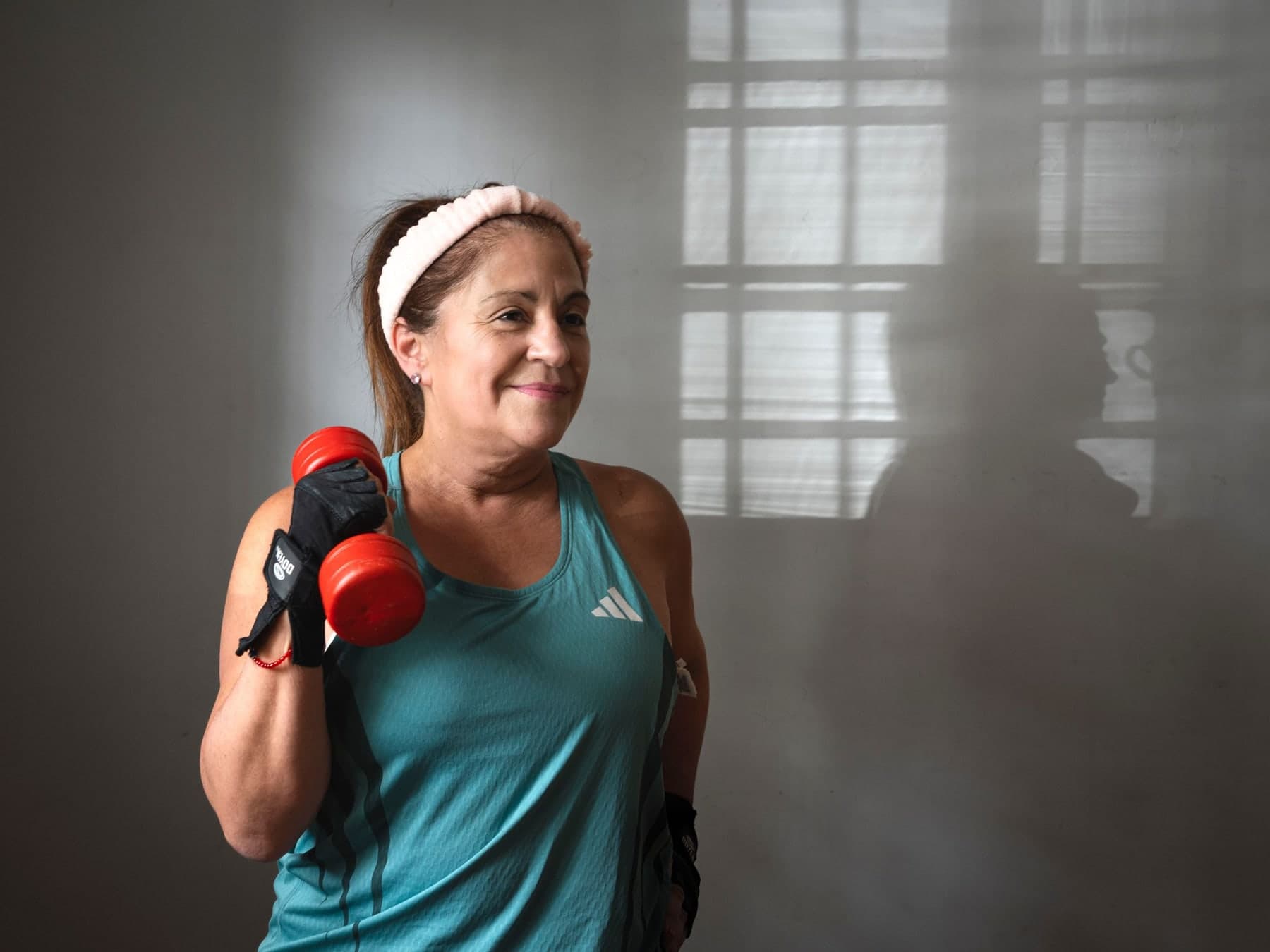
The carry is an underrated form of strength training. Hold a dumbbell or other manageable weight in each hand and walk slowly with an upright posture. Avoid leaning dramatically to one side. Begin with a short distance or 20–30 seconds. Carrying exercises challenge your grip, shoulders, trunk, hips, and legs. They also have obvious practical applications. Groceries, luggage, gardening supplies, and household objects don’t carry themselves.
The step-up strengthens the legs and practices a movement similar to climbing stairs. Begin with a low, stable platform near a handrail or sturdy support. Place one foot on the platform, press through that foot, and step upward. Lower yourself carefully. Choose a step height that allows control without excessive pushing from the trailing leg. If balance is uncertain, use support.
A complete beginner strength routine: Perform this routine twice weekly, allowing at least one recovery day between sessions.
- Chair squat: 1–2 sets of 8–12 repetitions
- Counter top push-up: 1–2 sets of 8–12 repetitions
- Resistance-band or TRX row: 1–2 sets of 8–12 repetitions
- Glute bridge: 1–2 sets of 8–12 repetitions
- Supported step-up: 1 set of 6–10 each leg
- Farmer’s carry: 2 sets of 20–30 seconds
- Bird dog: 1 set of 6–8 each side
Begin with five minutes of comfortable movement. Rest between sets as needed. Sixty to 120 seconds is a reasonable starting range, although some people will need more. The session may take approximately 25–40 minutes. If that’s too much, divide it into two shorter sessions or begin with fewer exercises.
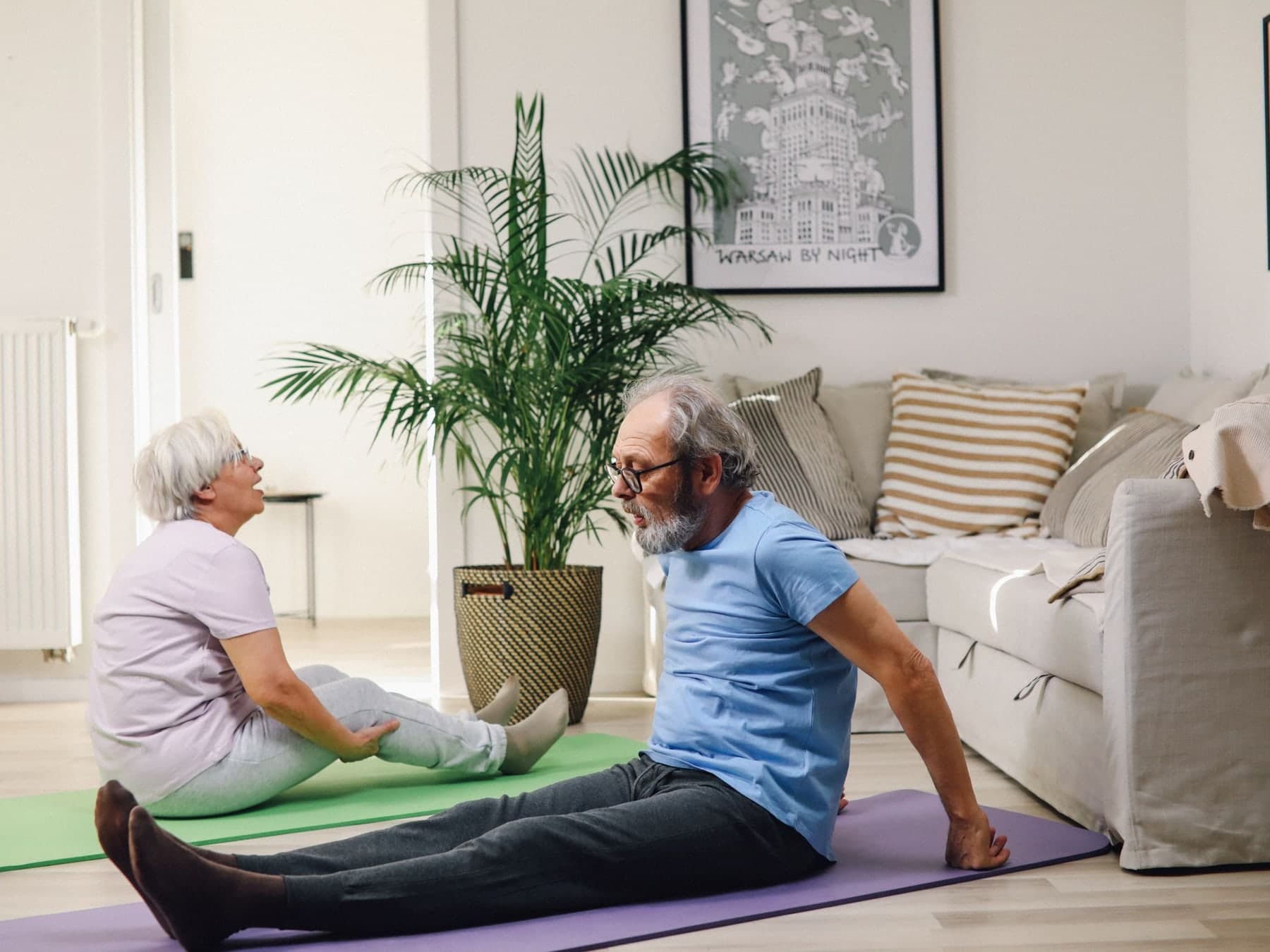
How to perform the glute bridge: Lie on your back with your knees bent and feet on the floor. Tighten your abdominal muscles gently and lift your hips until your shoulders, hips, and knees form a roughly straight line. Pause briefly, then lower. Avoid arching your lower back excessively. The movement should come primarily from the hips.
How to perform the bird dog: Begin on your hands and knees, with padding if needed. Extend one leg backward while maintaining a steady trunk. If comfortable, extend the opposite arm forward. Pause briefly and return. Alternate sides. You don’t need to lift your limbs particularly high. Keeping your trunk steady is more important. If kneeling is uncomfortable, a standing variation with your hands supported on a countertop may be preferable.
The value of machines: Some fitness enthusiasts dismiss exercise machines because they don’t require as much balance or coordination as free weights. That’s an unnecessarily narrow view. Machines can be excellent tools, especially for beginners, people rebuilding strength, and those who want to challenge particular muscle groups without managing a complex movement. A seated leg press can develop leg strength. A chest press machine trains pushing muscles. A seated row trains pulling muscles. A lat pulldown challenges the back and arms. Machines also make resistance easy to adjust. Their limitation is that they don’t always develop the same whole-body coordination required for free-weight exercises. That’s a reason to use a variety of training methods when appropriate, not a reason to avoid machines.
Dumbbells, barbells, and kettlebells: Free weights provide enormous flexibility. Dumbbells are particularly useful because they allow each arm to work independently and accommodate many exercises. Barbells make it practical to lift heavier loads in movements such as squats, deadlifts, and presses. Kettlebells can be used for carries, squats, hinges, and other exercises. No single tool is essential. If you enjoy gym training and want to become very strong, heavier free weights may eventually be useful. If your priority is maintaining everyday capability, dumbbells, machines, bands, and body-weight exercises can take you a long way.
If we could give every individual the right amount of nourishment and exercise, not too little and not too much, we would have found the safest way to health.
4. The beginner’s progression: your first twelve weeks
The biggest mistake new exercisers make is often trying to compress six months of progress into six days. The first twelve weeks should establish a foundation. Your objectives are to learn movements, build consistency, increase your tolerance for exercise, and gradually improve performance.
Weeks 1–2: Learn the routine. Train twice weekly. Use one set of each exercise if necessary. Choose manageable resistance and concentrate on technique. Record your repetitions and any difficulties. For example: Chair squat: 8 repetitions, used hands lightly for support. That’s useful information. It gives you something concrete to improve. Don’t worry about whether your workout looks impressive.
Weeks 3–4: Add repetitions. Continue training twice weekly. If an exercise feels comfortable, add one or two repetitions. You might progress from eight chair squats to ten, then twelve. If you’re already completing twelve repetitions easily, consider a slightly more challenging variation. For upper-body exercises, this could mean increasing band resistance or changing the push-up angle. For lower-body exercises, it might mean reducing hand assistance or adding a light weight.
Weeks 5–6: Build capacity. Introduce a second set for exercises you tolerate well. You might perform two sets of ten squats instead of one. That increases your training workload without requiring heavier resistance. Monitor how you feel the following day. Mild soreness may occur, but you should not routinely feel incapacitated by your workouts.
Weeks 7–8: Introduce more challenge. By now, familiar movements may feel easier. This is a good opportunity to make selected exercises more demanding. You could use heavier dumbbells, a stronger resistance band, or a more challenging push-up variation. Avoid increasing every exercise at once. Your goal is steady improvement, not proving how much discomfort you can endure.
Weeks 9–10: Refine your technique. Pay attention to movement quality. Are your squats controlled? Can you perform rows without shrugging? Do you maintain balance during step-ups? Are you breathing naturally rather than holding your breath throughout the movement? Good technique helps you train consistently and directs the challenge toward the intended muscles.
Weeks 11–12: Assess your progress. Compare your current abilities with your first-week records. Perhaps you can now perform twelve chair squats without using your hands. Maybe you’ve increased the resistance on your rows. Perhaps your walks are longer, your balance is better, or stairs feel easier. These are meaningful improvements. At this point, you can repeat the basic program with progressively harder exercises or move to a more structured intermediate routine. The important thing is that you now have a training habit and evidence of what your body can do.
5. Cardiovascular fitness: build an engine that keeps you going
Imagine being strong enough to carry your luggage but becoming breathless while walking through the airport. Or being able to lift heavy weights but finding a modest uphill trail exhausting. Strength and endurance are different physical qualities. Both deserve attention.
Cardiovascular fitness describes your body’s ability to deliver and use oxygen during sustained activity. Your heart, blood vessels, lungs, and muscles all contribute. When you train aerobically, you challenge this system to work more efficiently. Over time, regular training can improve your ability to sustain activity, making everything from recreational sports to long walks more enjoyable.
Why walking is such a good place to start: Walking requires little equipment and is easy to fit into ordinary life. It can be done alone, with friends, while listening to music, or as a way to explore your neighborhood. It also provides considerable flexibility in intensity. A leisurely stroll may be appropriate for someone beginning after a long period of inactivity. A brisk walk with hills may challenge someone who already exercises regularly. And a long, demanding hike can provide serious endurance training for a fit, experienced walker. The key is to match the activity to your current ability.
The talk test: You don’t need an expensive heart-rate monitor to estimate exercise intensity. The talk test is surprisingly useful. During moderate-intensity exercise, you can generally speak in sentences but would find singing difficult. During vigorous exercise, conversation becomes harder, and you may need to pause after a few words. A comfortable walk may be light exercise for one person and moderate exercise for another. That’s why relative effort matters.
How to build your walking endurance: Suppose you currently walk for ten minutes before becoming noticeably tired. Begin with ten-minute walks three or four days per week. After a week or two, try twelve minutes. Then fifteen. Eventually, you may work toward twenty, thirty, or forty minutes. The progression doesn’t need to be perfectly linear. If you’re unusually tired, reduce the duration. The objective is to gradually increase your capacity without making every session an ordeal.
Should you aim for 10,000 steps? Step counts can be useful, but 10,000 is not a magical threshold. It is better to establish a realistic baseline and gradually increase movement than to become discouraged by an arbitrary number. If you currently average 3,000 steps daily, adding another 500–1,000 steps may be a manageable initial goal. If you already walk 12,000 steps comfortably, you might gain more from incorporating hills, faster intervals, or strength training than from chasing ever-higher step totals. A step counter measures movement volume. It doesn’t fully describe fitness.
Cycling, swimming, rowing, and dancing: Walking isn’t the only option. Cycling provides cardiovascular exercise with relatively little impact. Swimming challenges the cardiovascular system while the water supports body weight. Rowing combines sustained effort with substantial muscular involvement. Dancing develops endurance, coordination, rhythm, and social connection. Choose activities that suit your interests and circumstances. If you dislike walking but love cycling, there’s no reason to force yourself into a walking-only program. The most effective activity is one you can perform safely, consistently, and with sufficient challenge.
What about running after 50? Running can remain an enjoyable and effective activity well beyond 50. Many adults continue running into their sixties, seventies, and beyond. Others begin later in life. The important considerations include previous training history, current fitness, joint symptoms, footwear, and the rate at which running volume increases. If you’re new to running, alternating walking and short jogging intervals can provide a manageable introduction. For example, after warming up, you might jog comfortably for thirty seconds and walk for ninety seconds, repeating several times. Over subsequent weeks, gradually increase the jogging portions if your body tolerates them. If running causes persistent joint pain, consider modifying the program or choosing another activity. Running is an option, not an obligation.
Should you do interval training? Interval training alternates harder efforts with easier recovery periods. It can be an efficient way to improve cardiovascular fitness. But intervals don’t need to involve all-out sprints. For a recreational walker, an interval session might consist of three minutes at a comfortable pace followed by one minute of brisk walking. Repeat that sequence five or six times. For a cyclist, intervals might involve short uphill efforts or periods of faster pedaling. Experienced exercisers can use more demanding interval protocols. Beginners should establish a comfortable aerobic foundation first. High-intensity training is useful when appropriately programmed, but it isn’t inherently superior for every person or goal.
How much cardio is enough? For general health, the familiar recommendation is at least 150 minutes of moderate activity weekly, with additional benefits possible from higher amounts. That could mean thirty minutes of brisk walking five days per week. But it could also involve shorter sessions distributed differently. You might cycle for forty minutes twice weekly, walk for twenty minutes on three days, and spend another thirty minutes dancing. There is no requirement that all aerobic activity come from a single exercise. If you’re preparing for a demanding hike or cycling trip, you’ll likely need more specific endurance training. Train for what you want to do.
6. Mobility and flexibility: make movement feel better
You can be strong and still feel stiff. You can also be flexible without having good control over your movements. That distinction matters. Flexibility refers largely to the available range of motion in muscles and joints. Mobility involves using that range with coordination and control. For everyday life, usable mobility is often more valuable than extreme flexibility. You don’t need to perform the splits. You need to reach, bend, turn, step, sit, and move comfortably.
Why do we feel stiff? Stiffness can have many causes. Prolonged sitting, unfamiliar exercise, reduced movement variety, muscle fatigue, joint conditions, and previous injuries may contribute. Sometimes the sensation reflects a temporary response to inactivity rather than a permanent loss of movement. Consider what happens after a long car journey. You stand up and feel stiff. After walking around for a few minutes, you may feel considerably better. Movement has changed how you feel. That doesn’t mean every kind of stiffness can be solved by stretching, but it illustrates why regular movement matters.
The joints worth paying attention to: A practical mobility routine can emphasize the ankles, hips, upper back, and shoulders. These areas participate in many common activities. Ankle mobility contributes to walking, squatting, and stair climbing. Hip mobility supports sitting, standing, bending, and stepping. Movement through the upper back helps with reaching and turning. Shoulder mobility contributes to dressing, reaching overhead, and carrying objects. The goal is comfortable function, not maximum possible range.
A ten-minute mobility routine: Begin with gentle movements. Ankle circles: Sit or stand with support and slowly circle each ankle ten times in each direction. Standing hip hinges: Place your hands on your hips, soften your knees, and move your hips backward. Perform eight controlled repetitions. Shoulder circles: Make slow, comfortable circles five to ten times in each direction. Seated upper-back rotations: Sit upright with your arms crossed loosely over your chest. Turn your upper body gently left and right. Calf stretch: Place your hands against a wall, step one foot backward, and keep the rear heel down. Hold for twenty to thirty seconds. Hip-flexor stretch: In a supported split stance, gently shift your hips forward until you feel a mild stretch at the front of the rear hip. Sit-to-stands: Finish with five controlled repetitions from a sturdy chair. Avoid forcing painful positions. If a movement causes sharp pain, dizziness, or unusual symptoms, stop and adjust.

Stretching before or after exercise? Before demanding exercise, dynamic movement is generally useful. That might include easy walking, arm circles, gentle squats, and movements resembling the workout ahead. Long, intense static stretches are not necessary before every session. After exercise, gentle stretching can be included if you find it helpful. Stretching may improve flexibility over time, but it should not be treated as a universal solution for soreness or injury prevention.
Yoga and Pilates: Yoga can develop flexibility, balance, body awareness, and strength, depending on the style and exercises. Pilates often emphasizes trunk control, coordination, and movement precision. Both can complement strength and cardiovascular training. However, neither automatically replaces every other form of exercise. A gentle yoga class may not provide sufficient cardiovascular challenge. A Pilates routine may not provide the progressive resistance needed for substantial increases in whole-body strength. Think of them as useful options within a broader program.
7. Balance: the ability you notice most when you need it
Balance is easy to take for granted. You stand up, turn, reach for something, and walk across the room without consciously planning every movement. Behind the scenes, your nervous system is constantly integrating information about your body’s position. Your vision contributes. Your inner ear contributes. Sensory information from muscles and joints contributes. Your muscles then make adjustments to keep you stable. Balance is an impressive coordination task. And it can be practiced.
Start with supported balance: Stand beside a sturdy countertop. Place your feet close together and maintain your position for twenty seconds. If that feels easy, move one foot slightly ahead of the other. Later, try a heel-to-toe stance. Always keep support within reach. The challenge should be enough to require attention without creating an unreasonable risk of falling.
Single-leg standing: Stand near a stable support. Shift your weight onto one leg and lift the other foot slightly. Hold for five to ten seconds. Repeat on the other side. As you improve, gradually increase the duration. You may eventually need only light fingertip support. Don’t rush to remove support entirely. The purpose is improving balance, not proving that you can balance without assistance.
Dynamic balance: Standing still is only one part of balance. Everyday life involves movement. Try controlled sideways steps along a countertop. Practice stepping forward and backward. Walk slowly along a straight line with a normal, comfortable stride. As your ability improves, you can introduce gentle direction changes. Tai chi is another option, combining controlled weight shifts, coordinated movement, and attention. The National Institute on Aging identifies activities such as tai chi, heel-to-toe walking, and single-leg standing as examples of balance training.
Strength and balance belong together: Balance isn’t exclusively a nervous-system skill. Muscle strength also matters. Strong legs and hips help you control your body when stepping or changing direction. That’s why a well-designed program combines resistance training and balance practice. One complements the other.
Physical fitness is not only one of the most important keys to a healthy body, it is the basis of dynamic and creative intellectual activity.
8. Bone health: why your skeleton needs a reason to stay strong
Bones are living tissue. They respond to mechanical loading, although the process differs from muscle adaptation. Resistance exercise and appropriate weight-bearing activities can help support bone health. That matters because bone strength influences the consequences of injuries and falls.
What kinds of exercise challenge bones? Walking, stair climbing, resistance training, and some impact activities place mechanical demands on the skeleton. However, the magnitude and type of loading vary. Swimming and cycling can provide excellent cardiovascular exercise, but they do not load the skeleton in the same way as weight-bearing activities. That’s one reason people who primarily swim or cycle may benefit from adding resistance training.
Should everyone jump or run? No. Impact exercise may be appropriate for some healthy, well-prepared adults. But people with osteoporosis, previous fragility fractures, significant balance difficulties, or certain joint conditions may need modified activities. The goal is to apply useful loading without creating unnecessary risk. For many people, progressive resistance training, walking, and appropriate functional exercises are sensible starting points. Those with diagnosed osteoporosis should obtain individualized guidance about loading, spinal movements, and fracture precautions.
The importance of the hips and spine: Hip and spinal health are particularly relevant because fractures in these regions can have serious consequences. Strengthening the legs, hips, back, and trunk supports physical function. But exercise technique matters. People with osteoporosis or vertebral fractures may need to avoid certain heavily loaded or forceful spinal movements. A qualified physical therapist or appropriately experienced clinician can help tailor a program.
9. Recovery: the part of fitness that happens between workouts
Exercise creates a challenge. Recovery allows your body to adapt. If you repeatedly train hard without sufficient recovery, performance may deteriorate. You might feel unusually tired, experience persistent soreness, sleep poorly, or find that exercises become harder rather than easier. The solution isn’t necessarily to abandon exercise. Often, it’s to adjust the amount or intensity of training.
How many rest days do you need? There is no universal number. A beginner performing full-body resistance training may do well with two sessions weekly, separated by several days. An experienced exerciser may train more frequently by distributing work across different muscle groups or varying intensity. Light activity can often continue between harder sessions. Walking, gentle cycling, and mobility work may feel restorative. Rest doesn’t always mean sitting completely still.
What muscle soreness tells you: Delayed-onset muscle soreness can appear after unfamiliar or demanding exercise. It often becomes noticeable the following day and may last several days. Soreness is not proof of an effective workout. Nor is the absence of soreness evidence that you accomplished nothing. As your body becomes accustomed to training, the same workout may produce less soreness even while continuing to support progress. Severe pain, major swelling, pronounced weakness, or dark urine after extreme exertion requires prompt medical assessment.
Sleep and physical adaptation: Sleep supports many processes involved in health and recovery. Most adults benefit from consistent sleep routines and sufficient sleep duration. If you’re regularly sleeping poorly, adding more demanding workouts may not be the most productive next step. Sometimes improving recovery allows you to train more effectively.
What about rest weeks? Experienced exercisers sometimes reduce training intensity or volume for a short period. This is often called a deload. It can be useful after several weeks of demanding training. Beginners usually don’t need complicated deload schedules. They can simply adjust workouts when unusually fatigued or sore. The larger principle is straightforward: training should challenge you without steadily wearing you down.
10. Nutrition: give your body the materials to adapt
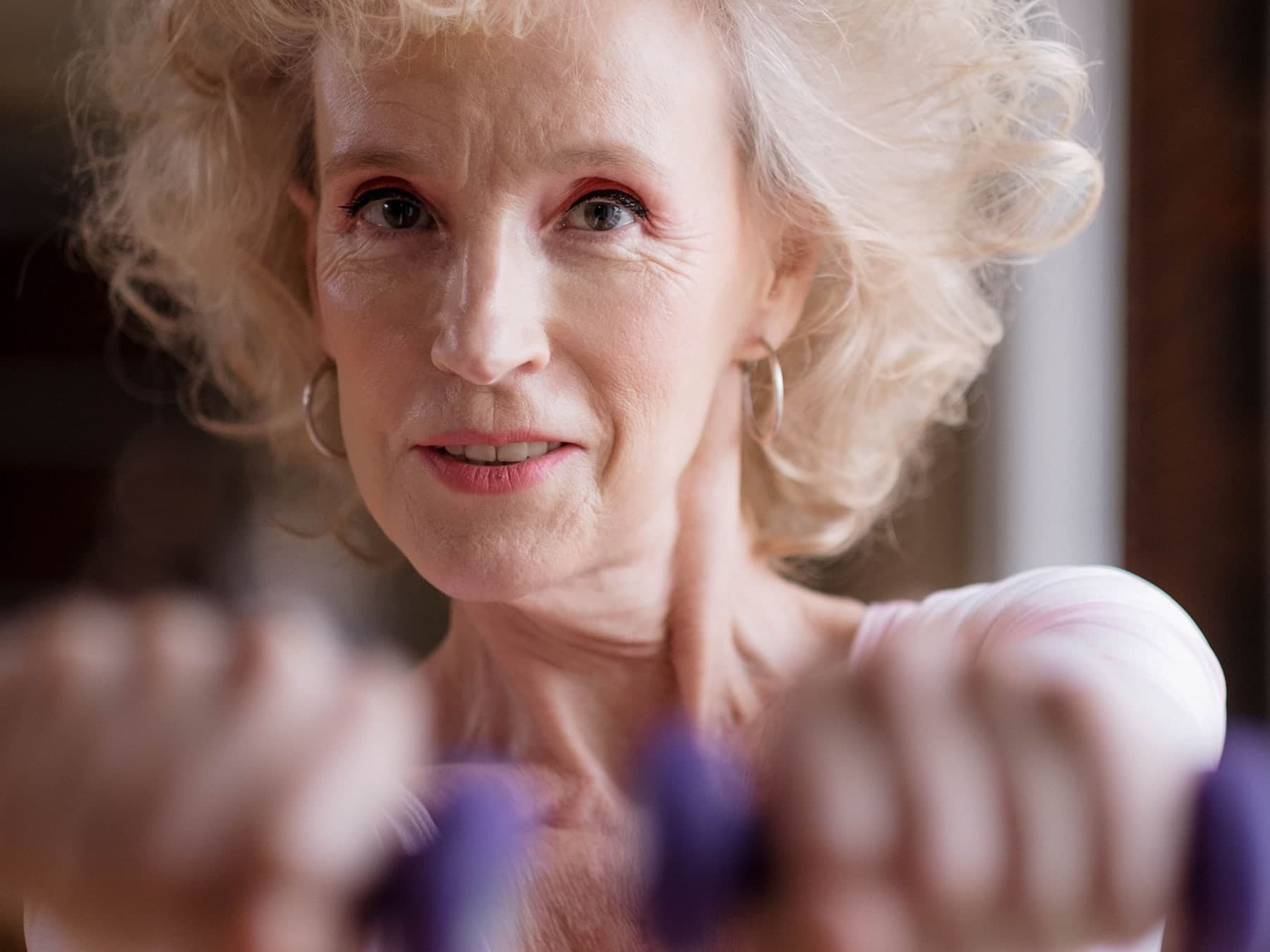
Exercise and nutrition work together. You can perform an excellent strength program, but inadequate food intake may limit recovery and progress. Likewise, eating well does not replace the physical stimulus of exercise. Both matter.
Protein and muscle: Protein provides amino acids used in building and repairing body tissues. For physically active adults, consuming adequate protein helps support muscle maintenance and adaptation. Sources include fish, poultry, eggs, dairy, tofu, tempeh, beans, lentils, and other protein-rich foods. Rather than concentrating all your protein into one enormous dinner, consider including meaningful protein sources across meals. For example, breakfast might include Greek yogurt, eggs, or tofu. Lunch could feature beans, tuna, chicken, or lentils. Dinner might include fish, poultry, soy foods, or another protein-rich choice.
Do you need protein supplements? Not necessarily. Protein powders can be convenient, but they are not required for muscle growth. If your regular meals provide adequate protein, a supplement may add little. For people who struggle to meet their needs through food, a supplement can be a practical option. People with kidney disease or other medical conditions affecting protein requirements should seek individualized guidance.
Carbohydrates are useful fuel: Carbohydrates supply energy for many activities, particularly sustained or demanding exercise. Whole grains, fruits, vegetables, beans, and other carbohydrate-containing foods can contribute to a balanced diet. There is no need to fear carbohydrates simply because you’re over 50. The amount that suits you depends partly on your activity level, health, and overall dietary pattern.
Dietary fats: Fats contribute essential fatty acids and help the body absorb certain vitamins. Useful sources include olive oil, nuts, seeds, avocados, and fish. An eating pattern that emphasizes a variety of minimally processed foods can support overall health.
Hydration: Hydration needs vary with activity, temperature, body size, and health. Drink regularly and pay attention to conditions that increase fluid losses. Long walks in hot weather require more attention to hydration than a short indoor workout. Some medications and health conditions affect fluid balance, so individualized guidance may be necessary.
Food timing: For most recreational exercisers, overall dietary consistency matters more than precise nutrient timing. You don’t need to eat a protein shake within minutes of finishing every workout. A normal meal containing protein and other nutrients within a reasonable period is generally practical. For long endurance sessions, fueling during exercise may become more important.
11. Training when you’re already fit
A 55-year-old who has trained consistently for thirty years needs different advice from a 55-year-old beginning for the first time. The experienced exerciser may already have excellent strength, endurance, and movement skills. Their challenge may be maintaining performance while managing recovery.
Keep training with purpose: If you’re an experienced runner, cyclist, swimmer, or lifter, continue pursuing goals that interest you. You don’t need to automatically abandon challenging exercise because of your age. However, it may be useful to become more deliberate about workload. Repeated maximal efforts, abrupt increases in volume, and inadequate recovery can be harder to tolerate. A thoughtful program balances challenging sessions with easier work.
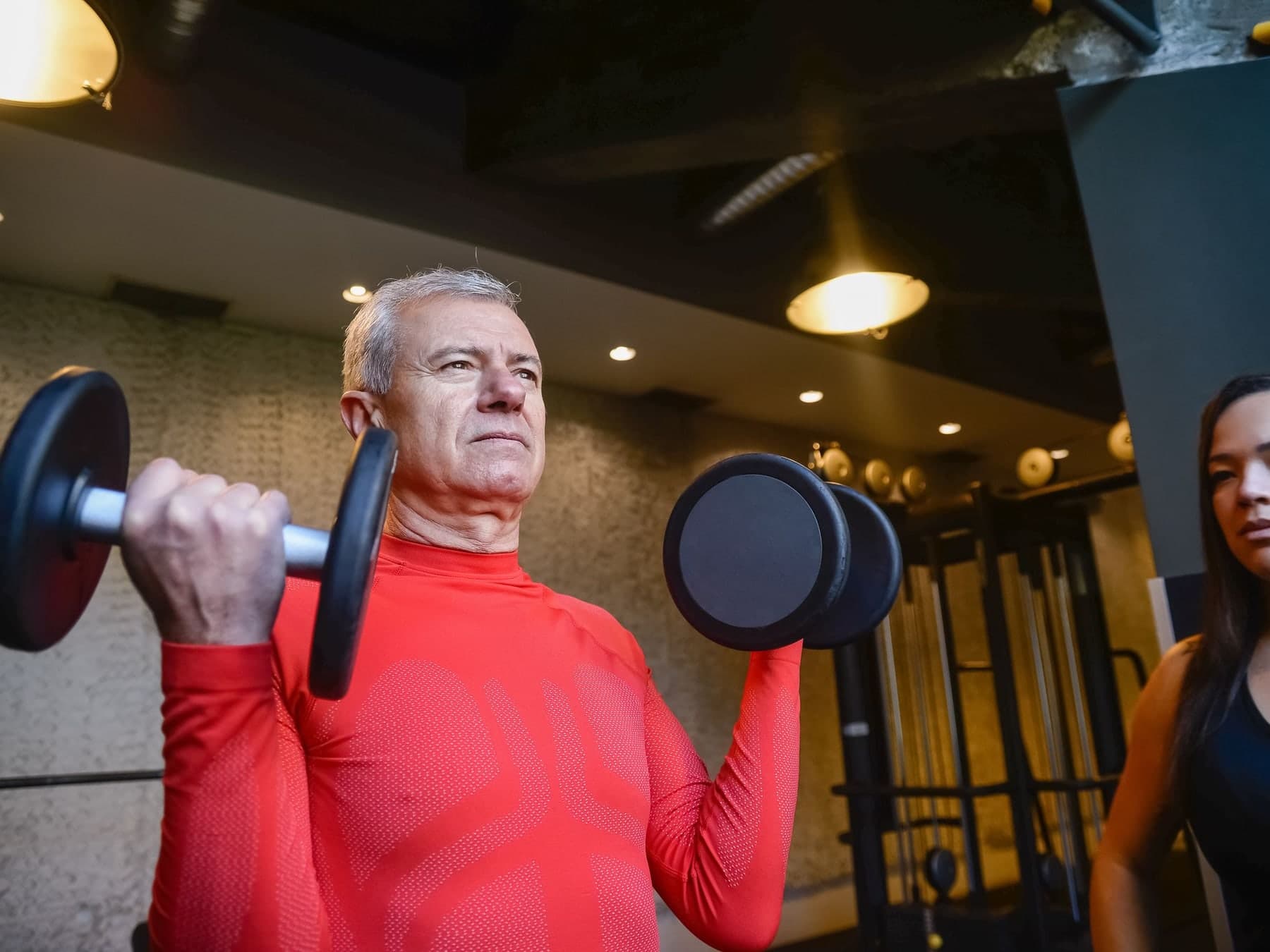
Strength athletes: Experienced lifters can continue using progressive resistance training. They may benefit from varying exercise intensity and volume across the week. For example, one session might emphasize heavier loads and fewer repetitions, while another uses moderate resistance and more repetitions. Exercise selection should reflect individual goals and joint tolerance.
Endurance athletes: Experienced runners and cyclists often benefit from maintaining a substantial amount of comfortable aerobic training while using harder sessions selectively. Not every workout needs to be a race. Easy sessions support training volume without requiring maximal effort. Harder sessions provide specific performance challenges. The balance depends on the athlete and event.
Recreational sports: Tennis, pickleball, golf, basketball, skiing, and other sports place distinct demands on the body. A tennis player may benefit from lateral movement, rotational strength, and aerobic conditioning. A golfer may benefit from hip mobility, trunk strength, and walking endurance. A skier needs strong legs, balance, and the ability to tolerate sustained effort. The more specific your goals, the more useful targeted preparation becomes.
Don’t confuse experience with invulnerability: Experienced athletes sometimes have the opposite problem from beginners. They know how to push themselves, but they may be reluctant to reduce training when recovery becomes inadequate. The ability to train hard is valuable. The judgment to adjust training is equally valuable.
12. Fitness with arthritis, joint discomfort, or previous injuries
Many adults live with some degree of joint discomfort. That doesn’t automatically mean exercise is inappropriate. In fact, appropriately selected activity can often support strength, function, and confidence. The important distinction is between tolerable exercise-related discomfort and symptoms that signal a need to modify or stop.
Knee discomfort: If squats bother your knees, consider changing the range of motion. A higher chair may make sit-to-stands more comfortable. A supported partial squat may be preferable to a deep squat. Strengthening the hips and surrounding muscles can also be useful. Persistent swelling, instability, locking, or worsening pain deserves professional evaluation.
Hip discomfort: Hip discomfort can have several causes. Sometimes reducing step height, modifying squat depth, or changing exercise selection helps. Cycling or water exercise may be comfortable alternatives for some people. But not every hip problem responds to the same modification.
Shoulder discomfort: If overhead pressing causes pain, try a different movement rather than forcing the exercise. Rows, wall push-ups, and carefully selected resistance exercises may be more tolerable. The appropriate program depends on the underlying problem.
Back discomfort: Back pain is common, but its causes vary. Many people benefit from gradually rebuilding movement confidence and strength. Exercises such as supported hinges, bridges, and carefully selected trunk exercises may be useful. However, pain accompanied by new neurological symptoms, significant weakness, or bowel or bladder changes requires prompt medical evaluation.
Exercise after joint replacement: People who have undergone hip or knee replacement may eventually return to substantial physical activity. The appropriate progression depends on the surgery, healing, individual restrictions, and rehabilitation progress. Follow the surgeon’s and rehabilitation team’s guidance. The long-term goal is usually to restore useful function, not to avoid movement indefinitely.
13. Home workouts versus the gym
You can build considerable fitness at home. You can also benefit enormously from a well-equipped gym. The better choice is the one that fits your goals, budget, preferences, and willingness to attend consistently.
The case for exercising at home: Home workouts eliminate travel time. You can train whenever your schedule allows. A few resistance bands, dumbbells, and a sturdy chair can support many useful exercises. For beginners, this may be enough for months of progress.
The limitations of home training: As you become stronger, you may need more resistance. A small collection of light dumbbells can eventually become limiting. Some exercises also require equipment that is difficult to replicate safely at home. That’s when a gym may become attractive.
The case for the gym: Gyms provide a wide range of resistance levels and equipment. Machines can make it easy to train major muscle groups. Free weights allow substantial progression. Some gyms offer classes, trainers, pools, and social opportunities. For people who enjoy the atmosphere, the gym can become a pleasant part of the week.
How to choose a gym: Visit before joining. Look at cleanliness, equipment maintenance, accessibility, and staff availability. Notice whether the environment feels welcoming. Ask whether someone can show you how to adjust machines. You don’t need the most expensive gym. You need one where you feel comfortable enough to return.
14. A complete weekly fitness program
A good program should be realistic. It should include enough activity to challenge the body without consuming your entire schedule. Here is one example for someone who has already developed a modest fitness foundation.
- Monday: Full-body strength training, 35–45 minutes
- Tuesday: Brisk walking, 30 minutes; balance practice, 5 minutes
- Wednesday: Cycling or swimming, 30–40 minutes
- Thursday: Full-body strength training, 35–45 minutes
- Friday: Brisk walking, 30 minutes; mobility, 10 minutes
- Saturday: Hiking, dancing, recreational sport, or a longer walk
- Sunday: Easy activity or recovery
This is a framework, not a mandatory schedule. A beginner might shorten every session. An experienced exerciser might add a third strength day or more specific endurance work.
What if you only have fifteen minutes? Use the time. A fifteen-minute strength session could include chair squats, wall push-ups, band rows, and carries. A fifteen-minute walk can contribute to your weekly aerobic activity. Short sessions are worthwhile. You don’t need to wait until your schedule magically produces a free hour.
What if you miss a week? Resume at an appropriate level. You haven’t erased every adaptation. If you’ve been inactive for several weeks, reduce the difficulty slightly when returning. Avoid trying to make up every missed workout. Fitness is built over years, not settled by one imperfect week.
15. How to measure progress without becoming obsessed with numbers
Progress can be measured in many ways. The most useful measurements reflect your goals.
Strength progress: Record the exercise, resistance, sets, and repetitions. If you increase from eight repetitions to twelve with the same weight and good technique, that’s progress. If you can lift a heavier dumbbell for the same repetitions, that’s progress too.
Endurance progress: Track walking duration, distance, pace, or perceived effort. Perhaps a route that once left you breathless now feels comfortable. That improvement matters even if your watch doesn’t congratulate you.
Functional progress: Pay attention to ordinary life. Are stairs easier? Can you carry groceries more comfortably? Can you get up from a low chair without using your hands? Can you enjoy a longer day of sightseeing? These may be the most meaningful measures of all.
Balance progress: Track how long you can maintain a supported balance position with control. Notice whether stepping, turning, and changing direction feel more confident. Don’t deliberately create unsafe situations to test yourself.
Body weight is only one measurement: Body weight may change with exercise and dietary habits. But it doesn’t capture strength, endurance, mobility, or overall physical capability. A person can become significantly fitter without a dramatic change on the scale. If your primary goal is improved function, measure function.
Because I take care of my body, it doesn't look like the body of a woman of my years.
16. Building fitness into ordinary life
Structured workouts are valuable. But the rest of your day matters too. Someone who exercises for thirty minutes and then sits almost continuously may benefit from adding more movement throughout the day. That doesn’t require turning every moment into a fitness opportunity. It means looking for natural ways to move. Walk while talking with a friend. Take a short stroll after a meal. Stand up periodically during long periods of desk work. Carry manageable groceries. Use stairs when appropriate. Spend time gardening. Walk around a museum. Play with children. Dance in the kitchen. Some activities provide more training stimulus than others, but they all contribute to a less sedentary life.
The importance of enjoyment: Exercise is easier to sustain when it connects to something you value. If you love nature, walking and hiking may be obvious choices. If you enjoy social interaction, group classes or recreational sports may appeal. If you prefer solitude, cycling or strength training at home may suit you. There is no requirement that everyone enjoy the same activities. The best fitness program is not necessarily the one with the most sophisticated design. It’s one you can practice consistently while still enjoying your life.
17. The psychology of staying active
Motivation is unreliable. Some mornings you’ll feel eager to exercise. Other mornings you’ll have approximately the same enthusiasm for working out as you do for cleaning the gutters. That’s normal. A sustainable fitness routine cannot depend entirely on feeling motivated. It needs structure.
Make exercise convenient: Keep your walking shoes accessible. Set out workout clothes the night before. Store resistance bands where you’ll see them. Choose a gym that is easy to reach. Reduce the number of decisions required before beginning.
Use a predictable schedule: Decide in advance when you’ll exercise. For example, Monday and Thursday mornings may be strength-training days. Tuesday and Saturday may be longer walking days. A predictable routine reduces the need to negotiate with yourself repeatedly.
Start smaller than your enthusiasm suggests: It’s tempting to begin with a dramatic plan. Six workouts per week. A complete dietary overhaul. A new collection of equipment. But an ambitious plan is useful only if you can maintain it. Two manageable strength sessions and regular walking can be a much better beginning. You can expand the program once the routine becomes established.
Make room for imperfect weeks: Travel, illness, family responsibilities, and unexpected events will interrupt your plans. That doesn’t mean the plan has failed. The important skill is returning. If you miss a workout, resume at the next reasonable opportunity. Don’t punish yourself with an excessively difficult session. Consistency means repeatedly returning to useful habits, not performing them perfectly.
18. Common fitness mistakes after 50
Several mistakes can slow progress or make exercise unnecessarily unpleasant.
Mistake 1: Doing too much too soon. The first workout should not be an attempt to discover your absolute physical limits. Start at a manageable level and build gradually.
Mistake 2: Avoiding resistance training. Walking and other aerobic activities are valuable, but they don’t fully replace progressive muscle-strengthening exercise. Include both.
Mistake 3: Using soreness as proof of success. You can make progress without being sore. Judge workouts by performance, consistency, and recovery rather than discomfort.
Mistake 4: Changing routines constantly. A sensible program needs time. If you change every exercise each week, measuring progress becomes difficult. Keep a useful core routine long enough to improve at it.
Mistake 5: Ignoring technique. Controlled movement allows you to direct effort toward the intended muscles. If you’re uncertain about an exercise, use a simpler variation or seek instruction.
Mistake 6: Neglecting balance. Strength and endurance are valuable, but balance deserves its own attention. A few minutes of regular practice can be worthwhile.
Mistake 7: Comparing yourself with someone else. Two people of the same age can have dramatically different training histories and physical capacities. Your most useful comparison is with your own previous performance.
Mistake 8: Treating rest as failure. Recovery is part of adaptation. Training harder isn’t always training better.
Mistake 9: Waiting for perfect conditions. You don’t need ideal weather, expensive equipment, or a completely free schedule. Begin with what you have.
Mistake 10: Forgetting why you’re exercising. A workout program is a tool. Its purpose is to help you live the life you want. If the program becomes so demanding that it consistently interferes with that life, reconsider its design.
19. Fitness through your fifties, sixties, seventies, and beyond
Chronological age alone does not determine the right exercise program. Training history, health, physical capacity, and personal goals matter more. Still, different life stages can bring different considerations.
In your fifties: Many people in their fifties are capable of demanding athletic training. This can be an excellent period to establish strength and endurance habits that will serve you for decades. If you’ve been inactive, rebuilding fitness now can make a substantial difference to your future capabilities. If you’re already active, continue pursuing meaningful goals while paying attention to recovery and workload.
In your sixties: Strength, endurance, mobility, and balance remain trainable. For some people, retirement or changes in work responsibilities create new opportunities for physical activity. You might finally have time for longer walks, cycling, swimming, or regular gym sessions. Others remain extremely busy and need efficient programs. Either way, consistency remains valuable.
In your seventies: Physical capacity varies enormously among people in their seventies. Some are competitive athletes. Others are rebuilding strength after illness or periods of inactivity. Appropriate exercise should reflect the individual. Strength training, aerobic activity, and balance work can remain important. The starting level may need adjustment, but the principles are familiar.
In your eighties and beyond: Movement continues to matter. For some people, the objective may be maintaining walking endurance, standing comfortably, and managing daily tasks. For others, it may involve recreational sports, travel, or demanding outdoor activities. There is no single model of fitness for an entire age group. A well-designed program respects both ambition and current ability.
20. Your first week: make the beginning simple
You don’t need to implement every idea in this guide immediately. Begin with a manageable experiment. Choose two days for strength training. Perform a few basic exercises: chair squats, wall push-ups, rows, and supported step-ups. On three other days, walk for ten to twenty minutes. Add a few minutes of gentle mobility or supported balance practice. Write down what you did. Next week, repeat it. If the routine feels manageable, add a few repetitions or several minutes of walking. If it feels too difficult, reduce the workload. The point is to create a starting point that you can build upon.
What should you expect after a month? You may notice that familiar exercises feel easier. You might walk farther before becoming tired. You may feel more confident performing movements you’ve practiced. Some people notice improvements quickly. Others progress more gradually. Visible changes in muscle size or body composition often take longer. Don’t judge the value of the program exclusively by what you see in the mirror. Pay attention to what you can do.
What about after six months? With consistent training, six months provides considerable opportunity for improvement. Your resistance exercises may be significantly more challenging than when you began. Your walking endurance may have increased. You may have developed better movement control and a more reliable routine. The exact results depend on your starting point, program, health, and consistency. But the accumulated effect of repeated, manageable training can be substantial.
21. Fitness should expand your life, not consume it
There is a peculiar danger in becoming interested in fitness. You can become so focused on optimizing your workouts that you forget what the workouts are supposed to accomplish. You track every step, analyze every meal, monitor every recovery metric, and worry about whether your program is perfectly designed. Meanwhile, the bicycle sits unused in the garage because today’s training schedule says you’re supposed to do something else. For some athletes, detailed programming is necessary. For most people, fitness should be a source of freedom. It should make ordinary life easier and enjoyable activities more accessible.
A stronger body can help you explore places you’ve never visited. Better endurance can make a long day outdoors feel exciting rather than exhausting. Improved mobility can make movement more comfortable. Balance and coordination can help you navigate the world with greater confidence. These are practical rewards. They are also deeply personal. One person wants to hike mountain trails. Another wants to continue playing tennis. Someone else wants to spend an afternoon gardening without needing the following day to recover. There is no single correct ambition.
Take care of your body. It's the only place you have to live.
The next step is surprisingly ordinary: Choose an activity you can do this week. Put it on your calendar. Make it manageable enough that you’ll be willing to repeat it. Then do it. You don’t need to announce a transformation. You don’t need to purchase a complicated program. And you certainly don’t need to prove anything to strangers on the internet. You need a beginning.
A few months from now, perhaps you’ll notice that stairs feel easier. A year from now, perhaps you’ll be carrying heavier weights, walking longer distances, or enjoying an activity you’d previously abandoned. And several years from now, perhaps you’ll find yourself at the beginning of a beautiful trail, looking toward a distant overlook. This time, you won’t need to wonder whether you’re capable of making the walk. You’ll already have a pretty good idea.
22. Sources
The scientific and exercise-guideline references supporting this draft include:
- CDC — Adult Physical Activity Recommendations
- CDC — Older Adult Physical Activity Recommendations
- CDC — What Counts as Physical Activity for Older Adults
- National Institute on Aging — Exercise and Physical Ability
- National Institute on Aging — Health Benefits of Exercise
- MedlinePlus — Exercise for Older Adults