Your periods have become unpredictable, or stopped a few years ago, and your bones feel exactly as they always did. That tells you nothing about bone loss after menopause, because osteoporosis is a silent disease: you typically have no symptoms, and you may not know you have it until you break a bone. A broken hip is the stake. Only 40% to 60% of people who break one recover their earlier level of mobility and ability to manage daily activities.
So the timing has to come from research. In a study that followed 1,902 women in the United States, bone loss sped up substantially in late perimenopause and continued at a similar pace in the first years after menopause. Perimenopause is the transition in the years before periods stop. Earlier, in early perimenopause or before it, bone density changed little on average.
Those are averages. The women were African-American, Caucasian, Chinese and Japanese, and they were 42 to 52 when the study began. The study watched women over time and tested no treatment, so it cannot say what you will lose or whether any step changes it. Hispanic women were left out of this analysis.
The study authors also cite earlier work estimating that women lose about 50% of one type of bone (trabecular) and about 30% of another (cortical) over a lifetime, with about half of that lost in the first 10 years after menopause. Rates vary widely: some women lose bone rapidly during the transition and others little or none. The authors say the reason for that variation is poorly understood.
Bone loss after menopause: weight and other risk factors
In the same study, women in the heaviest third of body weight lost bone about 35 to 55 percent more slowly in late perimenopause and after menopause than women in the lightest third. That is an association seen in observation. It does not show that gaining weight protects bone, and the study does not say what weight is healthy. The National Institute of Arthritis and Musculoskeletal and Skin Diseases (NIAMS) offers a plain explanation for the pattern: slender, thin-boned women have less bone to lose than larger-boned women.
The U.S. Preventive Services Task Force says the risk factors clinicians weigh for women under 65 include menopausal status, low body weight, a parent's hip fracture, cigarette smoking and excess alcohol.
Screening
The Task Force recommends osteoporosis screening for women 65 and older. For younger women it points to the risk factors above but gives no score or cutoff for when to screen, so the conversation is yours to open. In our view, if one or more of those factors describes you, bring screening up at your next visit and let your clinician decide.
Exercise and lifestyle

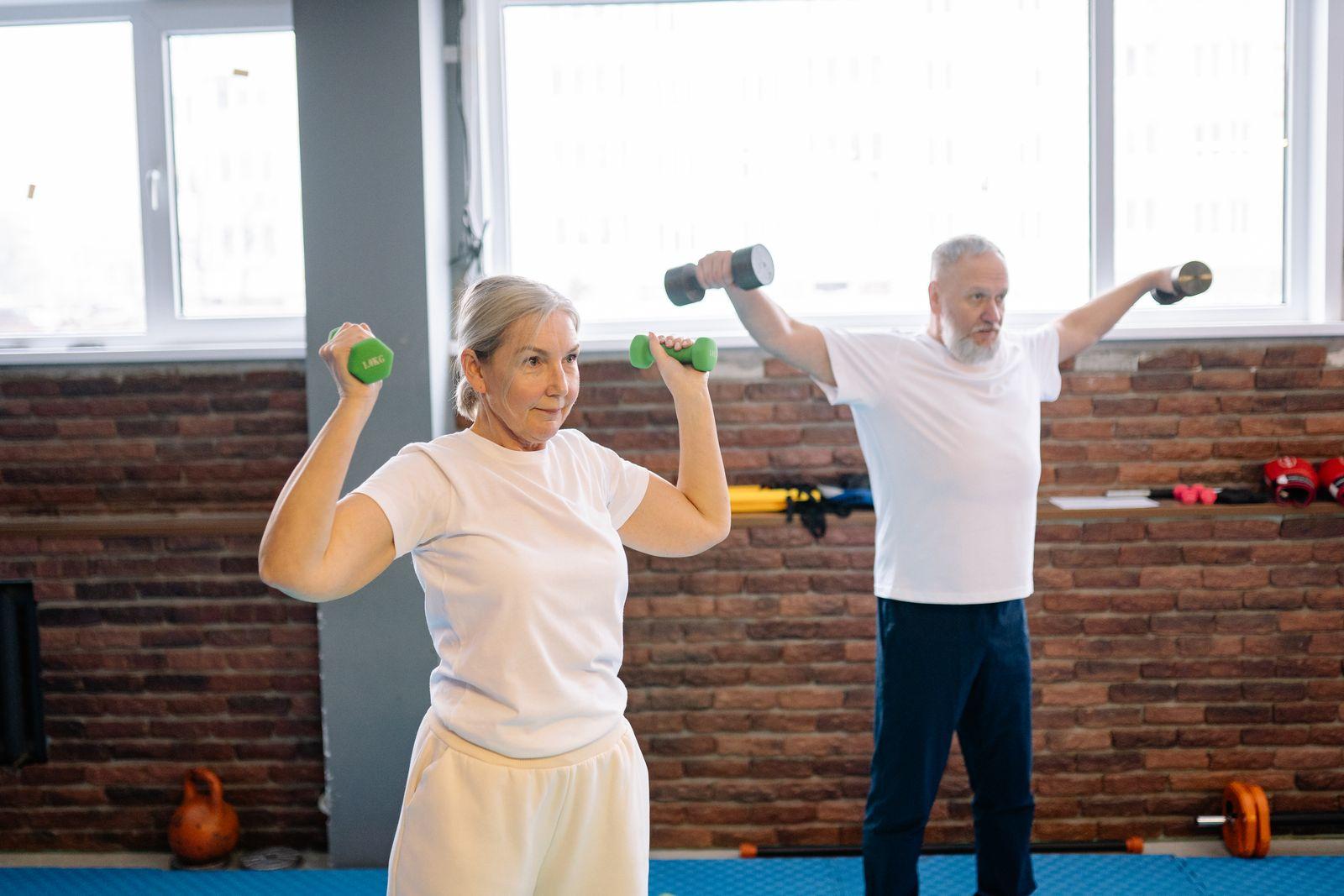
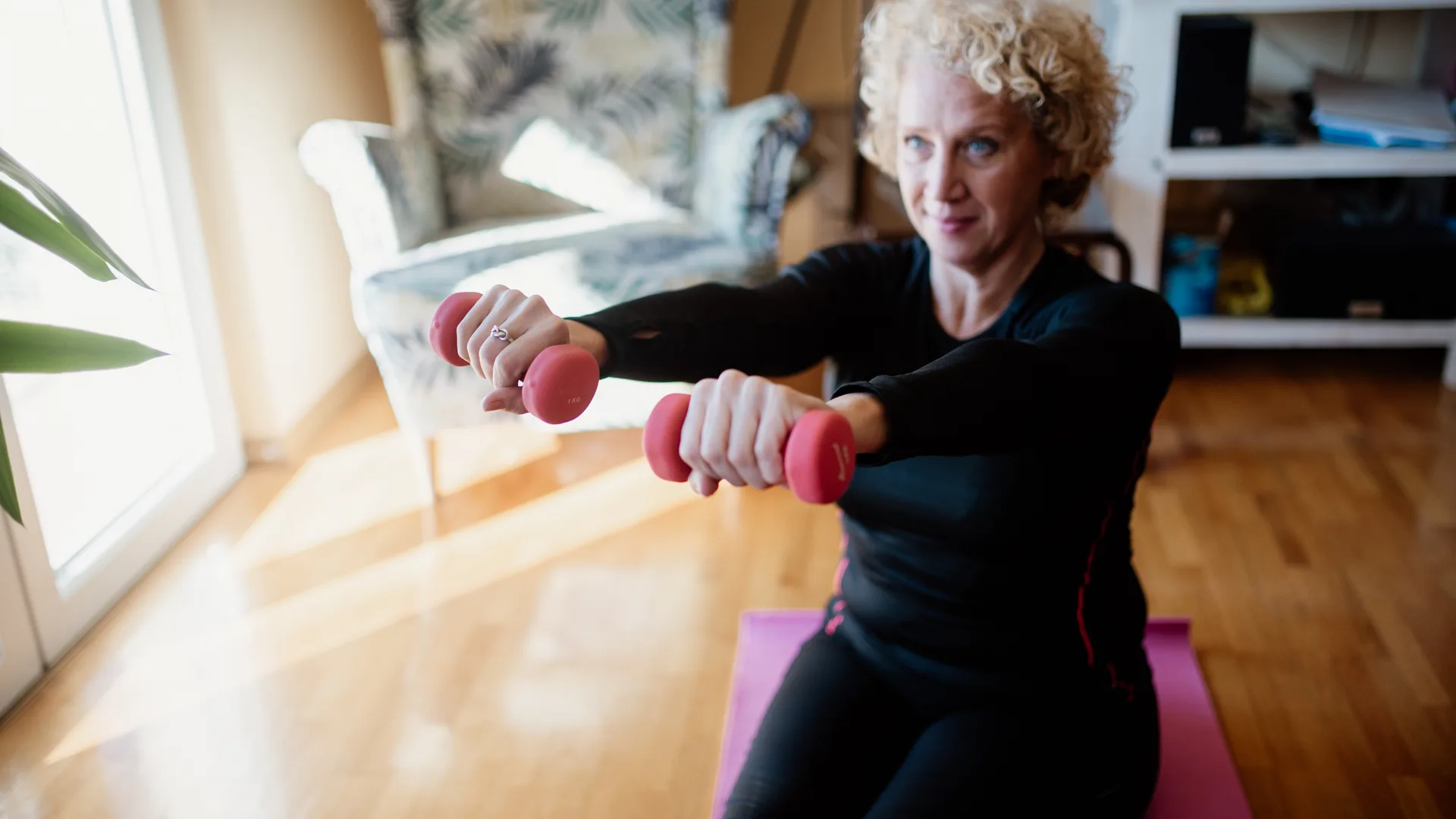
NIAMS says research shows the best physical activities for bone health include strength training or resistance training. It also says that for older adults, exercise no longer increases bone mass. A pooled analysis of trials in postmenopausal women, in programs lasting six months or more, found a small gain in bone density. Its authors think the true effect is diluted by studies with inadequate exercise programs. Those findings disagree, and the sources do not settle it. Neither gives sets, loads or weekly amounts to copy.
Exercise has a second job. The Task Force found it can prevent falls in older adults living at home who are at increased risk for falls.
If you already have osteoporosis or bone loss, NIAMS advises you to talk to your doctor or physical therapist before beginning any exercise program. On alcohol, NIAMS suggests no more than one drink a day for women. More movement ideas are in our bone health after 50 guide.
Supplements
For otherwise healthy postmenopausal women living at home, the Task Force recommends against daily low-dose vitamin D and calcium supplements for preventing fractures. That statement does not apply to women with osteoporosis, a prior fracture, higher fall risk or vitamin D deficiency, and it concerns pills, not calcium in food. The Task Force also found that supplementation increases kidney stones, a small harm. Whether a supplement fits you is a question for your clinician.
Where to start
While the coffee brews, open a note on your phone titled "Bone questions" and write down three facts: whether a parent ever broke a hip, how many drinks you have in a typical week, and whether you smoke. Pinning the note to your home screen makes it easy to add to before an appointment. At your next visit, show it and ask whether screening makes sense and whether any supplement applies to you. Once that feels routine, add a second question about which strength exercises suit you, especially if you already have bone loss.