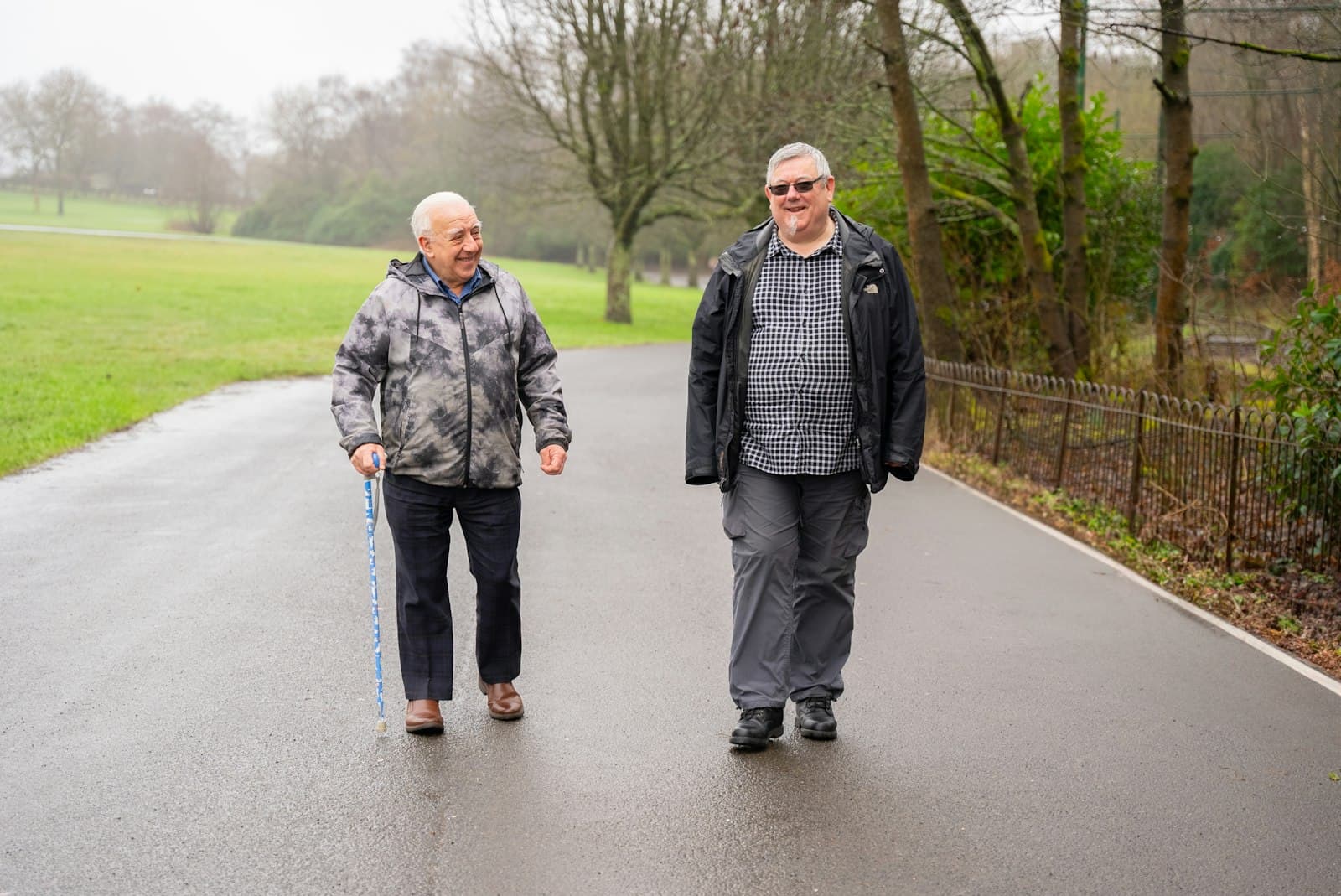

Your neighbor knocks at 6 p.m. and asks if you're coming on the evening walk. Do friends affect your health habits, and does having people like her around change how long you live? The habit half of that question rests on a hypothesis. The survival half has numbers behind it, though only as an association.
What the survival numbers show
A meta-analysis in PLOS Medicine pooled 148 studies with 308,849 participants. It found a 50% increased likelihood of survival for people with stronger social relationships. The link held across age, sex, starting health, cause of death and length of follow-up.
The studies were observational and followed people forward in time. That shows a link between relationships and survival. It cannot show that adding friends causes a longer life.
The review's summary also compares the size of this link with other risk factors. It says the influence of social relationships on risk of death is comparable with smoking and alcohol consumption, and exceeds that of physical inactivity and obesity. Those are comparisons of statistical associations across groups. They don't mean that more friends would offset smoking for any one person.
How friends might shape habits
The proposed route runs through behavior. The review's authors write that social relationships may directly encourage or indirectly model healthy behaviors, and that being part of a social network is typically associated with conformity to social norms relevant to health and self-care.
For example, in a hypothetical circle where everyone walks after dinner, a walk would start to look like the normal thing to do. That is a hypothesis from the review's introduction. The review didn't measure it, and it doesn't say how much any particular habit changes. The authors add that further research is needed on how relationships can be used to reduce the risk of death. Nothing in these sources shows that choosing different friends changes your own habits.
Being alone and feeling lonely are different
The CDC says social isolation can pose a health risk even if a person doesn't feel lonely. It also says even a person with a lot of friends can feel lonely. So the number of people in your life and how connected you feel are two separate things to look at.

Variety may matter more than any single marker
How researchers measured social ties changed the result. The link with survival was strongest for complex measures of social integration. It was weakest for a simple marker, whether someone lives alone or with others, and that result is also the least certain of the two. The researchers report that relationships were more predictive of death in studies that used complex measures than in studies that used simple ones such as marital status.
In our view, that points to the breadth of a person's social life as more informative than any single marker, though the sources give no target for how many friends to have or how often to see them. The authors suspect the overall effect may be an underestimate because many studies used single-item measures, though that is their speculation.
Where to start
After your morning coffee, text one person you'd enjoy seeing and suggest something you already plan to do, such as a walk, an errand or a meal. Save two or three names as favorites in your phone so you don't have to decide whom to ask each time. When that feels routine, invite someone from a different part of your life, such as a neighbor, a former coworker or someone from a class or congregation. If a week gets away from you, pick it up again with the next invitation. For more ways to build connection, see staying connected after 50.