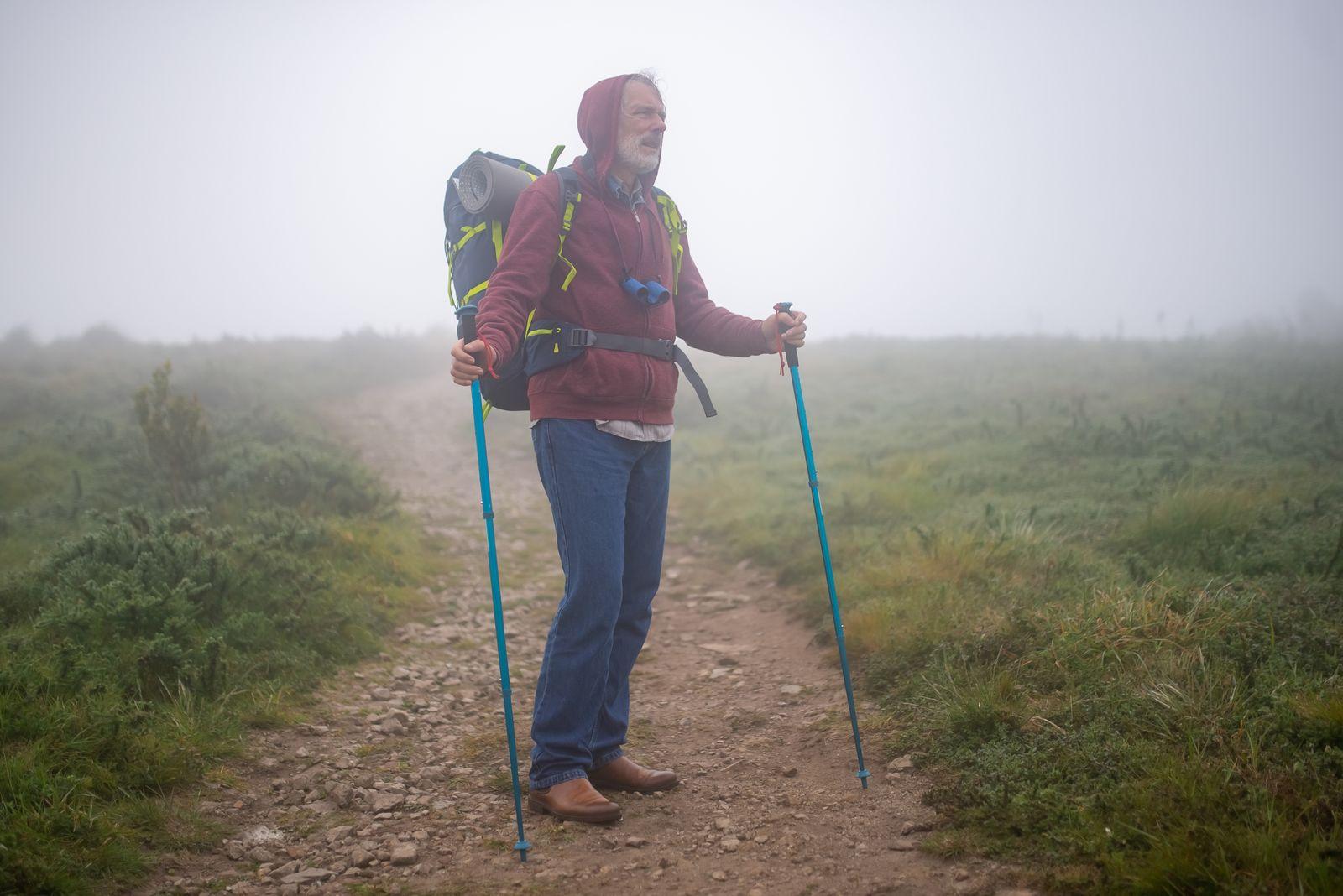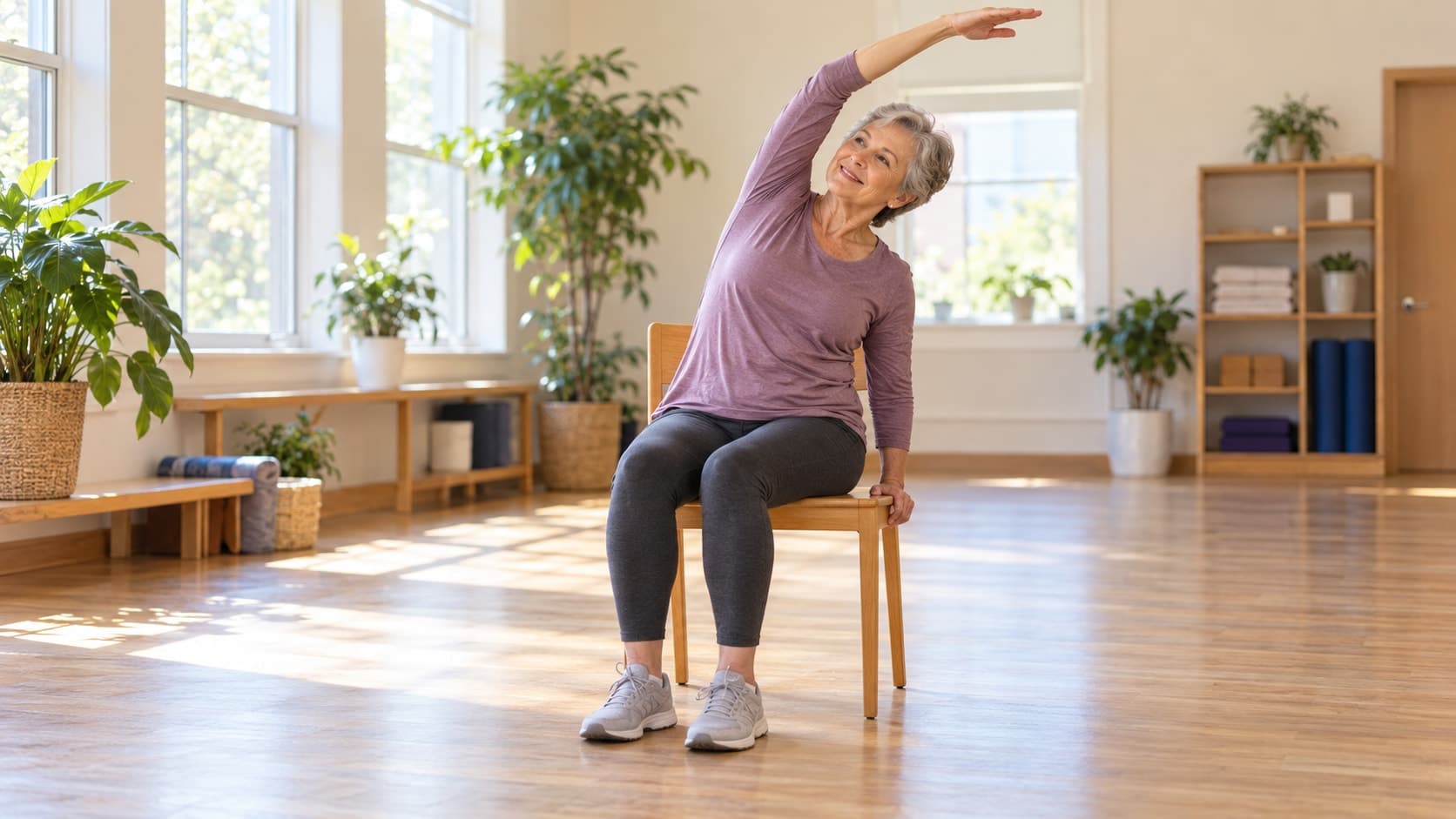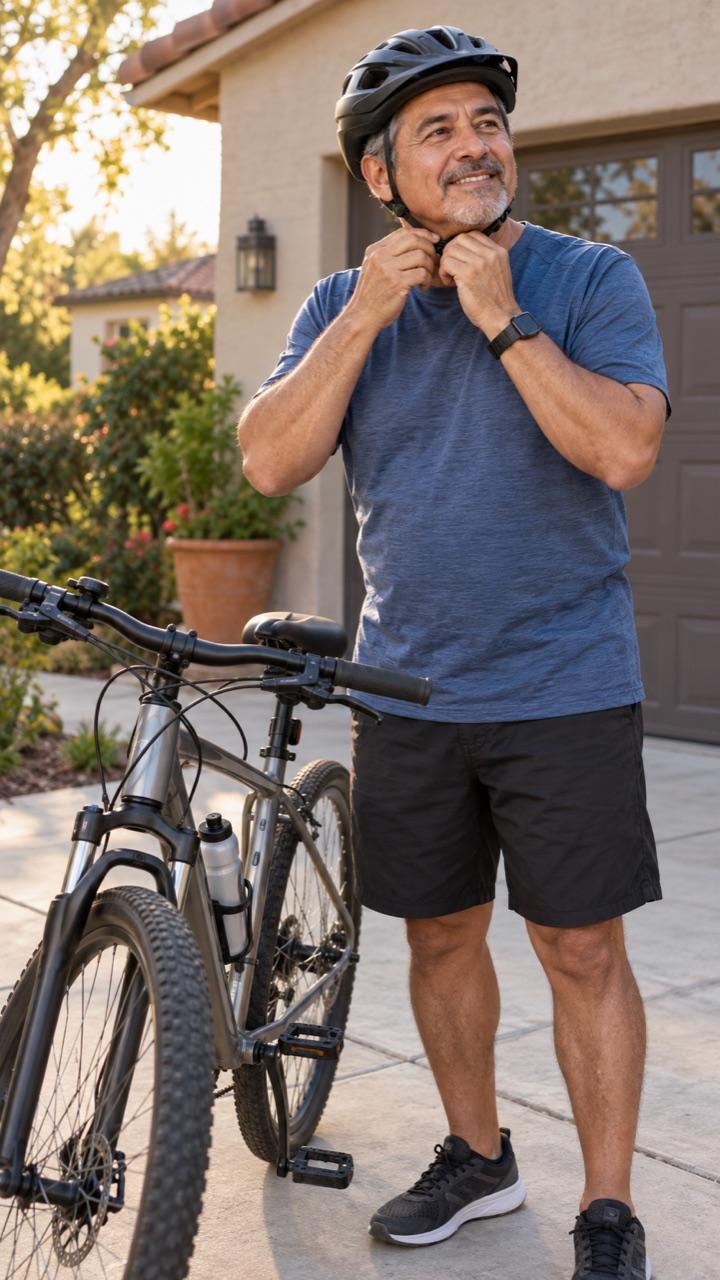

The guideline answer to exercises for seniors with bad knees is a category more than a list. NICE's osteoarthritis guidance says people with osteoarthritis should be offered therapeutic exercise tailored to their needs, with local muscle strengthening and general aerobic fitness as examples. That covers osteoarthritis in general rather than the knee alone. It names no moves, sets, weekly minutes or movements to avoid, so those details have to come from a physical therapist or other clinician who knows your knees and your history.
Why keep going when the knee hurts
It's tempting to protect a sore knee by doing less. NICE's committee said it wanted to reassure people that exercise is not harmful to osteoarthritic joints. That is an expert committee's statement rather than a set of trial results, and it doesn't address a joint that is newly injured or flared up. If that describes your knee, ask your clinician before you start.
Clinicians are told to advise that joint pain may increase when you start therapeutic exercise. The guidance also says regular, consistent exercise will be beneficial for the joints even though it may initially cause pain or discomfort. It gives no limit on how much pain is too much, so ask for a clear stopping rule before you begin.
Staying with it matters. The guidance says long-term adherence to an exercise plan increases its benefits by reducing pain and increasing functioning and quality of life. It also advises people to seek follow-up if planned management isn't working within an agreed time, or if they're having difficulties with the agreed approaches. Settle that time frame, and what would count as a warning sign, at the start.
With a professional or on your own
NICE says to consider supervised therapeutic exercise sessions for people with osteoarthritis. The committee's expert consensus was that supervised exercise is likely to be of greater benefit than unsupervised exercise, though trial evidence was limited and it called for more research.
Supervised doesn't have to mean a clinic forever. NICE's description of good care says the exercises are tailored to the person's needs and preferences, and may be done at home or in a local exercise class. It adds that when age, other health conditions, pain or disability get in the way, a person may need extra advice and support, such as supervised sessions.
Two other treatments come up. For hip and knee osteoarthritis, the evidence showed exercise alone was more effective than manual therapy alone (hands-on treatment of the joint), and more effective than manual therapy combined with exercise. The committee wanted better studies. The guidance also says not to offer acupuncture or dry needling to manage osteoarthritis.
Canes, braces and insoles
NICE suggests considering walking aids, such as walking sticks, for people with lower limb osteoarthritis. The support is thin: a single small study found walking aids improved quality of life and reduced pain compared with no device, and the rest is expert opinion, so the certainty is low. A clinician can show you how to fit and use one.

Insoles, braces, tape, splints and supports get a cooler reception. NICE says not to routinely offer them unless there is joint instability or abnormal loading, exercise isn't working without one, or a functional gain is likely. That is direction for clinicians about routine offering, not a ban on your using one. The committee also noted a potential risk of blistering and other pressure damage, though it gave no rate.
Weight as a companion measure
For people living with overweight or obesity, the guidance says any amount of weight loss is likely to be beneficial, and that losing 10% of body weight is likely to be better than 5%. For knee osteoarthritis, the evidence generally showed that as more weight was lost, the benefits for quality of life, pain and physical function increased, though NICE notes limitations in that evidence. It does not say how weight loss compares with exercise.
What to bring to the appointment
- Which strengthening and aerobic exercises suit my knees?
- How much, and how often?
- How much soreness should I expect, and what would mean I should stop and call you?
- When should we check whether the plan is working?
Where to start
Start with those four questions. Put them in your phone's notes or on an index card when you book the visit, so they're in hand when you need them. That is preparation, not exercise. The guideline's real ask is regular, consistent exercise over the long term, and the amounts come from the plan you and your clinician set.
Once you have answers, write down the exercises you were given and tie them to something you already do daily, such as right after brushing your teeth. If life interrupts, pick the plan back up when you can. If a flare or injury is the reason, check with your clinician before you restart.
For more movements, browse the exercise library. Strength work in general is covered in strength training after 50, and balance and falls in exercise and falls after 50.