If your knees or hands already ache, a walk around the block can feel like a bet: what if it makes the joints worse? For adults with arthritis, the CDC's answer is a weekly mix of aerobic activity and muscle strengthening, started in short sessions and built up gradually. Some pain, stiffness or swelling at the start is normal. Pain that doesn't ease over time, or that is severe, is the signal to call your provider.
The weekly targets
The CDC recommends at least 150 minutes a week of moderate-intensity aerobic activity, or anything that gets your heart beating faster. Thirty minutes on five days reaches that number. It is a target to build toward, and the CDC does not say whether people with severe or active disease should start at that level.
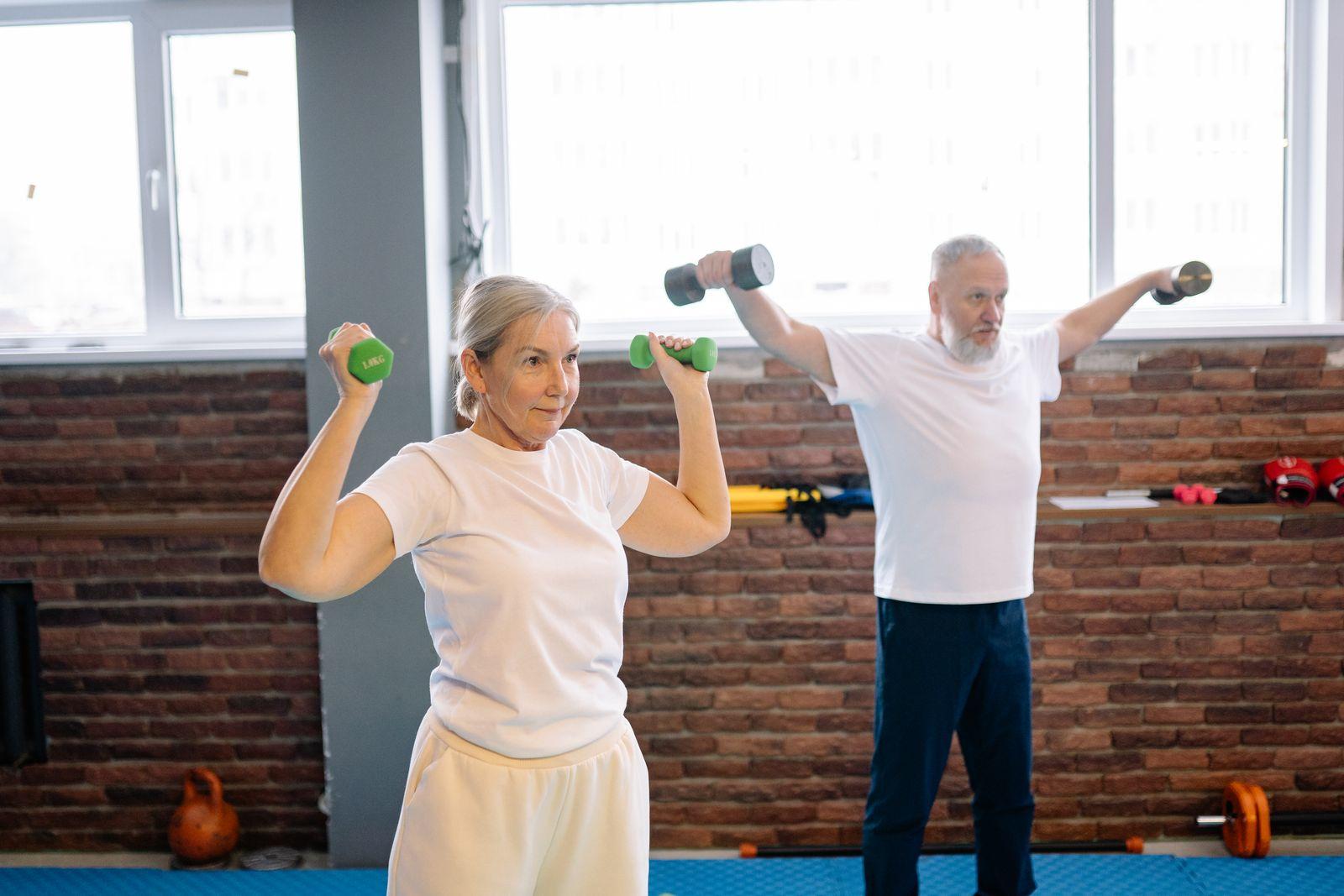
Add at least 2 days a week of muscle-strengthening activity, meaning anything that makes your muscles work harder than usual. That is a frequency, not a routine. The CDC gives no exercises, loads, sets or reps.
None of it has to happen in one block. Just 5 or 10 minutes at a time is beneficial, according to the CDC, which doesn't say how short sessions affect arthritis pain in particular.
For osteoarthritis (OA), the UK's National Institute for Health and Care Excellence (NICE) says everyone with the condition should be offered therapeutic exercise tailored to their needs. Its examples are local muscle strengthening and general aerobic fitness.
Picking activities and judging effort
For aerobic work, the CDC's test is whether the activity gets your heart beating faster. Walking counts if it does, and so does anything else you'll actually repeat. The sources offer no finer measure of effort.

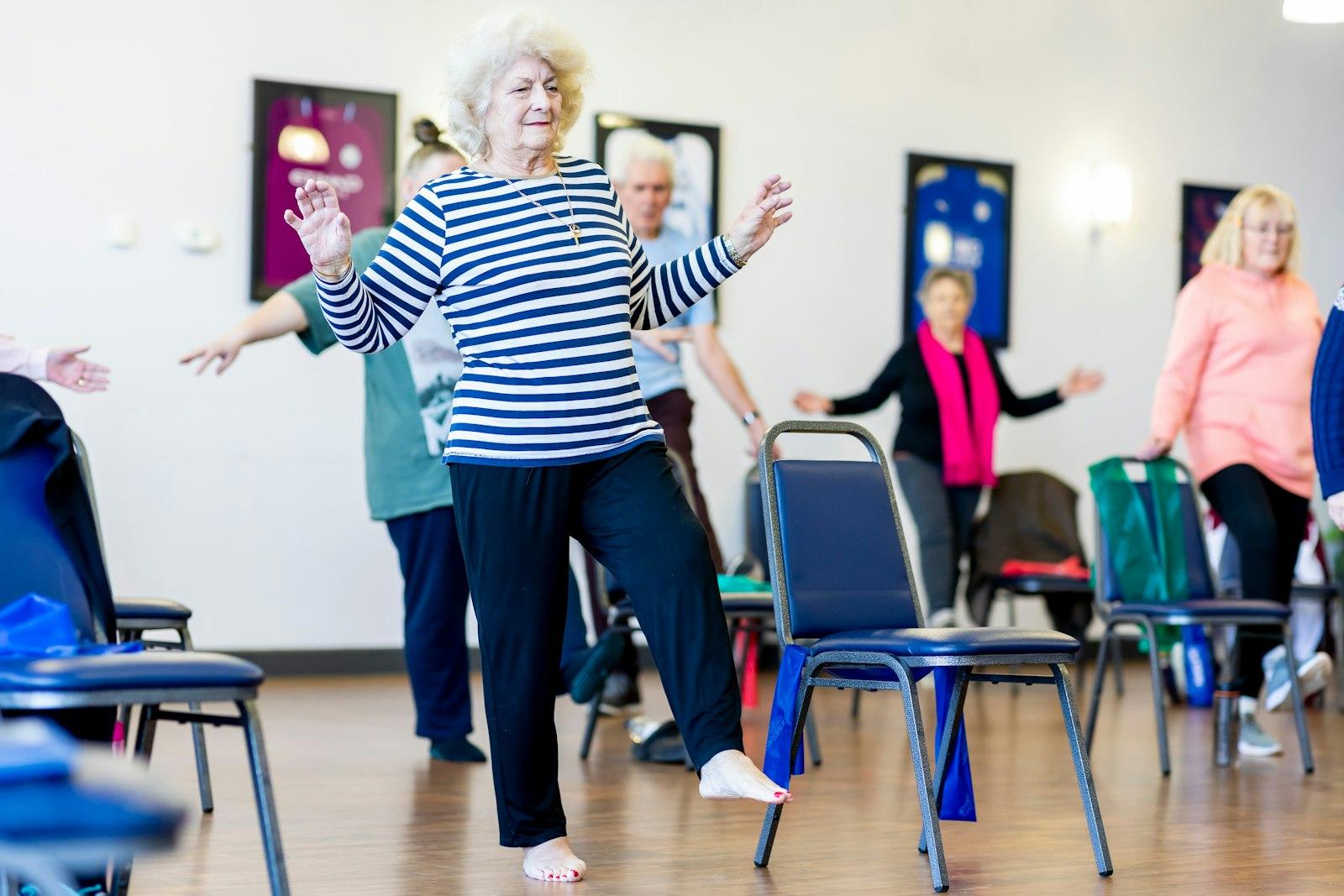
For strength training, the CDC says to choose weights or resistance bands that do not cause joint pain. It sets no limit for how much pain is too much. Our view: until you know more, a load that hurts the joint is the wrong load. The guide to strength training after 50 covers how to choose one, and the exercise library is the place to look for specific moves. For balance, see exercise and falls after 50.
Starting and building up
Begin with sessions short enough to finish comfortably. As your body gets used to an activity, the CDC says you can increase the difficulty in small amounts over time. It gives no rate of increase. Our view: change one thing at a time, either the minutes or the difficulty, so you can tell what your joints are responding to. And if a flare, illness or busy stretch interrupts the routine, restart with the short sessions and ask your clinician whether the flare changes the plan.
You don't have to plan the first weeks alone. The CDC says people with arthritis may benefit from seeing a physical therapist when beginning physical activity. For osteoarthritis, NICE says to consider supervised sessions. Its quality standard adds that when age, other health conditions, pain or disability are a barrier, a person may need specific advice and support, such as supervised sessions.
Sticking with it is where the payoff sits. For osteoarthritis, NICE says long-term adherence to an exercise plan increases its benefits by reducing pain and increasing functioning and quality of life. The excerpt gives no figures for how much, or for how long.
What soreness to expect, and when to call
After you start a new program, the CDC says, it's normal to have some pain, stiffness or swelling. NICE tells clinicians to advise people with osteoarthritis that joint pain may increase when they start therapeutic exercise. Neither source says how much is normal or how long it lasts, so there is no number to hold yourself to.

The CDC's follow-up rule is the useful part: over time, joint pain from physical activity should get better, and if it does not, contact your health care provider. Contact your provider too if pain or other symptoms are severe, a term the CDC leaves undefined. NICE adds that people with osteoarthritis should seek follow-up if the plan is not working within an agreed time or they are having difficulty with the approach.
The sources do not cover what to do on a day when a joint is actively flared. Settle that with your clinician before it comes up, and write down the answer.
What the studies show for rheumatoid arthritis
Rheumatoid arthritis (RA) has its own research. It is reassuring but limited.
- A review of 11 studies covering 274 people found that single sessions of aerobic exercise, resistance exercise, or both did not appear to worsen pain. Six of the studies were observational and the exercise programs varied. The authors call for more research, so "did not appear to" falls short of proof for any one person.
- A review of 13 randomized trials with 967 people concluded that aerobic exercise is generally beneficial and safe for RA, with better function, less pain and more aerobic capacity. The authors say the number and quality of studies were limited.
- A review of seven studies with 448 people found that five of the six that measured quality of life showed improvement, especially in pain, fatigue, vitality, and symptoms of anxiety and depression. Study quality was moderate, and only some studies showed better fitness.
The patients in that last review were not an older-adult sample, so it doesn't show how well the findings apply to people in their late 60s and older.