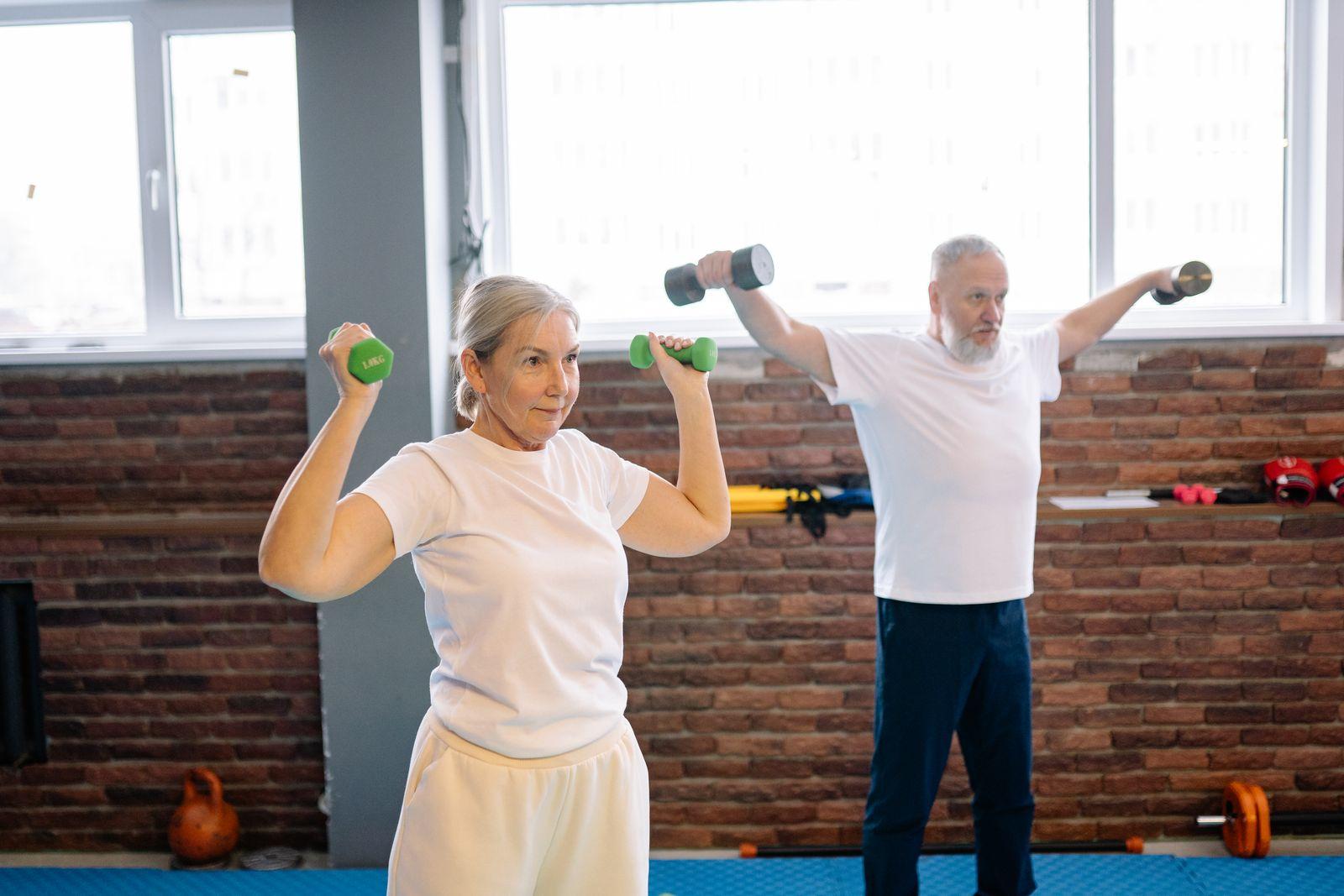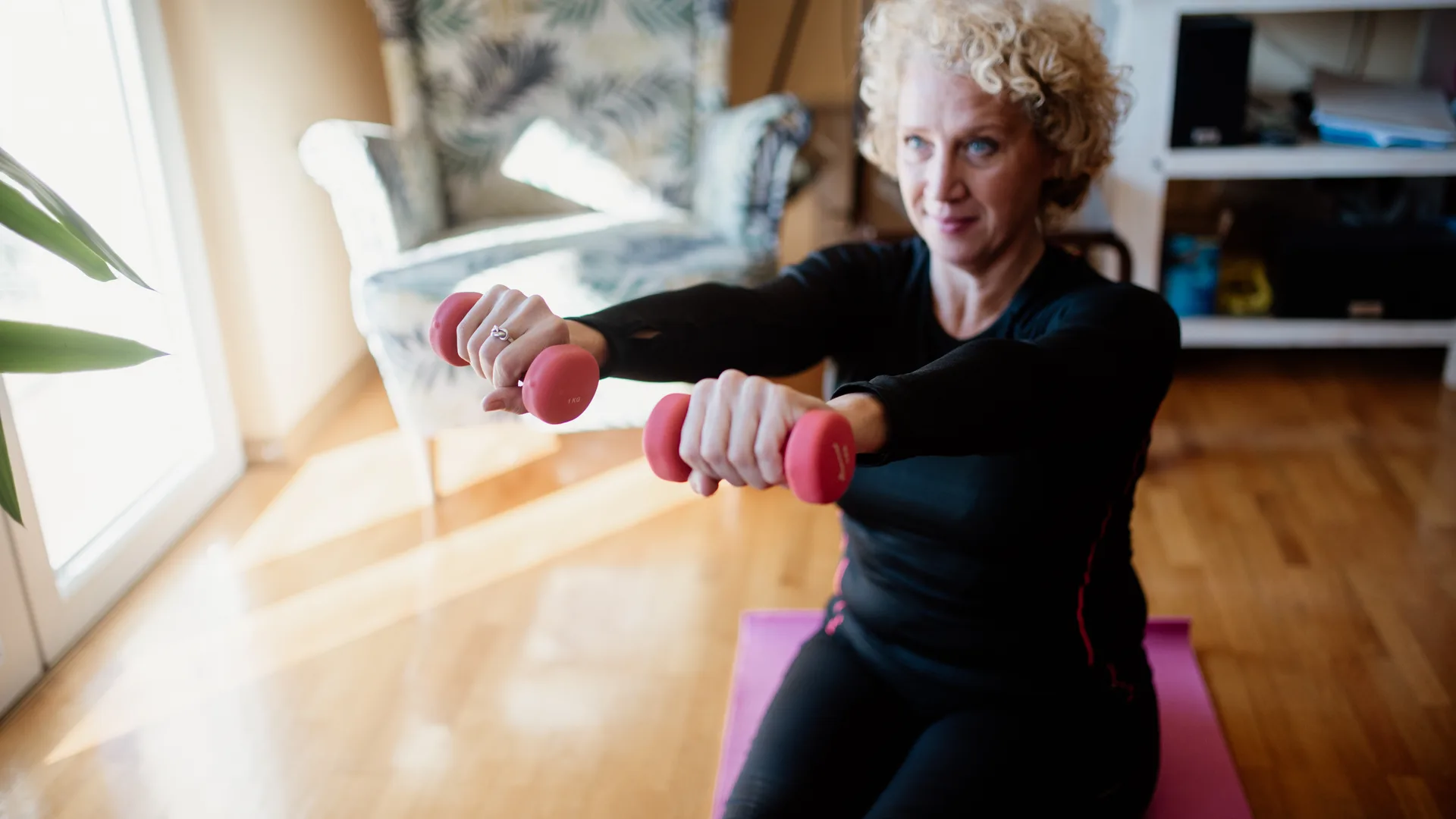
You're standing at the dumbbell rack with a light pair in one hand and a heavier pair in the other, wondering which counts as heavy enough for strength training for bone density. One review of trials in postmenopausal women points to moderate loads, about 65 to 80 percent of the most you can lift once, three days a week.
How the trials sorted the weights
The review pooled 19 studies that included 919 women. It used a network meta-analysis, which compares several training plans at once, even when no single trial tested them against each other. The researchers sorted plans by load, using a percentage of the one-repetition maximum (1RM), which is the heaviest weight you can lift one time. High intensity was 80 percent of 1RM or more, moderate was 65 to 80 percent, and low was 65 percent or less. Frequency was sorted too: 3 days a week counted as high and 2 days a week as low.
The authors ran the comparison because guidelines differ on intensity and fail to give specifics on type, frequency, intensity and duration. The comparison group did no added training and simply lived their usual daily lives. Results were judged by bone density on DXA scans, a type of X-ray, at four spots: the lower spine, the neck of the thigh bone, the whole hip and the bony point at the top of the thigh bone.
What strength training for bone density did at each site
Moderate-intensity lifting beat no added training for bone density in the lower spine and the neck of the thigh bone. At the whole hip and the bony point at the top of the thigh bone, the differences were not statistically significant, although moderate training tended to raise density there, so those results are less certain.

Three days a week of moderate lifting did better than two days for lower-spine density, and at three days a week moderate loads did better than both low and high loads. Those results come from indirect comparisons across different trials, and the review does not say how much better three days was. Nothing in the review says two days a week is useless.
Programs lasting up to 48 weeks showed a significant advantage for the three-day moderate plan, and that advantage was no longer significant for programs longer than 48 weeks. That may reflect fewer or different trials in the longer group, so it is not a reason to stop lifting at one year. The authors also say more high-quality studies are needed to confirm their conclusion.
Where the evidence stops
The trials were in postmenopausal women, and the outcome was bone density. Fractures and falls were not measured, so the review does not show that these programs lowered fracture risk. The findings may not apply to men or to younger people. Trials with drug therapy during training were excluded, so the findings may not apply to women taking osteoporosis medication, who should ask their clinician.
Nothing in these sources explains how to find your 1RM, how many sets or repetitions to do, or how to tell during a workout that you are lifting enough. A qualified trainer or physical therapist can help you pick a moderate load, so you do not have to test a true maximum on your own.
How the CDC baseline fits
The CDC recommends muscle-strengthening activities on 2 or more days a week that work all major muscle groups: legs, hips, back, abdomen, chest, shoulders and arms. That guidance is for adults 65 and older, and it gives no load or repetition targets. It adds that if you have trouble meeting the recommendations, you should be as active as your abilities and conditions allow, because some activity is better than none. Two days a week meets the CDC baseline, and three days of moderate loads is what the bone-density review favored.
Where to start
After you make lunch today, write the two or three days you plan to lift this week on a sticky note and put it where you keep your weights. Store the weights on a shelf you pass, out of any walkway, so they stay visible without becoming a trip hazard. The note is only the entry step; the lifting days are what the review studied. If a week falls apart, pick up at your next planned day. Once the days feel routine, book one session with a trainer or physical therapist to set a moderate load, and add a third day if you started with two.