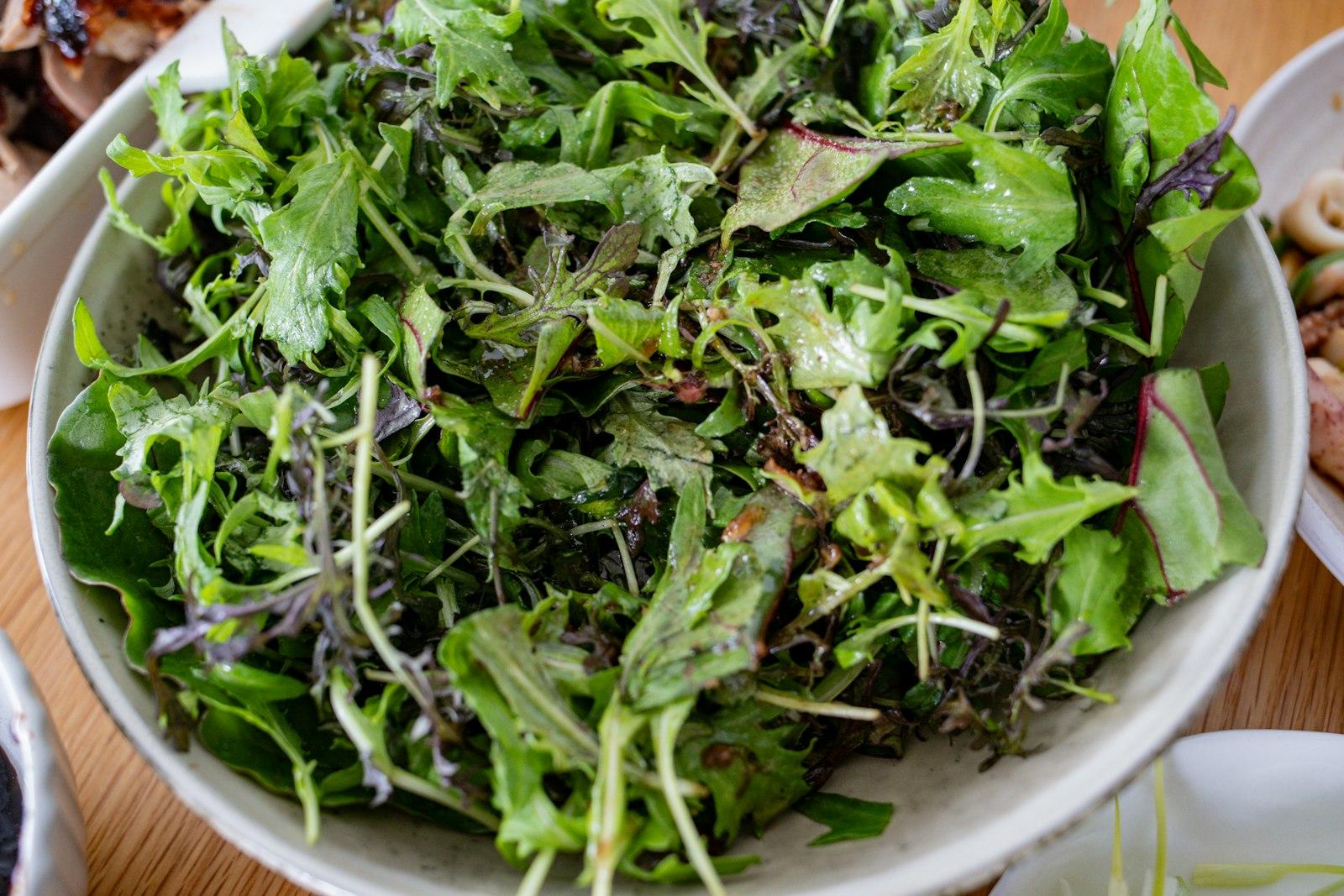
Leafy greens and cognitive decline are linked in one study of older adults: people who ate about one serving a day lost thinking skills more slowly than people who ate very little. The researchers recorded what people ate and watched how their thinking changed, so the finding can't show that the greens did the work.
If you're hoping to keep your memory and focus as the years add up, it's reasonable to wonder whether a daily salad is worth the effort.
What the study found
The finding comes from a report in the journal Neurology, summarized by the National Institute on Aging (NIA). The participants were older adults with an average age of 81, and all were free of dementia when the study began.
The people who ate the most greens, a median of 1.3 servings a day, were compared with those who ate the fewest, a median of 0.09 servings a day. The gap in the rate of decline was equal to being 11 years younger in thinking skills. That figure compares two groups with very different habits. It describes groups, and it can't tell you what would happen to your own brain.
Further analysis pointed to phylloquinone, lutein and folate as the likely source of the effect. That is a statistical inference, and it doesn't show that pills would do the same. NIA says no vitamin or supplement is recommended right now for preventing cognitive decline.
What counts as a serving

The questionnaire asked about three items: half a cup of cooked spinach, half a cup of cooked kale, collards or other greens, and one cup of raw lettuce salad. A plain lettuce salad counted in the study alongside the cooked greens. Those are the sizes the researchers asked about, and nobody tested them as doses.
How far the evidence goes
Diet came from a questionnaire about some 144 foods, filled out once at the start and covering the previous 12 months. Eating habits may have shifted over the roughly 5 years of follow-up. And the study doesn't tell us whether the pattern holds for people younger than 81.
NIA's broader verdict is cautious: so far, there is no evidence that eating or avoiding a specific food can prevent Alzheimer's or age-related cognitive decline. That statement is about prevention, so it doesn't contradict a link with slower decline. It does keep the claim modest.
The diet trial is less encouraging. The MIND diet, a greens-rich eating pattern, was tested in older adults with a family history of dementia. Those on it had only small improvements in thinking, similar to those on a control diet of mild calorie restriction. That trial tested a whole diet rather than greens alone, and it suggests the greens-rich pattern did not beat the control diet. Observational results on whole diets are mixed as well: some but not all observational studies link the Mediterranean and MIND diets to lower dementia risk.
Short trials of fruits and vegetables improved memory and attention over 10 to 12 weeks. Those trials did not test leafy greens by themselves. The review covered 13 studies and 493 people, and it combined fruit and vegetables. Its authors also describe earlier results as inconsistent.
Greens in the bigger picture
The researchers themselves suggest only that adding a daily serving of leafy greens may contribute to brain health. In our view, greens are a reasonable addition to your plate, and nothing here suggests they can protect your memory on their own.
NIA's wider advice for cognitive health puts greens inside a pattern. It describes a healthy, balanced diet as fruits and vegetables, whole grains, lean meats, fish and poultry, and low-fat or nonfat dairy. It also notes that Federal guidelines recommend that all adults get at least 150 minutes of physical activity each week, though it says more research is needed on exercise and cognitive decline. For the rest of that picture, see brain health after 50.
It's easier to make room for greens by swapping them in for something, such as a side of fries, than by piling a bowl on top of everything else. Keep them next to the protein you already rely on, like eggs, fish or beans, so a salad doesn't stand in for the main course.
Where to start
After you make lunch, put one serving of greens on the plate: half a cup of cooked spinach or kale, or a cup of salad greens. A bag of frozen spinach or kale makes it easier, because you can scoop some into soup, eggs or pasta while the food heats. Once lunch feels automatic, try a different green at dinner on some nights. If a day gets away from you, pick it up at the next meal.